
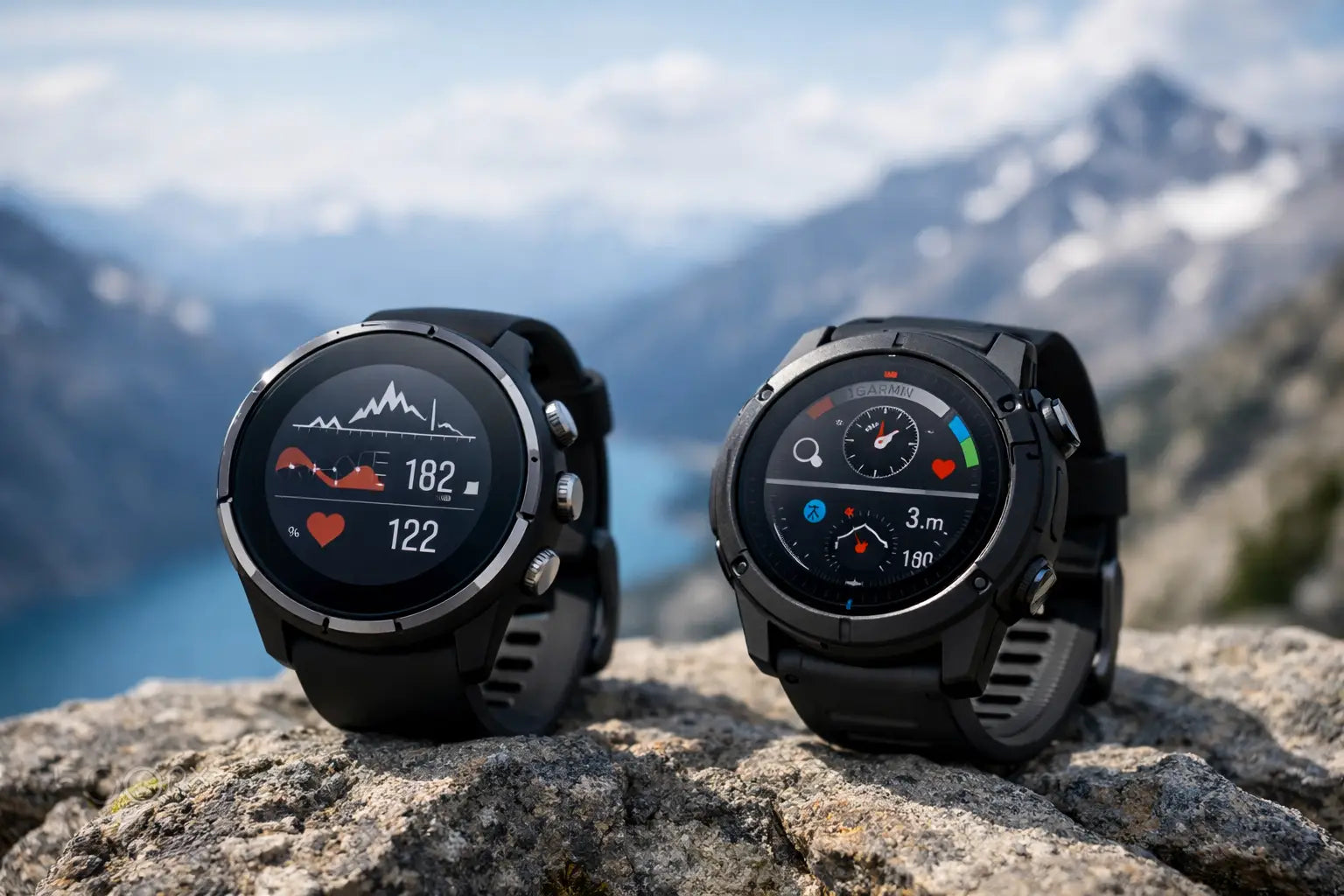
A watch used on the hill, on exercise or during a long tab has a simpler job than a phone: give you the right information quickly, keep working in poor conditions, and avoid becoming another item that needs managing. That is why we think Suunto watches outperform Garmin for many military, tactical and serious outdoor users. It is not because Garmin makes poor kit - far from it. It is because Suunto’s approach often suits field navigation and long-duration use better.
The deciding factor is rarely a long list of sports profiles or lifestyle functions. It is whether the watch remains clear, predictable and power-efficient when weather closes in, gloves are on and the route still has several hours left.
Why We Think Suunto Watches Outperform Garmin in the Field
Suunto has long built watches around the demands of mountaineering, trail running and expedition use. That heritage shows in the way its current outdoor models present route guidance, elevation information, weather awareness and battery status. The interface is generally less crowded than Garmin’s, making it easier to find the function that matters without working through layers of menus.
For a user carrying a map and compass as primary navigation tools, the watch should support sound navigation rather than try to replace it. Suunto tends to do this well. It provides a clear position reference, route line, bearing and altitude data in a format that is useful at a glance. That makes it particularly suitable for personnel, cadets and outdoorsmen who already understand navigation fundamentals.
Garmin watches can offer more data fields, more activity types and a broader connected ecosystem. Those are genuine strengths. But more options do not always mean a better watch when concentration, time and battery power are limited.
Navigation That Feels Purpose-Built
Modern Suunto watches with offline mapping are strong navigational tools. The mapping is designed to be read outdoors, with contour information, terrain detail and route guidance forming the centre of the experience. Planning a route beforehand and following it on the watch is straightforward, which matters when preparing for a loaded walk, a multi-day exercise or an unfamiliar training area.
Clear information under pressure
The best field equipment does not ask for unnecessary attention. Suunto’s screens and route displays tend to prioritise the essential information: where you are, where you are heading, how far remains and what the ground is doing. The result is less screen time and fewer distractions from the task at hand.
Garmin’s mapping is capable and, on some models, exceptionally detailed. However, its strength in features can make it feel more complex. Users who enjoy configuring activity screens, metrics and alerts may prefer that level of control. For others, particularly those wanting a dependable navigation companion rather than a miniature training computer, Suunto’s cleaner presentation is the better fit.
Altitude and weather awareness
A barometric altimeter, storm alarm and accurate elevation trend are practical tools, not gimmicks, when ground conditions change quickly. Suunto’s outdoor pedigree is evident here. Its watches place altitude, ascent, descent and weather trend at the forefront, helping users build a useful picture of the environment.
No wristwatch should be relied upon as a weather forecast or sole navigation method. A proper map, compass, route card and suitable communications plan remain essential. But a capable Suunto can add confirmation and situational awareness without adding bulk to your belt kit or pack.
Battery Management Is More Than a Headline Figure
Battery life is often compared through a single advertised GPS number. That can be misleading. What matters on the ground is whether the watch gives the user sensible choices before power becomes a problem.
Suunto’s battery modes are one of its strongest practical features. They allow you to choose between maximum location accuracy, longer recording intervals and extended endurance, while showing a realistic estimate of remaining use. On a long day in the Brecon Beacons, a weekend navigation exercise or an extended trail event, that clarity makes planning easier.
The more capable Suunto models also preserve useful route and exercise data in endurance-focused modes. There are compromises - lower GPS sampling can reduce the precision of a recorded track - but the watch remains serviceable instead of simply becoming a dead display.
Garmin has made major improvements in battery performance, especially through solar-assisted options and newer hardware. If you need very long battery life with a particular set of Garmin training or mapping features, it may be the stronger choice. Yet Suunto’s approach feels more transparent: choose the required level of accuracy, see the expected battery impact and get on with the job.
Build Quality for Everyday Hard Use
Both brands produce watches capable of taking regular knocks, rain, mud and cold. The correct comparison is model against model, not brand against brand. A premium titanium and sapphire model should not be judged against an entry-level plastic training watch.
That said, Suunto’s higher-end outdoor watches have a notably purposeful build. Sapphire crystal options resist scratching well, metal bezels offer protection around the display, and the cases are designed for regular exposure to wet and dirty conditions. They look at home with field clothing rather than appearing overly polished or fashion-led.
A watch is still a piece of electronic equipment. Avoid striking it against rock, weapon systems, vehicle doors or hard surfaces unnecessarily, and check water-resistance ratings before swimming or prolonged immersion. Durability is improved by good equipment discipline, not replaced by a specification sheet.
A Better Fit for Navigation-Led Users
Garmin is often the obvious recommendation for people focused on performance statistics. Its ecosystem is extensive, and its watches can track almost every training metric a runner, cyclist or gym user might want. For athletes who study recovery data, build workouts and analyse performance in detail, Garmin remains a serious option.
Suunto is often the better choice for the user who starts with a route, terrain and time available. Its training functions are still capable, with heart-rate monitoring, recovery information and activity recording, but they do not dominate the experience. The watch stays closer to a field instrument.
This distinction matters to different users. A police officer wanting a reliable watch for hill fitness and weekend trails may value Suunto’s direct operation. A cadet instructor preparing navigation activities may appreciate accessible route tools and weather information. A committed triathlete who wants deep analysis after every session might get more from Garmin.
The Trade-Offs Worth Considering
The case for Suunto is strong, but it is not universal. Garmin has a larger range, from compact fitness watches to specialist expedition units. It usually offers more third-party integrations, more payment and smart features on selected models, and broader support for highly specific sports and sensors.
Garmin Connect is also more expansive for users who want dashboards, comparisons and extensive historical analysis. Some people will find Suunto’s companion app and data presentation more restrained than they would like.
There is also the question of watch size. Suunto’s larger outdoor designs can be ideal for visibility and battery capacity, but may feel substantial on a smaller wrist or when worn under close-fitting cuffs. Check case dimensions, strap comfort and screen type before choosing. The right watch is the one you will wear consistently, not the one with the longest feature list.
Choosing the Right Tool, Not the Loudest Specification
When selecting a GPS watch, begin with the conditions in which it will be used. If your priority is clear route following, dependable elevation data, practical battery modes and a hard-use outdoor design, Suunto deserves to be near the top of the list. Its watches are particularly convincing for hillwalking, loaded walking, trail running, navigation training and general field use.
If detailed training analytics, smart functions, specialist sports modes and a wide connected ecosystem are central to your decision, Garmin may suit you better. Neither choice removes the need for basic fieldcraft, a waterproof map case and a compass carried where it can be reached.
For users who value a watch that stays focused when conditions become less forgiving, Suunto’s disciplined, navigation-first approach is difficult to beat. Choose the model around your actual ground, duration and training requirements, then spend time learning it before the first wet, dark or demanding outing.