
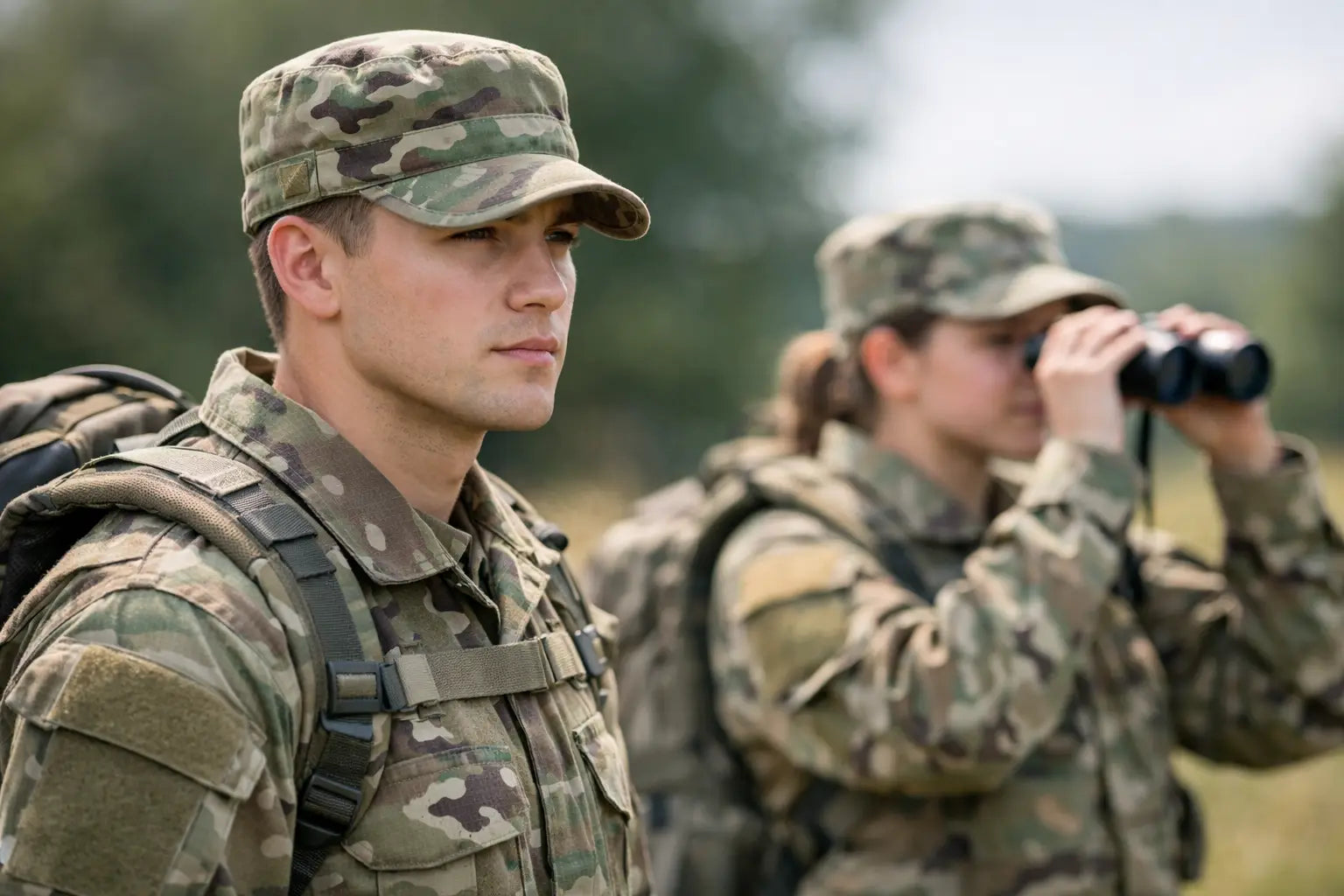
Cadet camouflage clothing has to do more than look the part. It needs to cope with wet drill nights, rough ground, fieldcraft exercises, camp weekends and repeated washing, while allowing a young cadet to move freely and layer properly. For parents, instructors and cadets alike, the right clothing makes preparation simpler and time outdoors more comfortable.
What Cadet Camouflage Clothing Needs to Do
Cadet kit is often used hard. A jacket may be worn over a shirt during evening parade, then pulled on over warm layers for a cold exercise. Trousers need to handle kneeling, crawling, walking and sitting on damp ground without becoming restrictive. That is why practical construction matters more than a fashionable cut.
A good camouflage garment should offer enough room for movement without being excessively loose. Overly baggy clothing catches on branches, webbing and equipment, while trousers that are too tight can make climbing, crouching and marching uncomfortable. Adjustable waists, belt loops, secure fastenings and useful pocket placement are all worth looking for.
Camouflage also has a straightforward field purpose. British Forces-style patterns help clothing blend into woodland and mixed terrain, but pattern alone is not the whole answer. Fit, weather protection and layering have a greater effect on whether a cadet stays warm, dry and able to concentrate during training.
Choosing Cadet Camouflage Clothing by Activity
The best choice depends on what the clothing will actually be used for. A cadet attending a weekly detachment may need smart, serviceable trousers and a lightweight smock. Someone preparing for fieldcraft, Duke of Edinburgh expeditions or a training weekend will benefit from a more considered clothing system.
Parade, Drill and Routine Training
For regular cadet activity, choose clothing that is tidy, durable and easy to maintain. Combat trousers should sit securely at the waist and be long enough to meet boots without riding up. A combat shirt or jacket should allow room for standard base layers but should not hang so loosely that it appears untidy on parade.
Check the requirements of the individual cadet force or detachment before buying. Some units have specific uniform regulations, authorised patterns or rules on badges, rank slides and headdress. Camouflage clothing bought for general outdoor use may be useful, but it is not automatically suitable as uniform.
Fieldcraft and Camp
Fieldcraft places greater demands on clothing. Conditions can change quickly, particularly during autumn and winter training, and a cadet may spend long periods standing still as well as moving through woodland. Start with a wicking base layer, add an insulating layer where needed, then use a camouflage jacket or smock as the outer working layer.
A smock remains a useful option when extra storage is needed. Larger pockets can carry gloves, a notebook, lightweight hat or other small essentials that need to be reached quickly. The trade-off is bulk. For active movement or warmer weather, a lighter combat jacket can be more comfortable and less restrictive.
Trousers should be hardwearing enough for uneven ground and practical enough to wear with boots. Reinforced seat and knee areas are useful on demanding exercises, although a simpler pair of combat trousers may be perfectly adequate for routine cadet training. Consider the season before choosing heavier fabric. Thick trousers can offer reassurance in cold, wet woodland, but they may be uncomfortable during a warm summer camp.
Outdoor Use Beyond Cadets
Cadet camouflage clothing is also regularly used for walking, camping, bushcraft, fishing, airsoft and general outdoor work. This makes durable British Forces-style clothing a sensible purchase when it can serve more than one purpose. A well-chosen jacket and pair of trousers can become dependable weekend kit, provided they are suitable for the activity and weather conditions.
For hiking or longer expeditions, do not rely on camouflage clothing alone for waterproof protection. Many combat garments are designed as working layers rather than fully waterproof shells. If heavy rain is expected, carry an appropriate waterproof layer that fits comfortably over the clothing underneath.
Fabric, Fit and Layering
Cotton-rich polycotton combat clothing remains popular because it is comfortable, breathable and tough enough for regular use. It is a practical choice for general training, especially when the forecast is dry or mixed. However, cotton holds moisture once wet and takes longer to dry than technical synthetic fabrics. In prolonged rain, a waterproof outer layer and spare dry clothing are essential.
Ripstop fabric is another worthwhile feature. Its reinforced weave is intended to limit the spread of small tears, which is useful when clothing meets brambles, fences and rough ground. It does not make a garment indestructible, but it can extend service life where a cadet trains regularly outdoors.
Sizing deserves more attention than many first purchases receive. Cadets grow, and buying several sizes too large rarely solves the problem. Excess material around the leg can interfere with boot wear, while oversized sleeves make cuffs difficult to manage. Aim for enough room to wear a base layer and fleece beneath the garment, then use adjustment points at the waist, cuff or ankle to keep the fit controlled.
When trying clothing with boots, check that trouser hems sit correctly and do not bunch excessively. If trousers are designed with ankle ties or adjustment tabs, use them sensibly. They help keep the trouser leg secure, but should not be tightened so much that they restrict circulation or make boot removal difficult.
The Details That Make Field Kit More Useful
Pockets are not just a styling feature. In the field, they need to close securely and be accessible when wearing gloves or webbing. Buttoned or covered pockets help protect contents from dirt and light rain, while cargo pockets give useful space for small essentials. Avoid overloading them. Heavy items swinging at the thigh can make walking uncomfortable and may pull trousers out of position.
Strong stitching at stress points, dependable zips and properly secured buttons all matter. A cheap garment can seem good value until a pocket seam opens halfway through an exercise. Inspect fastenings before first use and repair loose threads early, rather than waiting for a small issue to become a failed garment.
Colour matching is another practical consideration. Camouflage patterns can vary between production runs and brands. This is generally not a problem for outdoor use, but uniformed cadets should follow unit direction rather than attempting to assemble a matching set from unrelated patterns.
Caring for Camouflage Clothing
Regular care helps clothing remain presentable and serviceable. Brush off dried mud before washing, empty every pocket and close zips, buttons and hook-and-loop fastenings. Washing garments inside out can reduce surface wear and help preserve the finish over time.
Use the care label as the final instruction, particularly where treated fabrics are concerned. Avoid unnecessary high heat, which can damage fibres, fade colours and affect applied finishes. Drying naturally is often the safer choice. If kit has been soaked during an exercise, dry it fully before putting it away. Damp combat clothing stored in a kit bag quickly develops unpleasant odours and can encourage mildew.
It is sensible to keep a small repair kit with spare buttons, needle, thread and a few safety pins. Minor repairs are part of looking after field kit, and they can keep an otherwise sound garment in use for much longer.
Buying the Right First Set
For a new cadet, a sensible starting point is one properly fitting combat jacket or shirt, one pair of durable combat trousers, suitable socks and well-fitted boots. Add layers according to the season rather than buying every item at once. This approach keeps the first purchase focused on what will be used immediately and leaves room to follow unit-specific advice.
John Bull Clothing stocks military-style clothing and field equipment chosen for practical use, helping families and cadets source dependable kit without having to piece together general outdoor clothing. The priority should always be correct fit, suitability for the task and compliance with the cadet unit's requirements.
The most useful camouflage clothing is the kit a cadet can wear confidently, maintain properly and rely on when the weather turns. Buy for the conditions, leave room for layers and let the unit's guidance set the standard.