
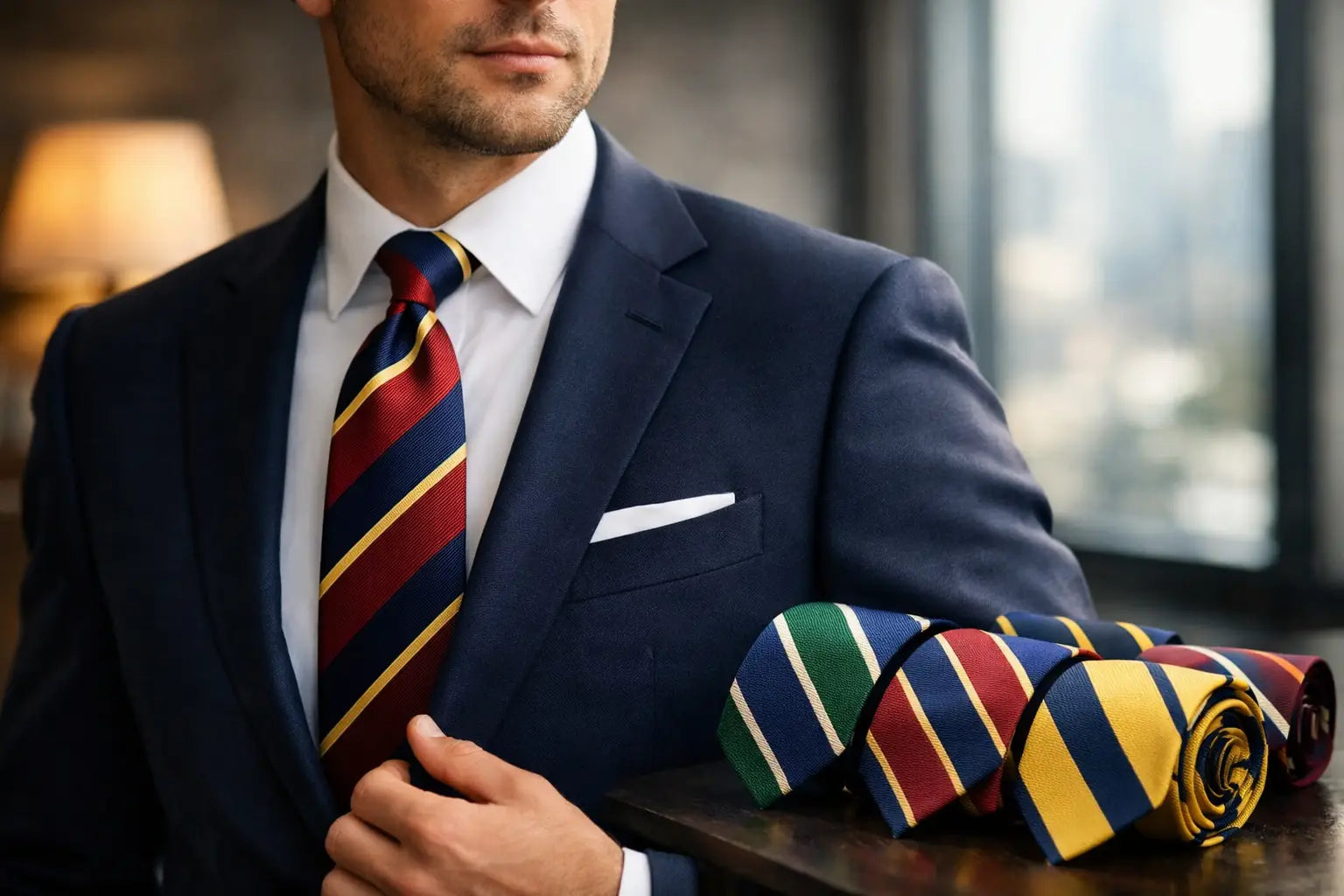
A regimental tie is a small item of dress with a great deal attached to it. Its colours can represent a regiment, corps, association, school or club; to the person wearing it, the pattern may mark service, family connection, comradeship or a significant period of life. Regimental ties are therefore best chosen and worn with the same care given to a beret badge, blazer badge or presentation item: correctly, respectfully and for the right occasion.
They are practical formalwear rather than costume. A well-made tie brings a smart shirt and jacket together for a regimental dinner, remembrance event, reunion, mess function, wedding or civilian formal occasion. The key is knowing what the colours mean, whether the pattern is appropriate to wear and how to pair it without making the rest of the outfit compete with it.
What makes a tie regimental?
The defining feature is the stripe pattern. Most British regimental ties use distinctive diagonal stripes in unit colours, although the width, spacing, direction and shades vary. A tie may also represent a corps, an old regiment, an association or a related military organisation. Some patterns have changed after amalgamations, while others remain closely associated with historic units and their predecessor regiments.
These ties are not rank insignia and are not a substitute for approved uniform dress. They sit in the civilian and association side of military presentation. That distinction matters. A regimental tie can be entirely suitable with a lounge suit at a formal gathering, but it does not make a civilian outfit into uniform and should not be treated as such.
There is no single rule covering entitlement across every regiment and association. Serving personnel, veterans and members of regimental associations will usually know the convention for their own unit. Family members may wear a tie to acknowledge a genuine connection, particularly at remembrance services, reunions and commemorative events, but it is sensible to check with the regiment or association if there is any doubt. A tie bought as a gift is more meaningful when the recipient's exact regiment, corps or former unit has been confirmed first.
Stripe direction and pattern accuracy
Stripe direction is easy to overlook, especially when viewing a tie folded in packaging. It can be part of a recognised design, so an inaccurate pattern may stand out to those familiar with the regiment. Do not assume that any tie in the right colours is correct. Check the full description, compare it with a trusted reference where possible, and make sure the product is specifically identified for the relevant regiment or corps.
This is particularly worthwhile for veterans whose service spans an amalgamation or a change of title. The tie linked to the unit in which they served may not be the same as the current regiment's pattern. Neither choice is automatically wrong; the appropriate choice depends on the connection being recognised.
Choosing regimental ties for the occasion
A traditional woven silk or silk-feel tie remains the usual choice for formal events. It has a clean surface, holds a knot well and gives the stripes enough definition to look smart under indoor lighting. Polyester can be a sensible alternative for regular use, travel or events where easy care matters more than a natural silk handle. The best option depends on use, not simply price.
For a formal dinner, service or presentation, choose a full-length tie with a crisp, properly proportioned blade. Avoid novelty versions, oversized logos and overly shiny fabric. Regimental colours already provide enough character. A restrained construction makes the tie look like proper formalwear rather than a souvenir.
For a less formal gathering, a standard regimental tie still works well with a blazer, chinos and polished shoes. It is usually better to keep the shirt plain and the jacket neutral. Navy, charcoal and mid-grey are dependable choices because they let the tie remain the focal point. A white shirt is the safest option for ceremonial events; pale blue can work for an informal lunch or club gathering if it does not clash with the stripe colours.
A patterned shirt is generally a poor match. Checks, bold stripes and textured novelty cloth create visual noise against diagonal regimental stripes. If the tie is strong in red, yellow, green or blue, keep the rest of the outfit quieter still. The aim is a composed, serviceable appearance, not a colour display.
How to wear a regimental tie correctly
The four-in-hand knot is the most practical choice for most wearers. It is compact, works with common collar shapes and suits the traditional character of a striped tie. A half-Windsor can be useful with a wider collar or a heavier fabric, but a large knot can make a regimental tie look overdone. Whichever knot is used, it should sit firmly at the collar without pulling the shirt points apart.
The tip of the front blade should finish around the centre of the belt buckle. Too short looks untidy, while too long can spoil the line of a jacket. Once tied, straighten the stripes so the blade hangs cleanly. The small dimple below the knot is optional, but it can give a woven tie a sharper finish when formed naturally rather than forced.
Tie clips should be used sparingly. A simple, understated clip is appropriate where practical, particularly if working around food, wind or travel. Position it between the third and fourth shirt buttons and attach it to both the tie and shirt placket. Highly polished, oversized or heavily branded clips can distract from the tie's colours.
Pocket squares need the same restraint. A plain white linen square is suitable with a dark suit, while many occasions need no pocket square at all. Matching a pocket square exactly to the tie is rarely the strongest look. If wearing medals, a poppy or another commemorative item, avoid adding extra accessories merely for effect.
Suit, blazer or uniform?
For civilian events, regimental ties are normally worn with a suit, blazer or smart jacket. They can sit well with a V-neck jumper in cooler weather, provided the shirt collar is neat and the tie remains visible. They are less convincing with casual T-shirts, camouflage clothing or overtly tactical kit. Those items have their place, but not at a formal regimental function.
If an event calls for uniform, follow the relevant dress regulations and unit instructions rather than attempting to add civilian regimental accessories. Dress codes vary between mess functions, association gatherings, funerals and parades. When an invitation specifies lounge suit, blazer and tie, or another form of dress, follow that wording first.
Care and storage for a tie that lasts
A quality tie should be untied after each wear. Pulling the narrow end back through the knot reverses the tying process and reduces strain on the fabric. Do not leave it knotted in a drawer or hang it from a hook for months at a time, as this can set creases and distort the interlining.
For storage, roll the tie loosely from the narrow end or hang it flat in a tie rack away from direct sunlight. Silk is vulnerable to moisture, oil and harsh spot treatments. If food or drink is spilled, blot gently with a clean cloth rather than rubbing the stain deeper into the weave. Professional dry cleaning is the safer choice for a valuable silk tie, although it is wise to tell the cleaner the fabric type first.
When travelling, a tie case or a loose roll inside a clean garment bag prevents hard folds. This matters for overseas postings, BFPO parcels and long journeys to reunions, where the tie may spend days packed with heavier clothing or kit.
A considered choice for service and remembrance
The value of regimental ties lies in the detail. The correct colours, a decent cloth and a properly tied knot show consideration for the people and history represented. That is why accuracy should take priority over a bargain pattern that is merely close enough.
Whether the tie is for a veteran, a serving member, a cadet instructor or a family gift, take a moment to verify the regiment and the event before buying. A properly selected tie will not need a great deal of explanation when it is worn - the connection behind it does the work.