
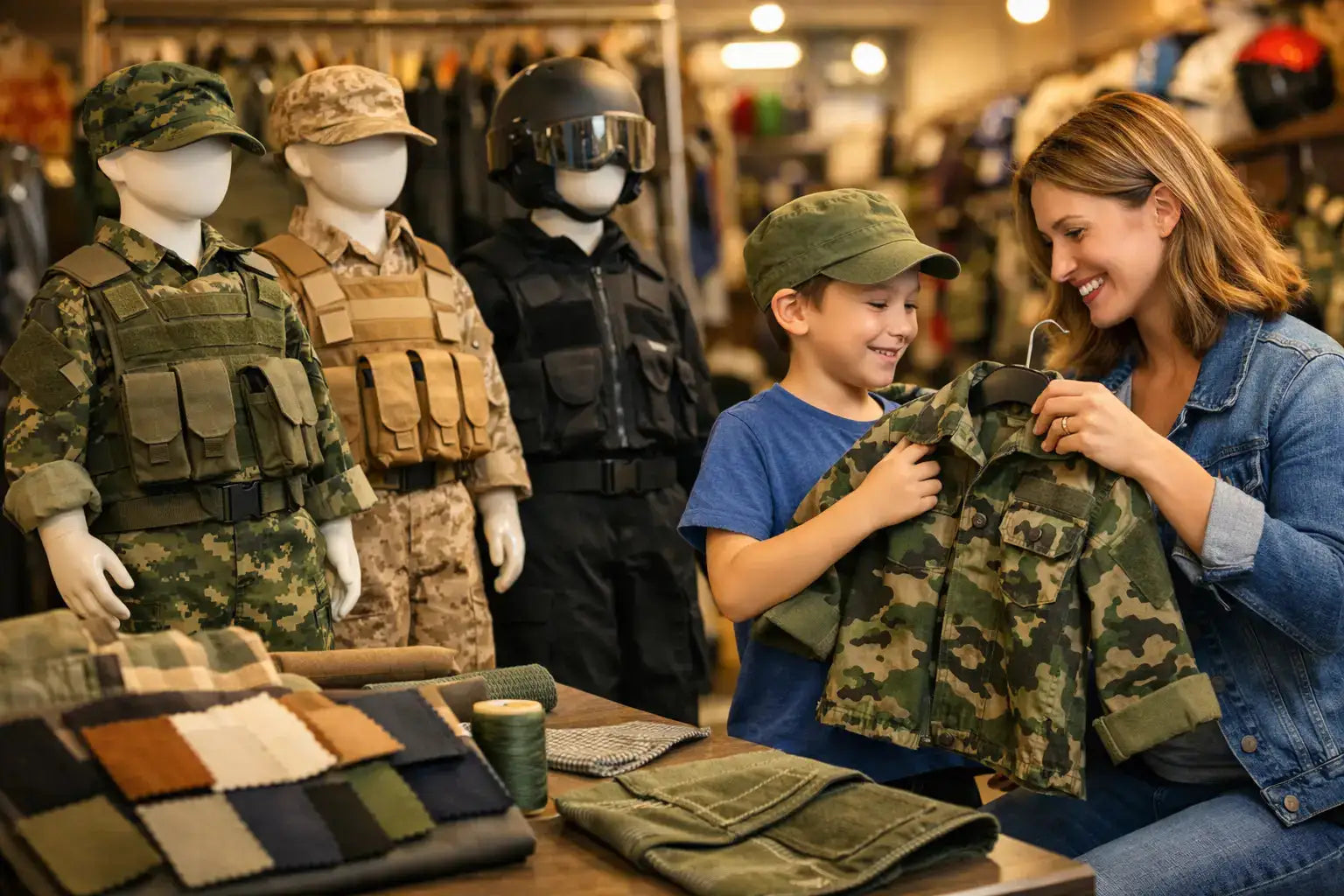
A flimsy outfit lasts one school event. Properly chosen kids army costumes last through fancy dress, garden missions, cadet-style play, hand-me-down use and the odd muddy afternoon. If you are buying for a child who actually intends to wear their kit rather than pose in it for ten minutes, the details matter.
That is where many buyers get caught out. A costume photo can look convincing, but poor stitching, stiff fabric and awkward sizing show up the moment the child starts moving. For parents, grandparents and anyone buying military-inspired clothing for younger wearers, the better approach is to treat the purchase like light-duty field kit - not a throwaway novelty item.
What makes kids army costumes worth buying?
The first question is simple: what is the costume for? A World Book Day outfit, school play or themed birthday party places different demands on the garment than regular dressing-up at home. If it is only needed for one short event, appearance may be the priority. If the child is likely to wear it repeatedly, durability and comfort quickly move to the front.
The strongest options tend to sit closer to real military-inspired clothing than supermarket fancy dress. That means camouflage trousers that can handle kneeling and crawling, smocks or shirts with usable pockets, and fabrics that do not feel paper-thin. A better-made set may cost more at the start, but it usually works harder and lasts longer.
Realism matters too, although it depends on age and occasion. Younger children usually care most about looking the part at a glance. Older children, particularly those with an interest in military history, outdoor play or cadet culture, often notice whether the pattern, cut and accessories feel believable. In those cases, costume-style prints on shiny synthetic fabric tend to disappoint.
Fit matters more than most buyers expect
Poor fit ruins otherwise decent kids army costumes. If the jacket is too tight across the shoulders or the trousers sit badly at the waist, the child will stop wearing it. If everything is oversized in the hope of growing room, the result can look untidy and become a trip hazard.
A sensible fit should leave room for movement and, in cooler weather, a base layer underneath. Elasticated waists, adjustable cuffs and practical fastenings are all useful, particularly for younger children who need help dressing quickly. Trousers need enough room for crouching, climbing and sitting on the floor. Jackets or shirts should allow full arm movement without the hem riding up.
Sizing is one area where buying from a specialist military clothing retailer can make a difference. General costume suppliers often treat size as approximate. Military-style clothing is more likely to be described in a way that reflects how it actually wears.
Why fabric choice is not a minor detail
Fabric affects comfort, wear life and the overall look. Lightweight polyester has its place in cheap event costumes, but it can feel sweaty, snag easily and give that unmistakable shiny finish that looks more theatrical than military. A cotton-rich or polycotton construction usually feels better and presents a more authentic appearance.
Polycotton is often the practical middle ground. It is easier to care for than pure cotton, generally more durable than low-grade synthetics and better suited to repeated use. For children who will wear their costume outdoors, that balance matters. The outfit needs to handle grass stains, rough play and regular washing without falling apart after a fortnight.
The season matters as well. A heavier shirt or jacket may be right for autumn events, but too warm for indoor parties or summer use. Lightweight camouflage clothing is often more versatile because it can be layered. That gives you more use across the year rather than one awkwardly timed wear.
The difference between costume and usable kit
There is a clear dividing line between novelty outfits and military-inspired clothing that also works as practical playwear. The latter tends to have proper pockets, stronger seams, more realistic cuts and better camouflage patterns. It may not be sold purely as fancy dress, but it often does the job far better.
For many families, that is the smarter purchase. A camouflage jacket and trousers set can cover a school event, outdoor play, camping weekends and general dressing-up. Add a beret, cap or dog tags if required and the look is complete without relying on one-piece costume fabric that will not survive much use.
That no-nonsense approach suits buyers who want value rather than gimmicks. It also gives children something they are more likely to keep wearing because it feels like real clothing, not just a costume.
Choosing kids army costumes for different ages
Age changes what matters most. For younger children, comfort, simple dressing and soft fabric are usually more important than exact authenticity. They need something easy to move in, easy to wash and hard to damage. Complicated buckles, rigid accessories and scratchy fabrics are best avoided.
For older children, especially those with a clear idea of how military kit should look, the bar is higher. They may want camouflage that resembles British Forces style patterns, smarter cuts and accessories that complete the outfit properly. At that point, quality matters more because they will notice the difference.
There is also the question of supervision and safety. Accessories should be chosen with care. Toy items, cords and heavy add-ons may look the part, but they are not always suitable for younger wearers or school settings. In most cases, the better option is to keep the clothing itself strong and convincing, then use simple finishing touches rather than overloading the outfit.
Practical features that genuinely help
The best kids army costumes usually include details borrowed from real field clothing. Reinforced knees are useful if the child spends more time crawling than standing. Adjustable waists extend the life of the garment. Button or zip quality matters because those are the first points to fail on cheaper outfits.
Pockets are another point buyers often underestimate. Children use them constantly. If the pockets are fake, badly placed or too small to be useful, the clothing feels less convincing and less practical. Functional chest, side and cargo pockets help the outfit look right and work better.
Colour retention deserves attention too. Cheap prints can wash out quickly, leaving the costume looking tired after a handful of wears. Better camouflage fabric keeps its appearance for longer, which is important if the outfit is going to be passed down to a sibling or kept for future events.
When authenticity matters, keep it sensible
Some buyers want a general military look. Others are trying to source something that feels closer to British military style. That is a perfectly reasonable goal, but for children, sensible authenticity is the right standard. The clothing should look credible without trying to mimic operational equipment too closely.
In practice, that means choosing well-made camouflage garments, perhaps a simple military-style hat, and keeping the overall presentation tidy. There is no need to overload a child with excessive tactical add-ons. A cleaner, more functional outfit usually looks better and is easier to wear.
This is one area where a specialist retailer such as John Bull Clothing has an advantage. Buyers looking for military-relevant clothing rather than generic party wear are usually better served by a range that understands camouflage, field cuts and practical wear.
Buying for one event or repeated use
Not every purchase needs to be built for hard wear. If you need a costume for a single school day and nothing more, the budget option may be enough. But it is worth being honest about how children use clothing. If they enjoy it, they will keep reaching for it.
That is why repeated-use value is a better buying test than initial price alone. A slightly more expensive set that lasts through several events, regular play and a younger sibling's turn often works out better than replacing a cheaper costume two or three times.
Storage and care also matter. Washable fabrics, straightforward fastening systems and garments that can be folded into a drawer without damage are much easier to live with. If the outfit needs delicate handling, it is unlikely to stay in service for long.
The best buying approach
If you want kids army costumes that look right, wear well and do not become instant waste, buy as though you are choosing junior camouflage clothing first and fancy dress second. Check the fabric. Check the fit. Check whether the pockets, seams and fastenings will stand up to actual use.
A good child costume should be comfortable enough to wear for hours, durable enough for active play and realistic enough to feel convincing. That balance is what separates decent kit from disposable novelty wear.
Get that right and you are not just buying an outfit for one occasion. You are buying something a child will actually want to wear again, which is usually the clearest sign that the choice was sound.