
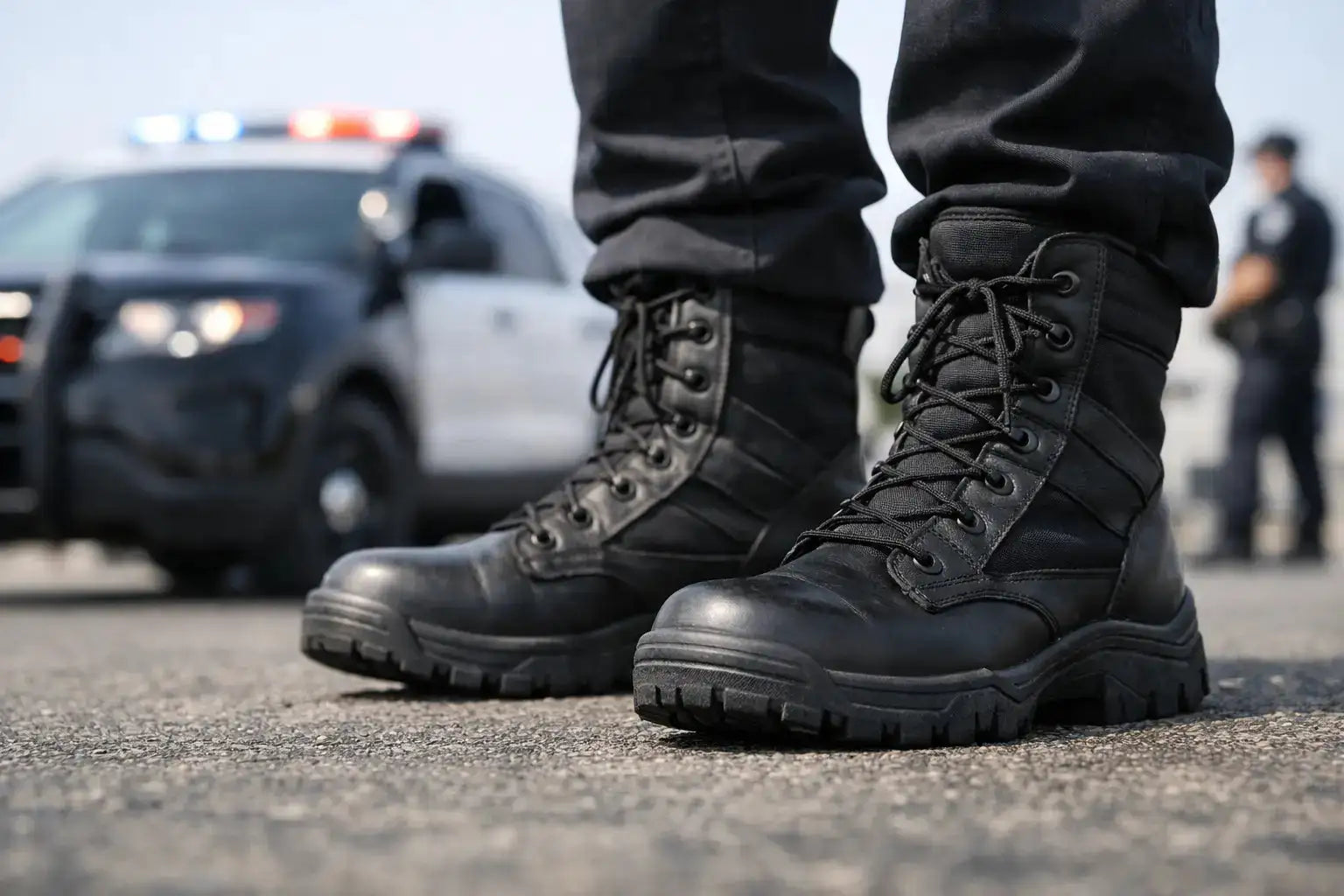
A poor pair of police patrol boots usually gives itself away before the end of the shift. Hot spots start early, ankles feel loose on stairs and kerbs, and by the time the pace picks up, the boot is working against you rather than with you. For officers, security teams and anyone spending long hours on foot, that is not a minor annoyance. It affects comfort, focus and confidence every time you move.
The right boot is not simply a black tactical boot with a smart finish. Patrol work places a very particular set of demands on footwear. You need something stable enough for hard surfaces, supportive enough for long periods standing and walking, and practical enough to cope with fast changes in pace, weather and terrain. That means choosing on performance first, not just appearance.
What makes good police patrol boots?
Good police patrol boots sit in a specific middle ground. They are not heavy mountain boots, and they are not lightweight trainers dressed up as duty footwear. A proper patrol boot needs structure, but not so much bulk that it becomes tiring over a full day or night shift.
Support is usually the first thing experienced buyers look at. A boot with decent ankle hold can make a real difference when moving quickly over uneven paving, wet steps, grass verges or broken ground. That does not mean the stiffest boot is always the best option. Too much rigidity can feel secure at first, then become uncomfortable if most of your work is on tarmac, station floors and urban foot patrol.
The sole matters just as much. Patrol footwear spends a lot of time on hard man-made surfaces, so shock absorption and underfoot comfort are not extras. They are central to whether the boot remains wearable after ten or twelve hours. Grip should be dependable in the wet without feeling clumsy indoors. A sole that performs well on mixed surfaces is usually more useful than one designed for one extreme condition only.
Then there is weight. Lightweight boots can reduce fatigue, especially for officers and security personnel covering distance on foot. The trade-off is that very light boots sometimes give away durability, support or long-term cushioning. If your work includes regular vehicle use, rapid exits, stairwells and short bursts of running, lightweight can be a strong advantage. If you are carrying more kit or spending time on rougher ground, a slightly more substantial build may be the better call.
Leather, fabric and waterproof linings
Material choice changes how a boot performs in service. Full leather boots remain a trusted option because they are durable, supportive and generally smart in appearance. They often take polish well, which still matters in many roles. A good leather boot can also mould to the foot over time and offer a reassuringly solid feel.
Fabric and leather combinations tend to reduce weight and improve breathability. For patrol use in warmer conditions, or for users who run hot, that can be a major benefit. The compromise is often in finish and long-term abrasion resistance. Mixed-material boots can still perform very well, but they may not suit every dress standard or every working environment.
Waterproof membranes are useful, but only if they match the job. For regular outdoor patrols, poor weather and long exposure to wet ground, waterproofing makes clear sense. It helps keep feet dry and keeps the boot serviceable in bad conditions. On the other hand, if most of your work is in urban environments, vehicles and buildings, a heavily waterproof boot can sometimes run warmer than you would like. That is where breathability becomes just as important as weather protection.
Fit is where good boots become the right boots
A strong specification on paper means very little if the fit is wrong. Boots for patrol work need secure heel hold, enough room in the forefoot and no pressure points across the instep. If the heel lifts noticeably during walking, blisters are rarely far behind. If the toe box is too cramped, long shifts become hard work very quickly.
Socks are part of the fit, too. Trying boots with the type of duty sock you actually wear is the sensible approach. A thin trainer sock can make a boot seem roomier than it really is, while a proper service sock gives a more honest result. Some buyers also find that aftermarket insoles improve comfort, but that only works if the boot already fits well enough to accommodate them.
Breaking in still matters, even with modern patrol boots. Some are comfortable from day one, while others need a little time to soften and settle. What you should not expect is a painful break-in period that magically disappears later. A quality boot may ease with wear, but it should not punish you from the start.
Choosing police patrol boots for the work you actually do
Not every patrol role looks the same, which is why one boot does not suit every buyer. Response work, static security, neighbourhood patrol, event security and site work all place different demands on footwear.
For predominantly urban patrol, comfort on hard surfaces is often the deciding factor. Cushioning, moderate support and a sole that grips well on wet pavements are likely to matter more than aggressive tread or heavy-duty stiffness. If your day involves getting in and out of a vehicle repeatedly, flexibility through the forefoot becomes more valuable as well.
For longer outdoor shifts, security perimeter work or mixed rural and urban movement, durability and weather resistance move higher up the list. In those cases, a higher-cut boot with stronger ankle support and a more substantial sole unit may justify the extra weight.
There is also the matter of smartness. Some boots are built to look neat and professional while still offering tactical performance. Others are more field-driven in design. Neither is automatically better. It depends on your dress requirements, your working environment and how much emphasis your role places on appearance versus all-weather utility.
Features worth paying for and features that are not
A side zip can be genuinely useful for some wearers, especially when quick on and off matters. If the zip is poor quality, though, it becomes a failure point. Traditional lacing is slower but often more secure over time. The best option depends on how often you remove the boot and how much value you place on convenience.
Toe protection is another area where the answer is not universal. Composite or protective toe caps make sense in some security and site roles, but many patrol users prefer a lighter, more flexible boot without the extra bulk. If your role does not call for protective toe footwear, adding it for the sake of it may simply reduce comfort.
Antistatic properties, fuel and oil resistance, moisture-wicking linings and speed-lace hardware can all be worthwhile. The point is not to collect features. It is to choose the ones that support your actual working conditions. Boots are field equipment. If a feature does not improve performance, durability or comfort, it is probably not essential.
Why brand reputation still counts
With duty footwear, trusted brands usually earn that position over time. Consistent sizing, proven sole units, dependable materials and boots that stand up to repeated wear all matter more than sales language. Buyers in this category tend to remember which brands delivered and which did not.
That is why specialist retailers still matter. A focused range is often more useful than a huge one if the selection has been chosen around operational use rather than fashion-led design. At John Bull Clothing, that practical approach is what makes category depth useful rather than confusing. Buyers looking for patrol-ready boots generally want proven options, not guesswork.
Looking after patrol boots properly
Even the best boot will wear out early if it is neglected. Regular cleaning keeps leather from drying out and helps you spot damage before it becomes a problem. Mud, road salt and constant wet-dry cycles all shorten the life of footwear if left unchecked.
Conditioning leather when needed helps maintain suppleness and finish, while correct drying matters more than many people realise. Boots should be dried gradually, away from direct heat. Fast drying on a radiator may seem efficient, but it can harden leather, weaken adhesives and shorten the life of the boot.
Laces and insoles are worth checking as part of routine kit maintenance. They are inexpensive compared with replacing the entire boot, and worn components can affect comfort and support long before the upper or sole is finished.
A dependable pair of police patrol boots should feel like working kit, not something you have to think about every half hour. When fit, support and build quality are right, you notice the job, not your feet - and that is usually the clearest sign you have chosen well.