
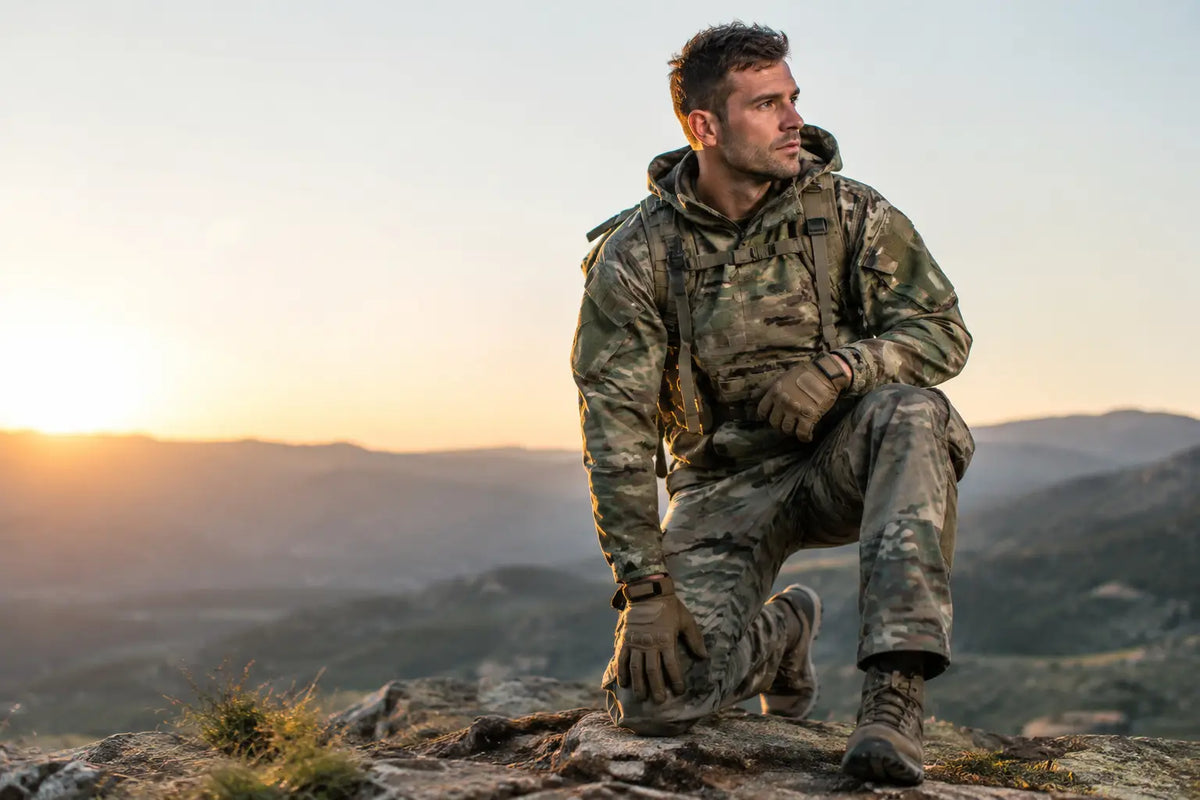
A jacket that catches on webbing, trousers that bind when kneeling, or a base layer that stays damp after a tab will soon become more than a minor irritation. Good combat clothing is working kit. It must protect from the weather, move with the wearer, tolerate hard use and still make sense with boots, belts, armour and load-carrying equipment.
For service personnel, cadets, security professionals, airsoft players and serious outdoor users, the right choice is rarely about one garment. It is about building a clothing system suited to the task, terrain and season.
What Combat Clothing Needs to Do
Combat clothing is designed around movement and repeated wear. That separates it from casual camouflage clothing, which may look the part but often lacks the cut, reinforcement and pocket layout needed for field use.
A dependable set of combat clothing should allow a full range of motion when climbing, crouching, lying prone or getting in and out of vehicles. It should stand up to abrasion at the knees, seat and elbows, where fabric takes the most punishment. It also needs practical storage that remains accessible when wearing a belt kit, plate carrier or rucksack.
Weather protection matters, but there is a trade-off. A fully waterproof outer layer can keep driving rain out, yet it may be too warm or restrictive for sustained movement. A lightweight combat shirt may breathe well under body armour, but it is not the answer for an exposed, cold position. The right garment depends on how hard you are moving and how long you will be static.
Start With the Conditions, Not the Pattern
Camouflage pattern is often the first thing buyers notice. It should not be the first decision. Begin with the environment, expected weather, task and any dress or unit requirements. A woodland cut suited to temperate ground is different from clothing selected for dry terrain, winter training or urban security work.
Colour still has a practical role. Multi-terrain patterns are useful where the ground cover changes frequently, while solid olive, black or coyote garments may suit security, range use or a particular equipment set-up. For cadets and general outdoor use, durability, comfort and sensible layering will usually matter more than matching every item exactly.
Where clothing is intended for official duties, always follow current unit dress instructions and local policy. Personal preference does not override issued scales, safety requirements or operational direction.
Combat Trousers: The Hardest-Working Layer
Combat trousers earn their keep faster than most garments. They are exposed to mud, wet grass, vehicle floors, rock, kneeling drills and constant friction from belts and holsters. Look closely at fabric weight, reinforcement and fit before choosing a pair.
A useful combat trouser has enough room through the seat and thigh to move freely, without excess fabric bunching behind the knee or catching on equipment. Articulated knees and a gusseted crotch can make a noticeable difference during long days on the ground. If knee pad compatibility matters, check whether the trouser accepts internal pads, external pads or neither. Do not assume all reinforced knees take pads.
Pocket design deserves equal attention. Large cargo pockets are useful, but only if their closures hold securely and the contents do not swing about when running. Low-profile thigh pockets are often better for maps, notebooks or small admin items. Deep front pockets are convenient, although they can be difficult to reach beneath a waist belt.
Fabric is a balance between toughness and drying time. Polycotton ripstop is a proven choice for general field wear because it handles abrasion well and dries more quickly than heavy cotton. Stretch panels can improve comfort, particularly around the knees and seat, but they may wear differently from the main fabric. For regular hard use, inspect stitching and panel construction rather than relying on fabric description alone.
Shirts and Jackets Need to Work With Your Load Carriage
The best combat shirt is not necessarily the warmest or the heaviest. When worn beneath body armour or a chest rig, a lighter, moisture-managing torso can reduce bulk and help control heat. Durable sleeves and shoulders protect the areas exposed beyond the carrier, while sleeve pockets keep small items close to hand.
For cooler conditions, build outward with insulation and a protective shell rather than relying on a thick combat shirt. A fleece or insulated jacket retains warmth during rest periods, while a windproof or waterproof layer deals with exposure. This approach gives more control than one bulky garment and lets you regulate temperature before sweat becomes a problem.
A field jacket should be judged with your usual kit on. Check that the collar does not interfere with helmet straps or armour, that shoulder seams sit comfortably under a rucksack, and that pockets can still be reached. A jacket that feels excellent on a shop floor can become awkward once a day sack and webbing are added.
Build a Layering System That You Will Actually Use
Layering is not about carrying every possible garment. It is about having the right layers available and using them before you get cold or soaked.
Start with a wicking base layer. Avoid ordinary cotton next to the skin for demanding activity in cold or wet conditions, as it can retain moisture and leave you chilled when you stop. A breathable synthetic or merino base layer is generally the better option, chosen for the temperature and how active you expect to be.
Your combat shirt and trousers form the working layer. Over this, use insulation when static conditions demand it, then add a windproof or waterproof shell as the weather dictates. In persistent rain, a waterproof layer needs more than a good membrane: the hood, cuffs, zip protection and ventilation all affect how it performs in use.
Keep spare dry layers protected inside a waterproof pack liner or dry bag. A quality jacket is of limited use if the insulation packed in your bergen is already wet.
Fit Is a Safety and Comfort Issue
Combat clothing should fit well enough to move freely without creating snag hazards or pressure points. Trousers that are too long can drag under boot heels and collect water. Sleeves that are too tight restrict reach, while sleeves that are too loose can interfere with gloves, watches and weapon handling.
Try clothing in the positions you will use. Squat fully, kneel, step up high, reach overhead and lie prone if possible. Wear the boots and belt that you normally use. This is particularly important with waterproof trousers, over-trousers and insulated jackets, where sizing must allow room for layers underneath.
Do not size up automatically. Excess fabric can make a garment colder in wind, noisier in undergrowth and more awkward under load carriage. The aim is usable room, not bagginess.
Details That Separate Field Kit From Fancy Dress
Small construction choices often decide whether clothing remains dependable after repeated use. Check bar-tack reinforcement at pocket corners, double stitching on stress areas and the quality of zips, press studs and hook-and-loop fasteners. These are the parts that tend to fail first.
Pay attention to four practical details:
- Reinforced knees, seat and elbows for high-wear contact points.
- Adjustable cuffs and ankle closures to manage wind, mud and boot fit.
- Drainage or mesh in pockets where water can collect.
- Quiet, secure pocket closures that will not open under movement.
Care Extends Service Life
Mud and sweat shorten the useful life of any garment when left to dry in. Brush off loose dirt, close zips and hook-and-loop tabs before washing, and follow the care label rather than using the hottest wash available. Fabric softener can reduce the effectiveness of moisture-wicking materials and waterproof treatments, so it is usually best avoided.
Waterproof shells need periodic reproofing once water stops beading on the face fabric. This does not repair a damaged membrane, but it helps the outer fabric shed water and breathe as intended. Repair small tears promptly with suitable patches or professional repairs. A minor snag can become a split seam halfway through an exercise if ignored.
Dry kit thoroughly before storing it, particularly boots, gloves and insulated layers. Damp clothing packed away in a kit bag will soon smell, degrade and leave you with poor kit when it is needed.
Choose for the Job Ahead
There is no single best set of combat clothing. A lightweight shirt and durable ripstop trousers may be right for a warm training day; an insulating layer and proper waterproof shell may be essential for a wet overnight exercise. Match the clothing to the task, then make sure every layer works with the kit you already carry.
The most dependable choice is usually not the most complicated. Well-fitted, hard-wearing garments that you can move in, maintain easily and trust in poor weather will earn their place in your kit bag long after the novelty of a new camouflage pattern has worn off.