
A uniform left damp after an exercise, compressed beneath kit bags or hung in a cold garage can deteriorate far faster than most people expect. Knowing how to store army uniforms properly protects the fit, finish and serviceability of clothing you may need for duty, parade, cadet activities or outdoor use. The aim is simple: clean, dry, supported and easy to inspect.
Different garments need different treatment. Field clothing is built to work hard, but that does not make it immune to mildew, fading, damaged fastenings or permanent creasing. Ceremonial uniform, regimental items and badges require even more care, particularly where wool, brass, embroidery or polished components are involved.
Start with clean, fully dry kit
Never put a uniform into long-term storage straight after a weekend exercise, range day or field deployment. Sweat, body oils, mud and salt can stay in the fibres even when the garment looks clean. Over time, they can cause odour, staining and fabric breakdown.
Follow the care label for each item. Combat shirts, PCS trousers, smocks and fleece layers often have different washing requirements, while waterproof or insulated garments may need specialist cleaning products to preserve their performance. Close zips and hook-and-loop fastenings before washing so they do not catch other fabric.
Dry every item completely before packing it away. Pay particular attention to pocket linings, belt loops, cuffs, collars and the inside of boots. Air drying indoors is usually preferable to leaving kit in direct sunlight, which can fade camouflage patterns and weaken some synthetic fabrics. If you have washed a waterproof outer layer, ensure it is thoroughly dry before folding it, as trapped moisture can encourage mould and affect coatings.
Before storage, take two minutes to check for repairs. Replace missing buttons, remove loose threads, empty all pockets and deal with small tears before they grow. A clean uniform with a failed zip is still not ready kit.
Choose a dry, stable storage area
The right storage space matters as much as the container. A spare-room wardrobe, internal cupboard or dry loft space is generally suitable if temperatures are reasonably stable. Avoid damp sheds, uninsulated garages, cellars and containers that suffer condensation. These locations may seem practical for surplus kit, but they are hard on fabric, leather and metal fittings.
Humidity is the main enemy. It produces the familiar musty smell, encourages mildew and can tarnish badges, belt buckles and ceremonial fittings. If your storage area is prone to damp, address that first. A dehumidifier or moisture absorber can help in enclosed spaces, but it is not a substitute for a dry room and regular checks.
Keep uniforms away from direct sunlight, radiators and exposed pipes. Heat can dry out leather, damage elastic and degrade waterproof finishes. Sunlight can bleach fabric unevenly, particularly on garments stored near a window.
How to store army uniforms by garment type
For everyday combat clothing, folding is usually the most space-efficient option. Fold trousers along their natural seams, fasten buttons and zips, and avoid forcing too many garments into one drawer or box. Heavy compression leaves deep creases and makes it harder to find what you need at short notice.
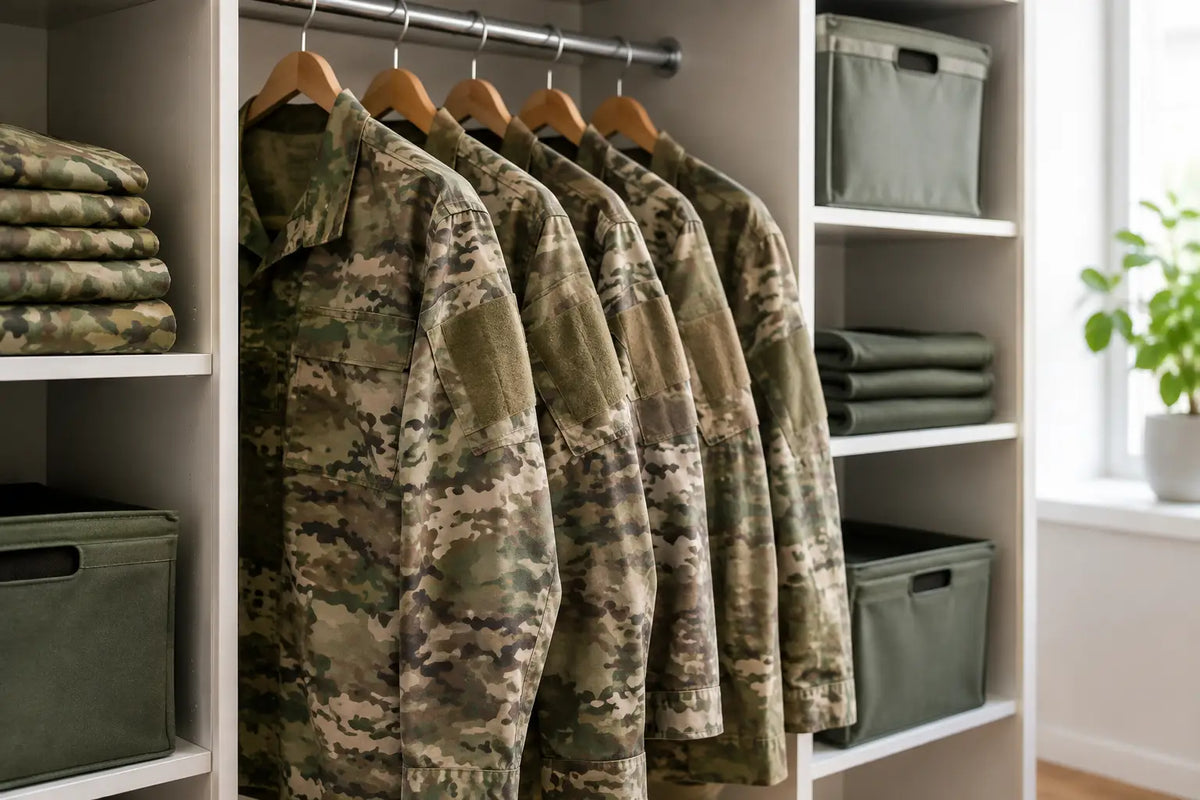
Hang jackets, shirts, smocks and service dress on sturdy, wide hangers. Thin wire hangers can distort shoulders over time, especially with heavier wool garments or jackets carrying insignia. Leave enough space between items for air to circulate. If the uniform is for parade or ceremonial use, a breathable garment cover offers protection from dust without locking in moisture.
Do not store field uniforms with muddy boots, wet webbing or used sleeping systems. Separate clean clothing from equipment that may carry moisture, soil or fuel odours. That simple division also makes preparing for the next exercise much quicker.
Combat uniforms and field layers
Store clean combat trousers, shirts and lightweight layers folded in labelled drawers, fabric storage bags or clean lidded boxes. Group items by type and season - for example, temperate layers together and cold-weather insulation separately. This avoids repeatedly disturbing your whole clothing store to find one item.
Avoid vacuum bags for items you expect to use regularly. They save space, but hard compression can crease fabric, flatten insulation and make a quick kit check more awkward. They are better reserved for clean spare clothing being stored for a long period, not for a working rotation.
Ceremonial uniform and regimental dress
Dress uniforms deserve hanging storage wherever possible. Brush off surface dust with a soft clothes brush before covering them, and make sure medals, metal insignia and lanyards are removed or secured as appropriate. Sharp pins and edges can pull delicate fabric while the garment is being moved.
Store medals, cap badges, stable belts and other detachable items separately in padded or compartmented boxes. Keep polished metal dry and avoid wrapping it directly in newspaper or unsuitable plastic, which can transfer marks or trap moisture. A uniform prepared for an annual parade should still be inspected several weeks beforehand, not the night before.
Boots, berets and headwear
Boots should be cleaned, dried and stored separately from uniforms. Remove mud from soles and stitching, then allow leather boots to dry naturally away from direct heat. Once dry, use suitable leather care where required and keep them upright or supported so the uppers do not collapse. Never seal boots into an airtight plastic bag while there is any chance of residual moisture inside.
Berets should be kept clean, dry and protected from crushing. A shallow box or dedicated drawer is better than stuffing one into the bottom of a kit bag. For peaked caps and other shaped headwear, use a box large enough to prevent pressure on the crown, badge or visor.
Protect against pests without damaging fabric
Moths and other insects are more likely to target natural fibres, particularly wool garments that have been worn and stored without cleaning. Regular washing and inspection are your first line of defence. Vacuum wardrobes and storage areas, including corners and skirting boards, before placing clean kit inside.
Use breathable storage where practical rather than sealing everything in plastic. For long-term protection, a clean lidded box can be useful, provided the garment is completely dry and checked periodically. If using a pest deterrent, keep it away from direct contact with fabric and follow the product instructions. Strong scents are not a replacement for good housekeeping.
Keep a serviceable rotation
A well-organised kit store is not just about preserving clothing. It saves time before an exercise, inspection or parade. Keep frequently used PCS items accessible and reserve less-used ceremonial clothing for protected hanging space. Label boxes clearly, especially where more than one family member has cadet, service or outdoor kit stored in the same home.
A practical inspection every few months is enough for most stored uniforms. Look for damp, insect activity, dust, fading, loose badges and damaged fastenings. Rotate folded garments occasionally to prevent hard creases becoming set, and air items briefly if they have been stored through a humid period.
John Bull Clothing customers often build their kit over many years, combining issued-style clothing, surplus items and specialist field layers. Treating each item according to its fabric and use will keep that kit dependable for longer.
Store uniforms as you would prepare them for use: clean, dry, complete and ready to hand. That approach protects the clothing, preserves regimental detail and means your kit is not another job waiting for you when the next requirement comes round.