
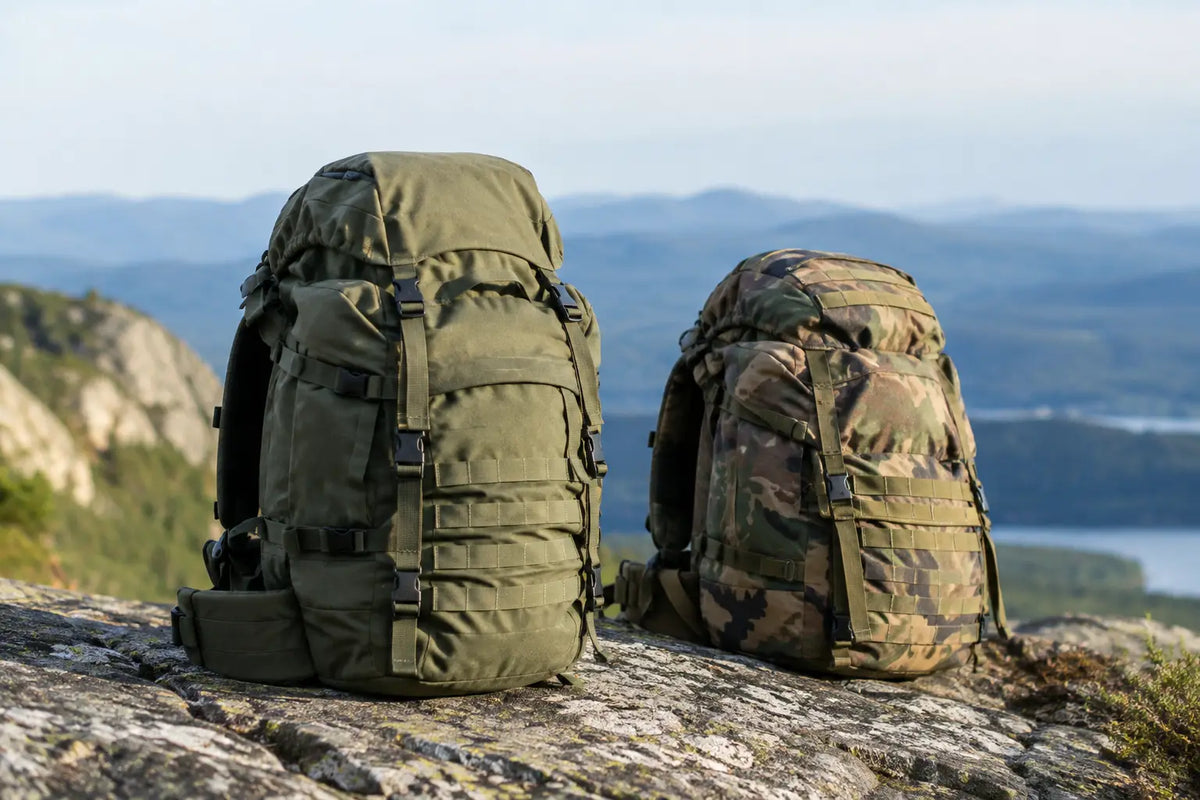
A pack that feels acceptable on a shop floor can become a liability after several kilometres, wet ground and a full load. Choosing a military rucksack or bergen is not simply a question of litres. The right choice depends on the duration of the task, the weight being carried, the terrain, and how well the pack works with your clothing, webbing and other field kit.
For service personnel, cadets, security users and serious outdoor customers, load carriage should be approached as part of the wider equipment system. A well-fitted pack keeps essential kit accessible, transfers weight sensibly and remains dependable when conditions turn poor. An oversized, badly adjusted or poorly organised pack does the opposite.
Military Rucksack or Bergen - Know the Difference
The terms are often used interchangeably, particularly in the UK, but they can suggest different pack sizes and uses. A military rucksack is the broader term. It may describe a compact day pack, a patrol pack or a larger framed field pack. A bergen traditionally refers to a large-capacity military load carrier, usually intended for extended exercises, deployments and multi-day expeditions.
In practical terms, a 25-litre patrol pack is a rucksack, but few people would call it a bergen. A 90-litre pack with a supportive harness, substantial waist belt and external attachment points is much closer to the traditional bergen role. There is overlap, though, and product names are not a substitute for checking capacity, dimensions and carrying system.
The decision should begin with the job. A compact pack is easier to move with in vehicles, confined spaces and built-up areas. A bergen carries more sustainment equipment, but its size encourages overpacking and becomes awkward when a lower profile is required. More capacity is useful only when it is genuinely needed.
Choose Capacity Around the Task
For a day on the ranges, a short patrol, dog walking or general outdoor use, a pack around 20 to 35 litres usually provides sufficient room for waterproofs, water, food, first-aid kit, navigation equipment and a spare layer. This size also works well for cadets who need practical capacity without an unnecessarily heavy setup.
A 40 to 60-litre rucksack suits overnight trips, longer hill days and field weekends where a sleeping bag, shelter components and cooking kit need to be carried. It can be a sensible middle ground for users who want one pack for several roles, provided the load stays disciplined.
For multi-day field use, cold-weather kit and self-sufficient expeditions, a 70 to 100-litre bergen is often the sensible option. It allows room for a sleeping system, insulated clothing, rations, stove, water and spare equipment. However, the volume should not become permission to carry duplicate or non-essential items. A correctly packed 70-litre bergen is generally preferable to a half-organised 100-litre pack carrying dead weight.
Season matters as much as duration. Summer kit packs down smaller, while wet and cold conditions demand more insulation, spare socks, weather protection and potentially a larger sleeping system. Consider what must remain dry, not just what must fit.
Fit Comes Before Features
A pack’s harness is the part you notice after the first hour. Look for adjustable shoulder straps, a stable waist belt, a chest strap and, on larger models, a back-length system that matches your torso. The waist belt should sit over the top of the hips so that much of the load is supported by the pelvis rather than hanging from the shoulders.
Shoulder straps need to sit close without restricting arm movement or digging into the neck. Once the waist belt is tightened, use the shoulder straps to steady the pack, not to lift its full weight. Load lifter straps, where fitted, can draw the upper part of a bergen closer to the body and reduce the feeling of being pulled backwards.
Fit should be checked with weight inside the pack. An empty rucksack can feel comfortable regardless of its design. Add the sort of load you actually expect to carry, walk around, climb stairs and make sure the pack does not sway, pinch or ride up. If you are buying for a growing cadet, adjustability is particularly valuable, but a pack that is far too large will still carry poorly.
Compatibility also matters. Try to account for body armour, plate carriers, webbing or thick cold-weather layers where relevant. Some packs work neatly over a simple belt kit; others can clash with pouches, shoulder straps or hydration routing. There is no universal answer, so match the pack to the equipment worn most often.
Fabric, Frame and Field Durability
Military-style packs are commonly made from hard-wearing polyester, nylon or Cordura-type fabrics. Denier ratings can be useful as a broad guide to abrasion resistance, but fabric weight alone does not determine quality. Stitching at strap anchors, reinforced base panels, dependable buckles and well-protected zips matter just as much.
A padded internal frame sheet, aluminium stays or a shaped back panel can improve load transfer and keep the pack stable. The trade-off is additional weight and less flexibility. A soft day pack is easy to stow and suitable for light loads. A larger bergen benefits from structure when carrying heavier equipment over distance.
Water-resistant fabric is useful, but do not assume it makes contents waterproof. Prolonged rain will find seams, zips and openings. Use dry bags or liners for sleeping kit, spare clothing, electronics and documents. A pack cover can help in persistent rain, but it may snag in thick vegetation and is not a replacement for waterproof internal organisation.
Access and Organisation in the Field
A top-loading bergen is simple, strong and efficient for carrying bulky kit. The compromise is access: the item you packed at the bottom will stay at the bottom until the load is unpacked. Packs with a lower sleeping-bag compartment, side access or a front zip can be more convenient, although every additional zip and panel adds potential weight and complexity.
External pockets are useful for items needed quickly, such as a waterproof jacket, water treatment, gloves, headtorch or first-aid supplies. Keep heavier equipment close to the back and avoid filling outer pockets with dense items that pull the load away from your centre of gravity.
MOLLE and other attachment webbing allow pouches to be fitted where needed, but they are best used with restraint. A pack covered in loosely fitted pouches is wider, harder to move through woodland and more likely to catch on doors, branches and vehicle interiors. Add modular capacity only for a clear purpose.
Hydration compatibility is worthwhile for long walks, patrols and warm-weather activity. Check that the pack has a protected routing point for the tube and that the bladder can be refilled without dismantling the entire load. In cold conditions, remember that exposed hydration tubes can freeze.
Pack Weight Where It Carries Best
Organisation affects comfort as much as the harness. Place the heaviest items high and close to the back, ideally between shoulder-blade height and the middle of the pack. This keeps the load close to your natural centre of balance. Lighter, bulky items such as a sleeping bag can sit at the bottom, while regularly used items should be placed near the top or in accessible pockets.
Keep wet kit separated from dry layers and sleeping equipment. Use colour-coded dry bags or simple labelled stuff sacks if several people share a camp or if kit needs to be found in poor light. Loose items create noise, waste space and make it harder to account for equipment.
Before setting off, compress the load and secure all straps. Dangling webbing catches on obstacles and can work loose. A packed bergen should feel like one stable unit, not a stack of separate items tied together.
Select for Your Actual Use
An operational user carrying equipment over distance may prioritise a proven suspension system, muted colours, durable fabric and enough capacity for a full field load. A police or security professional may favour a lower-profile rucksack with organised access to medical, communications and personal equipment. For airsoft, a military-pattern pack can be useful, but comfort and sensible capacity remain more important than copying a particular loadout.
Outdoor users should consider whether a military bergen’s tough construction outweighs its usual extra weight. For some hillwalking and expedition use, it does. For fast-and-light travel, a lighter civilian pack may be the better tool. Cadets often benefit from straightforward, adjustable packs that are durable without being unnecessarily large or complicated.
The most dependable choice is the pack you can fit properly, load logically and carry without fighting it. Start with the equipment required for your next real task, allow space for changing conditions, then choose the smallest military rucksack or bergen that will do the job well.