
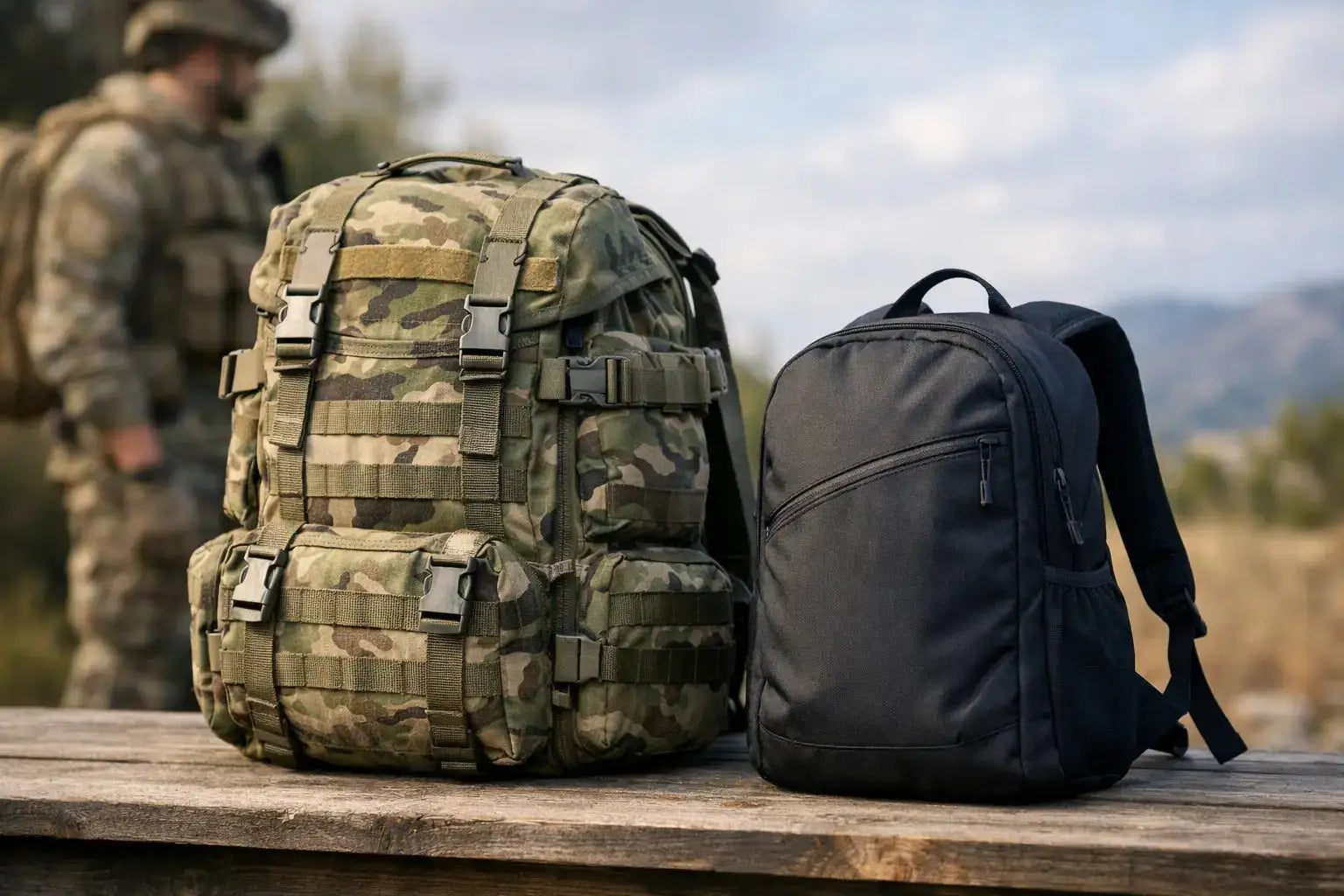
A pack that works for a six-mile tab with spare layers, water and admin kit can feel completely wrong for a short range day, daily commuting or a quick hill session. That is where the military rucksack vs daypack question matters. The right choice is less about style and more about load, duration, comfort under weight and how you actually move with your kit.
For military users, cadets, security professionals and serious outdoor buyers, the difference is not cosmetic. It affects how efficiently you carry equipment, how quickly you can access it, and whether the bag still feels serviceable after hours on your back. A poor choice usually shows up in sore shoulders, wasted space, awkward packing and a bag that never quite suits the task.
Military rucksack vs daypack: the core difference
At a basic level, a military rucksack is built for heavier loads, longer duration and more demanding conditions. A daypack is designed for lighter loads and shorter periods of use. That sounds straightforward, but the practical difference goes further than litres alone.
A military rucksack will usually have a stronger frame or more structured back system, a wider hip belt, firmer shoulder straps and tougher fabric throughout. It is made to carry weight properly, not just contain it. Many also include MOLLE attachment points, compression straps, hydration compatibility and compartments suited to field organisation.
A daypack is normally simpler and lighter. It may still be durable, especially if it has a tactical or military-inspired design, but it is intended for essentials rather than sustained load carriage. Think waterproofs, food, water, small admin items and perhaps a first aid pouch, not several days of field kit.
If you regularly carry more than the basics, or expect your pack to cope with rough ground, repeated use and denser loads, a rucksack is usually the safer choice. If your use is genuinely short-duration and light-load, a daypack often makes more sense.
Capacity is only part of the picture
Most buyers start with litres, and that is sensible, but volume can be misleading if you ignore weight and pack design.
A daypack often sits somewhere around 15 to 30 litres. That is enough for a day’s essentials, gym kit, work items, range gear or a light outdoor load. Some tactical daypacks push a bit higher, but once you start filling them with water, spare clothing, cooking gear or bulkier equipment, their limits show quickly.
A military rucksack usually starts where many daypacks finish. Common sizes run from around 35 litres upward, with larger models designed for extended field use, patrol tasks, cadet exercises or overnight movement. More importantly, they are built to keep that extra load stable.
This is where buyers can make the wrong call. A large daypack may offer enough internal space, but if the harness is basic and the belt is little more than a strap, it will not carry like a proper rucksack. Likewise, an oversized rucksack used for minor daily tasks can be excessive, awkward in vehicles and frustrating to pack efficiently.
Load carriage and comfort under weight
If there is one point that settles the military rucksack vs daypack decision for many users, it is comfort under load.
A military rucksack is designed to transfer weight more effectively across the back and hips. That matters when carrying ammunition pouches, wet weather layers, rations, boots, sleeping kit or heavier technical equipment. A decent rucksack helps keep the load close, reduces sway and gives better control over distance.
A daypack is usually more comfortable when lightly loaded because it is less bulky and less structured. For urban use, short walks, travel, airsoft skirmish days or carrying a laptop and lunch, that lighter format is often preferable. You are not fighting excess padding or an overbuilt frame for a task that does not need it.
The trade-off is simple. Once the weight climbs, daypacks can become fatiguing quickly. Shoulder pressure increases, the bag pulls away from the back and the lack of support becomes obvious. For occasional use that may be acceptable. For repeated field use, it is not ideal.
Organisation, access and field practicality
Pack choice is not just about carrying weight. It is also about how you organise and retrieve kit.
Military rucksacks often favour larger main compartments, modular attachment options and compression systems that let you secure changing loads. That makes sense when packing for tasks where contents vary - extra insulation, poncho, brew kit, gloves, optics, wash kit or mission-specific gear. They are generally better for layered packing and sustained use.
Daypacks tend to be quicker and simpler. They often have easier-access external pockets, admin storage and layouts that suit everyday carry. If you need to reach for a notebook, torch, charger, gloves or snacks without unpacking half the bag, a well-designed daypack can be more efficient.
So the question becomes: are you building a load for endurance, or for convenience? In the field, endurance usually wins. For everyday movement, convenience often does.
When a military rucksack is the right choice
A military rucksack is the better option when you expect your pack to do real carrying work. That includes overnight exercises, longer tabs, bushcraft weekends, field training, travel with heavier equipment or any task where conditions are rough and the load is substantial.
It also suits buyers who value durability over minimal weight. Heavier fabrics, reinforced stitching and more substantial hardware add grams, but they also add service life. For military personnel, ex-forces buyers, cadet instructors and those who use gear hard, that is usually a fair trade.
A rucksack is also the better choice if your load changes from one outing to the next. Compression straps and larger capacity give you flexibility. You can cinch down a part-filled pack or expand it when more kit is needed. That is harder to achieve with a smaller daypack once you hit its ceiling.
When a daypack is the better option
A daypack is the right tool for shorter jobs and lighter loads. If you are heading out for a day walk, commuting, visiting the range, carrying compact training kit or need a practical grab-and-go bag, it avoids unnecessary bulk.
For airsoft players, dog walkers, casual hikers and those who want military styling without full field capacity, a daypack is often more usable. It fits in the car more easily, stores neatly, and does not encourage overpacking. That last point matters. Many people carry more than they need simply because the bag allows it.
A good daypack also works well as a secondary bag. Even if you own a larger rucksack, there is a strong case for keeping a smaller pack for low-load days, travel legs and general daily use.
The grey area: tactical daypacks and small patrol packs
Not every pack sits neatly in one camp. Some tactical daypacks blur the line, especially those in the 25 to 35 litre bracket with decent shoulder straps, sternum straps, hydration sleeves and external webbing.
These can work well for patrol-style day use, range sessions, bug-out setups or minimalist overnighters. They offer more capability than a basic civilian daypack without the full size and weight of a larger military rucksack.
That said, they are still compromise options. If you repeatedly push them into heavy-load territory, they will never feel as stable or supportive as a true rucksack. If you only ever carry a jacket, lunch and a bottle, they may still be more bag than you need.
For many buyers, this middle category is worth considering, but only if you are honest about your actual carry weight.
How to choose the right pack for your use
Start with the load, not the look. Ask what you carry on a normal day, not the heaviest load you might carry once or twice a year. Water, spare layers, boots, insulated kit and cooking gear add up quickly. So do radios, tools and training equipment.
Then consider duration. Two hours and twelve hours are different problems. A bag that is perfectly comfortable for a quick outing may become poor value by the end of a full day.
After that, think about environment. Urban, vehicle-based and travel use usually favour a daypack. Fieldcraft, long walks, cadet activity and rough terrain tend to favour a military rucksack. Finally, look at fit. Even the right category fails if the harness does not suit your frame or the back length is wrong.
For buyers who want dependable, military-relevant kit rather than general outdoor luggage, it pays to choose on function first. John Bull Clothing serves exactly that kind of buyer, where authenticity and usefulness matter more than trend-led features.
A good pack should disappear into the job. If you notice it constantly, it is probably the wrong one. Choose the bag that matches your real load, your real distance and your real routine, and it will earn its place every time you shoulder it.