
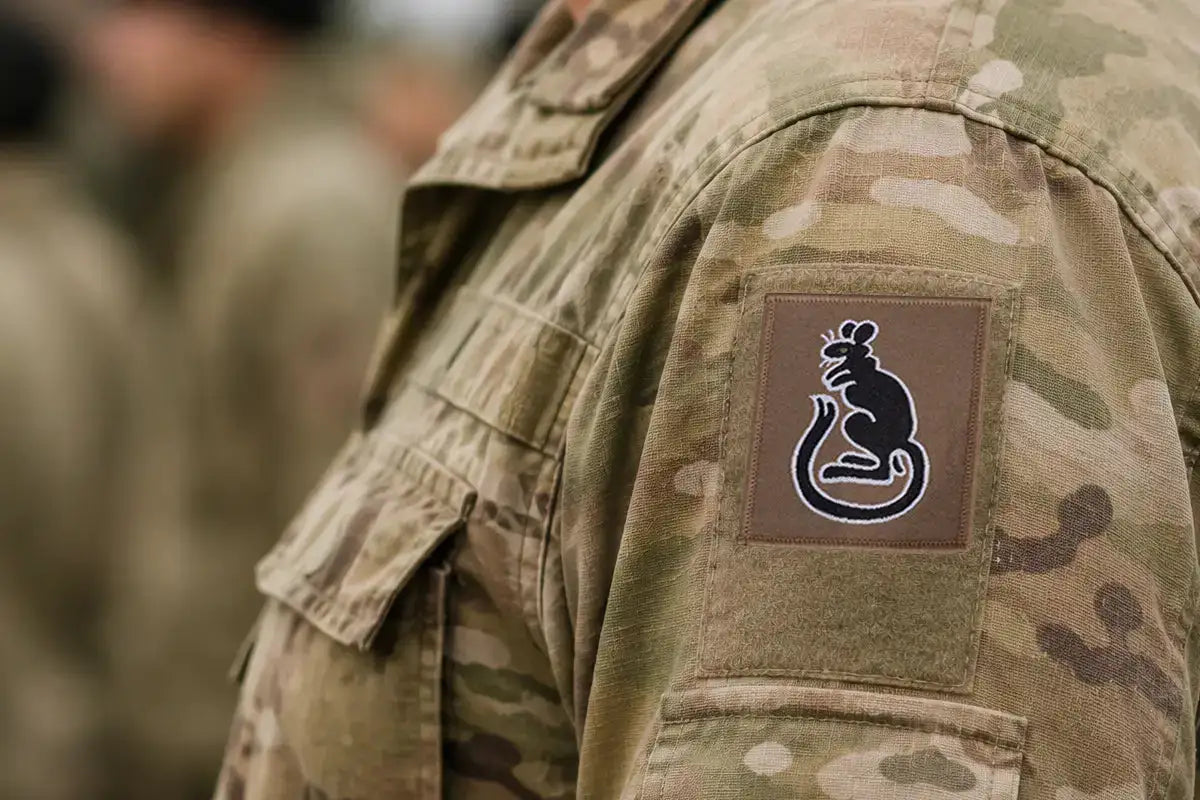
A small patch can say a great deal. In British military dress, trade recognition flashes (TRF) are one of those details that experienced eyes spot straight away. They are not decoration for the sake of it. They help identify a soldier's corps, unit grouping, branch or specialist function quickly and cleanly, which is exactly why they still matter to serving personnel, veterans, cadets, collectors and anyone buying regimental clothing or insignia.
If you are sourcing kit, replacing worn insignia, or trying to make sense of what belongs on which uniform, it helps to understand what a TRF actually does and where the limits are. Not every coloured patch is a TRF, and not every formation sign or tactical marking should be treated as one.
What are trade recognition flashes (TRF)?
Trade recognition flashes (TRF) are cloth insignia worn on uniform to indicate an affiliation - usually a corps, regiment, branch, trade grouping or recognised military formation. In British service use, they are typically compact, shaped patches with distinctive colours and patterns. Their job is straightforward: visual identification.
That sounds simple, but the detail matters. A TRF is not the same as rank, and it is not a medal ribbon. It does not tell you seniority. Instead, it gives context. It helps place the wearer within the wider structure of the Army and, in some cases, signals role or specialism.
For anyone outside the military, the easiest comparison is that a TRF works as a quick identifier. It tells informed observers where someone fits, without needing a word said. In practical military settings, that clarity has obvious value. In ceremonial, veteran and cadet settings, it also supports accuracy and standards.
Why TRFs still matter
Uniform detail is rarely accidental. TRFs matter because military identity is built from recognised components - headdress, cap badge, rank slide, stable belt, tactical patches and flashes all working together. Remove or mix them carelessly and the result looks wrong straight away.
For serving personnel, correct insignia supports discipline, consistency and proper representation of unit or corps. For cadets, it is often part of learning standards from the ground up. For veterans, a TRF can carry genuine regimental meaning. For collectors and gift buyers, authenticity is the difference between a credible item and a poor imitation.
There is also a practical side. In large organisations, especially those structured around specialisms, visual markers help with recognition at a glance. That does not replace formal identification, but it remains useful. The military has kept such systems for a reason.
Where a trade recognition flash is worn
Placement depends on the order of dress, the unit, and current regulations. That is where many mistakes happen. People assume a TRF always goes in one position on every garment, but uniform policy is not that loose.
On many forms of British Army combat clothing, flashes are commonly worn on the upper arm or shoulder area, often in conjunction with formation signs, unit identifiers or other authorised insignia. On some garments, hook-and-loop fields make attachment straightforward. On others, the flash may be sewn in place or only authorised for particular forms of dress.
The important point is that placement is governed, not improvised. If you are replacing a flash for active or formal use, check current dress regulations or unit instruction rather than relying on guesswork or old photographs. What was correct on one jacket, in one era, may not be correct now.
TRF, formation signs and tactical patches - not the same thing
This is where buyers often need a clear steer. A TRF can sit alongside other insignia, but it should not be confused with them.
A formation sign usually identifies a larger military formation such as a division or brigade. A TRF is more commonly tied to corps, regiment, branch or specific organisational identity. Tactical or morale patches are something else again, especially in commercial or airsoft settings where unofficial hook-backed badges are common.
That distinction matters if you are building a correct uniform, buying for a cadet, or choosing a regimental gift. Plenty of patches look military. Fewer are actually appropriate for a specific dress standard.
Understanding colours, shapes and meanings
The design of a TRF is not random. Colour combinations and shapes are chosen to create a recognisable identifier linked to a particular corps or grouping. To those familiar with British military insignia, those design cues can be immediately recognisable.
That said, interpretation depends on context. Similar colour schemes can appear across different eras or organisations. Some flashes change over time following mergers, restructuring or revised dress policy. Others remain consistent for years and become strongly associated with a regiment or corps identity.
This is why buying by appearance alone can be risky. A patch that looks right in a thumbnail image may turn out to be the wrong size, wrong backing, wrong shape, or tied to a different period of service. If the aim is authenticity, product detail matters more than a rough visual match.
Buying TRFs - what to check before you order
If you are looking for a trade recognition flash, the first question is simple: what is it for? The right answer for a serving soldier replacing issued insignia is not always the same as the right answer for a veteran display piece or a collector's board.
Start with the exact corps, regiment or branch you need. Then check the intended use - combat clothing, barrack dress, cadet wear, collecting, reenactment or presentation. After that, look at construction. Size, stitching quality, backing type and colour accuracy all make a difference.
A cheap patch can be enough for costume use. It is not enough for proper uniform standards. Poor edging, weak hook backing or inaccurate colours stand out quickly, especially next to genuine military clothing and equipment. Buyers who already care about the difference between serviceable boots and fashion boots will understand the point straight away - details count.
Trade recognition flashes (TRF) for cadets, veterans and collectors
Demand for TRFs does not come from one audience alone. Cadet units often need clear, regulation-appropriate insignia to keep standards tidy and consistent. Veterans may want replacement flashes for blazers, shadow boxes, display boards or commemorative frames. Collectors tend to focus on period correctness, issue style and provenance.
Each use case has its own standard. A collector may value age and originality over perfect condition. A cadet instructor may care more about consistency across a detachment. A veteran buying a framed item may simply want a respectful and accurate representation of service.
That is why specialist military retailers remain important in this space. General patch sellers often group everything together, but military buyers usually need sharper distinction than that. John Bull Clothing sits in that specialist category - the sort of place customers use when they want military-relevant kit and insignia rather than generic surplus styling.
Common mistakes when choosing a TRF
The most common error is assuming any patch with the right colours will do. It will not. Shape, dimensions and era all matter. The second is mixing unofficial items with authorised insignia on an otherwise correct uniform. That tends to look untidy at best and inaccurate at worst.
Another issue is copying images from online forums or old service photographs without checking whether current regulations still match. British military dress evolves. Units merge, titles change and insignia guidance gets updated. A flash from one decade may be historically valid but wrong for present-day wear.
Finally, there is the simple problem of buying low-grade stock. Inexpensive reproductions have their place, but if the item is going onto a service-style jacket, a cadet uniform or a formal display, poor manufacture shows immediately.
Why authenticity matters more than people think
To someone unfamiliar with military dress, a flash may seem like a small accessory. To the people who wear the uniform, served under the badge, or know the difference between corps and regiment, it is not small at all. It represents belonging, function and standard.
That is why correct insignia deserves the same attention as boots, webbing or headdress. You would not treat a parade belt as interchangeable with any random strap, and the same logic applies here. Accuracy shows respect for the uniform and for the organisation behind it.
There is also a practical buying point. Authentic, well-made insignia lasts better, sits better on the garment and looks right alongside proper kit. If the rest of your clothing and equipment is selected for dependable performance, your insignia should meet the same standard.
When you are choosing a trade recognition flash, treat it as part of the uniform system, not an afterthought. Get the right item for the right purpose, and the rest of the kit makes far more sense.