
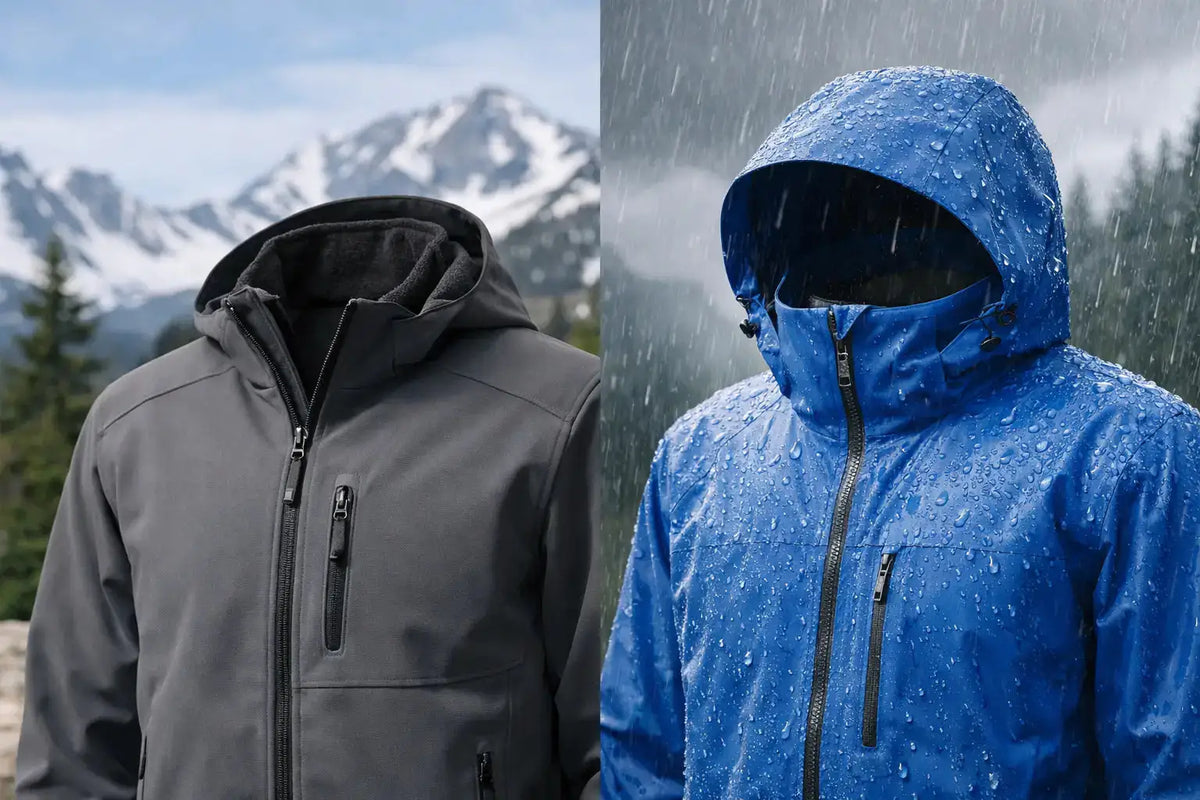
You notice the difference quickest when the weather turns ugly halfway through a job. A jacket that feels ideal on the move can become clammy under load, while a fully waterproof layer that keeps rain out can feel stifling during hard graft. That is the real question behind soft shell vs waterproof jacket - not which is better in general, but which one suits the ground, the task and the pace.
For military users, cadets, police, security staff and serious outdoor kit buyers, this is not a style decision. It is a performance choice. The wrong outer layer can leave you wet from rain, wet from sweat, or carrying extra bulk you did not need in the first place.
Soft shell vs waterproof jacket: the core difference
A soft shell jacket is built for movement, breathability and comfort in mixed conditions. It usually has a woven face fabric with some stretch, a degree of wind resistance and light weather protection. Some soft shells shed brief showers well enough, but they are not designed to replace a true hardshell in sustained rain.
A waterproof jacket is designed first and foremost to keep external water out. That usually means a membrane or coated fabric, taped seams and a construction aimed at full rain protection. It is the more protective option when the forecast is poor or when exposure is prolonged.
In simple terms, soft shell is the better active layer in cool, dry or changeable weather. Waterproof is the defensive layer for rain, wind and prolonged exposure. The problem is that field conditions are rarely simple, which is why the details matter.
Where a soft shell earns its place
A good soft shell is often the jacket people end up wearing most. That is because it handles the conditions that are neither fully dry nor fully wet - cold starts, wind on open ground, light drizzle, and periods of sustained movement where heat build-up becomes an issue.
For patrolling, range work, dog handling, outdoor instruction, airsoft, stalking and general field use, a soft shell can be the more practical option. It is quieter than many waterproof shells, usually more comfortable under webbing or a pack, and less likely to rustle every time you move. That matters if you are spending long hours in it.
Breathability is the main advantage. Waterproof fabrics can only shift so much moisture, especially when you are working hard. A soft shell usually vents better, which means less condensation inside the jacket and less need to keep stopping to adjust layers. If your main problem is overheating rather than getting soaked by heavy rain, soft shell makes sense.
They also tend to offer better freedom of movement. Stretch panels, articulated sleeves and a less rigid handle make them easier to wear when climbing, kneeling, driving or working with equipment. For users who need a jacket that stays on for most of the day, that comfort is not a small point.
The trade-off is straightforward. Once the rain sets in properly, most soft shells will wet through. Some have durable water repellent finishes that bead water initially, but that is shower resistance, not storm protection.
When a waterproof jacket is the right call
If you know you are heading into prolonged rain, exposed wind or static time in bad weather, a waterproof jacket is the safer choice. This is the layer you want in your bergan, vehicle or locker when the weather has moved beyond inconvenient and into operationally relevant.
A proper waterproof jacket is built to block external weather far more effectively than a soft shell. Taped seams matter. So does a hood that actually works, cuffs that seal properly, and a cut that allows layering underneath. In British conditions, where rain can move from light nuisance to all-day saturation quickly, that level of protection is often worth the extra compromise in comfort.
This matters particularly for low-mobility tasks. If you are static on observation, marshalling, supervising, waiting on exercise, fishing, or standing through prolonged wet weather, breathability becomes less important than staying dry. A jacket that is slightly less comfortable but keeps the rain out for hours is doing its job.
Waterproof jackets also make more sense in winter wind. Even when temperatures are not extreme, wind-driven rain strips heat quickly. A shell that seals out weather helps preserve the effectiveness of the layers underneath.
The downside is familiar to anyone who has tabbed hard in one. Waterproof jackets can feel hotter, louder and less forgiving in active use. Even premium breathable fabrics have limits. Under effort, sweat management still becomes a factor.
Soft shell vs waterproof jacket for British weather
British weather is exactly why this comparison keeps coming up. Most people are not choosing for alpine extremes or desert heat. They are choosing for damp woodland, open training areas, muddy footpaths, urban patrol work, moorland wind and changeable forecasts that are wrong by lunchtime.
In those conditions, there is no universal winner. If the day is cool, breezy and mostly dry with a chance of brief showers, a soft shell is often the more useful garment. You stay more comfortable while moving, and a light shower does not become a major issue.
If the day is already wet at first light, or the forecast shows sustained rain, a waterproof jacket is the better call. Waiting for a soft shell to prove itself in those conditions usually ends with damp insulation layers and a poorer day than necessary.
A lot depends on how long you are out and whether you can change or dry kit later. For short use near transport or shelter, a soft shell may be enough. For longer field time where wet kit stays wet, waterproofing becomes more important.
Fit, layering and load carriage
The jacket itself is only half the system. What you wear underneath and over the top changes the result.
Soft shells work best as part of an active layering setup. A wicking base layer and a light insulating mid-layer, if needed, let the jacket manage wind and light moisture without trapping too much heat. Worn this way, a soft shell becomes a highly versatile outer layer for autumn, spring and milder winter use.
Waterproof jackets are more effective when treated as a shell rather than an all-day comfort garment. Use them when required, and layer beneath according to temperature and exertion. That approach reduces the usual complaint that they feel sweaty and restrictive.
Load carriage also matters. Under body armour, webbing or backpack straps, some waterproof fabrics can feel less comfortable and may show wear in high-friction areas over time. Soft shells are often better to move in under load, but again, only while the weather remains within their limits.
Fit should allow movement without excess bagginess. Too tight and you lose layering room and mobility. Too loose and you create bulk, snag risk and poor heat retention. For professional or field use, a clean, functional fit matters more than fashion-led tailoring every time.
Which jacket suits your use
For patrol, training areas, hill walking, airsoft and active outdoor work, a soft shell is often the jacket you will wear more often. It is easier to live in, better during movement and generally more versatile in mixed but not severe weather.
For wet deployments, prolonged static work, winter exposure and days when the forecast is grim from start to finish, a waterproof jacket is the safer and more dependable layer.
If your budget allows only one jacket, the answer depends on your pattern of use. Buyers who spend more time moving than waiting often get more practical value from a good soft shell, provided they accept its limits. Buyers who need guaranteed weather protection, or cannot risk getting wet, should start with waterproof.
If you can carry both, that is usually the strongest setup. Wear the soft shell as the working layer and keep the waterproof in reserve for heavy rain or extended exposure. That gives you better comfort for most of the day without sacrificing proper protection when conditions worsen.
That is often the most sensible route for UK users buying serious field kit. It is also why specialist retailers such as John Bull Clothing stock both categories - because they solve different problems.
Common buying mistakes
The biggest mistake is expecting one jacket to do everything equally well. Manufacturers can blur the lines with terms like weather resistant, water resistant and breathable, but the fabric still has limits. A shower-resistant soft shell is not a waterproof shell, and a waterproof jacket is not automatically comfortable for high-output movement.
The second mistake is ignoring noise and mobility. For tactical, fieldcraft or shooting use, fabric noise can matter. So can stretch and ease of movement. A jacket that looks technically impressive on paper may still be the wrong choice for your actual use.
The third is buying too much insulation built into the shell. In most cases, it is better to separate weather protection from warmth. Layering is more flexible, easier to manage and more useful across the year.
Choose for the conditions you actually face most often, not the ones you imagine once a year. That usually leads to better kit decisions and more use from the jacket you buy.