
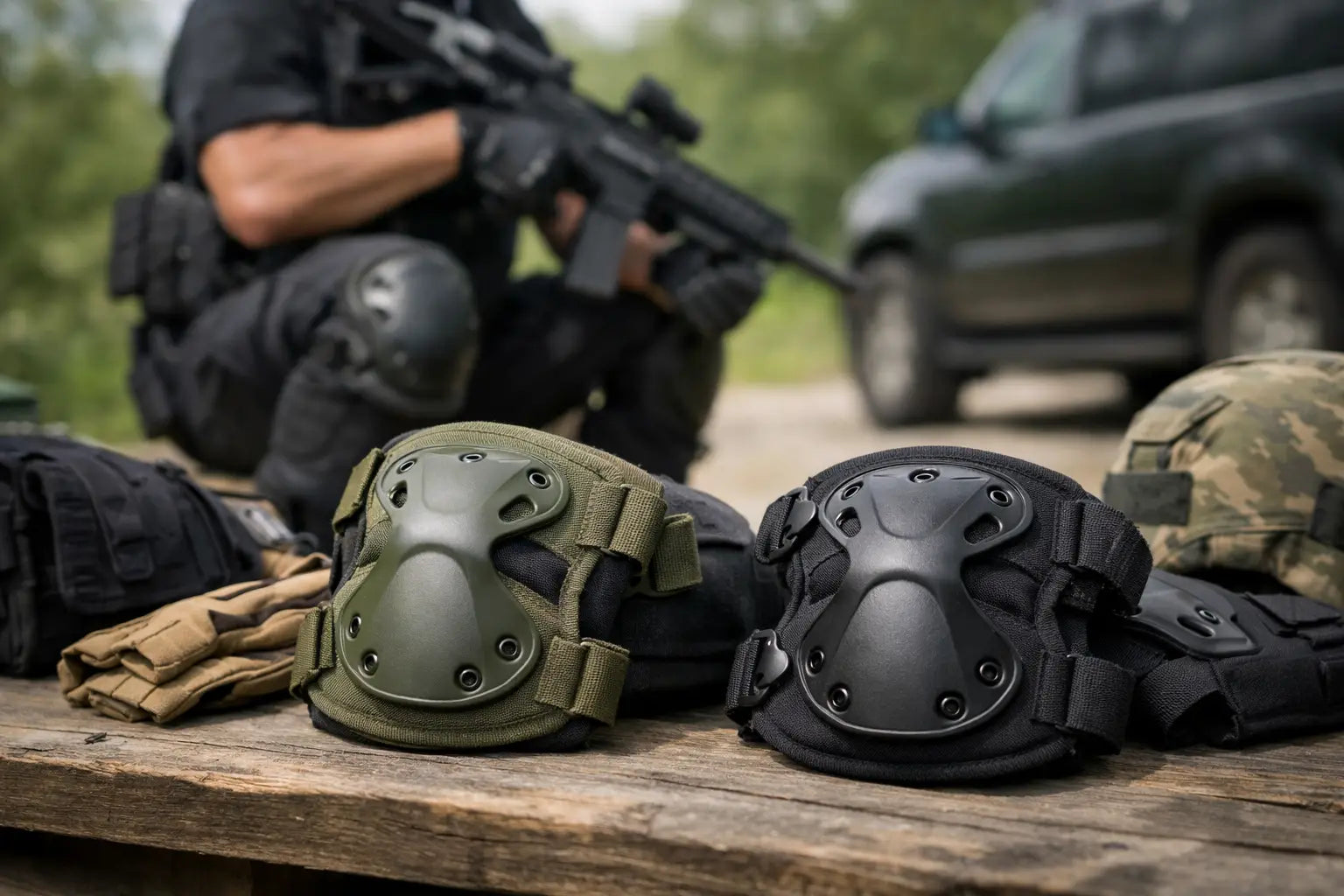
A knee on wet gravel, broken concrete or a vehicle floor can quickly turn a routine task into a distraction. This tactical knee pads guide is for choosing protection that stays in place, works with your trousers and does not become a liability after an hour on the ground. For patrol, fieldcraft, range work, airsoft and demanding outdoor jobs, the right pair protects more than the knee cap. It helps you stay mobile and focused when the surface is unforgiving.
Knee pads are simple kit, but poor fit is common. Pads that slip down the shin leave the knee exposed at the point they are needed. Pads that are too bulky can catch on equipment, restrict movement or make driving uncomfortable. Selection should begin with the job, the trouser design and the amount of time you realistically expect to spend kneeling or prone.
What Tactical Knee Pads Need to Do
A proper tactical knee pad spreads pressure across a wider area while shielding the knee from impact, abrasion and sharp ground. That is different from a soft gardening pad or a lightweight sports sleeve. Field use often involves repeated contact with mixed terrain: hard floors, compacted earth, loose stone, mud, roots and debris. A pad must cope with all of it without cracking, retaining excessive water or constantly needing adjustment.
The best level of protection depends on use. A static range instructor, mechanic or airsoft player may spend prolonged periods kneeling and benefit from generous cushioning. A patrol user may prioritise a lower-profile pad that permits sprinting, climbing and getting in and out of vehicles. Someone training on gravel may want a hard outer shell, while a user mainly working indoors may prefer a quieter, non-marking outer face.
There is always a trade-off. More padding and a larger shell generally mean better impact protection, but also more heat, bulk and potential interference with natural movement. Buy for the ground and role you face most often, rather than the most extreme scenario you can imagine.
Tactical Knee Pads Guide: Choose the Right Style
Tactical knee pads are usually supplied as external strap-on pads or built-in inserts for compatible combat trousers. Neither is universally better. The correct choice is the one that stays correctly positioned through the movements required.
External strap-on knee pads
External pads sit over the trouser knee and use one or two straps to secure them around the leg. They are the most versatile option because they can be worn with a wide range of combat trousers, work trousers and waterproof over-trousers. They are also easy to put on or remove when conditions change.
Look closely at the strap arrangement. Wide elasticated straps offer flexibility as you move but can loosen over a long day. Webbing straps with positive buckles tend to provide firmer adjustment, although overtightening can restrict circulation. A crossed or articulated strap system often holds the pad more securely than two simple horizontal straps, particularly when running, crawling or repeatedly standing from kneeling.
A hard cap is useful where the knee may meet rough surfaces or sharp edges. It also provides a smooth contact point that can make moving on hard ground easier. However, hard shells can be noisier when kneeling and may slide on smooth floors. Soft-shell pads are quieter and more comfortable against indoor surfaces, but can offer less protection against concentrated impacts.
Integrated trouser inserts
Many modern combat trousers include knee-pad pockets, normally positioned at the front of the knee. The pad slips into the pocket, keeping it close to the body and preventing the common problem of an external pad migrating down the leg. For tasks involving frequent movement, this is often the cleanest and most secure arrangement.
The limitation is compatibility. Insert pads must fit the pocket shape and dimensions of the trousers. A pad designed for one cut of trouser may fold, sit too low or create an uncomfortable pressure point in another. Check the manufacturer's stated compatibility rather than assuming that all insert systems are interchangeable.
Integrated pads are also less convenient to remove during the day. If you switch between vehicle work and ground work, external pads may offer greater flexibility. For a planned exercise, range day or airsoft event, trouser inserts are often the neater option.
Materials That Matter in the Field
The outer shell determines how the pad handles abrasion and impact. Thermoplastic shells are common because they are tough, light and resistant to water. Textured surfaces can provide grip, while a smooth shell reduces drag when moving across ground. On a hard shell, check for a shape that follows the knee rather than forming a flat, rigid plate.
Behind the shell, closed-cell foam is a practical choice. It does not readily soak up water and maintains its form better than basic open-cell foam. Denser foam handles impacts well, but may feel firm during extended kneeling. Layered construction can give a better balance, using a firm outer layer for protection and a softer layer against the leg for comfort.
Fabric-covered pads should use hard-wearing material around the edges, where abrasion is most likely. Stitching matters as much as the fabric. Reinforced stitching, protected strap anchors and quality buckles are signs that a pair is intended for repeated use rather than occasional fancy-dress or light recreational wear.
Colour is secondary to performance, but it still has a place. Black suits police, security and general work use. Olive, coyote and camouflage options may better match field clothing and webbing. Keep in mind that a shiny hard shell can be conspicuous, while dusty or mud-marked fabric pads may blend in more naturally.
Getting the Fit Right
Fit the pads while wearing the trousers and boots you will use, not while standing in shorts at home. Place the centre of the pad over the knee cap, then kneel, squat, walk briskly and climb a flight of stairs. The pad should remain over the knee as the leg bends. If it rides high, digs into the thigh or slips towards the shin, adjust it or try a different design.
External pads should be snug enough to prevent movement but not so tight that they cause numbness, rubbing or marked pressure lines. Check them again after ten to fifteen minutes of walking. Straps can settle, especially over smooth or lightweight trousers. If a pad only stays put when cinched down uncomfortably, it is not the right fit.
For inserts, trouser length is critical. A knee pocket positioned too low will leave the pad sitting on the upper shin whenever you kneel. Combat trousers should allow free movement through the seat and knees without pulling the pad away from its intended position. This is one reason to assess knee protection as part of a clothing system, rather than as an isolated purchase.
Match Protection to the Task
For field exercises, stalking and outdoor training, choose durable pads with reliable retention and water-resistant materials. Ground conditions are rarely consistent, so a balanced design with firm foam and a modest shell is often more useful than an excessively large cap.
For police, security and vehicle-based work, low-profile protection is usually preferable. You may spend more time seated, moving through doorways or working in confined spaces than kneeling on rough ground. A slim insert or flexible external pad can protect the knee without creating unnecessary bulk.
For airsoft and tactical training, hard-cap pads make sense on rubble, woodland tracks and indoor sites with concrete floors. They should still be treated as protective equipment, not permission to take unsafe risks. Good footwear, sensible movement and awareness of hazards remain essential.
For trades, maintenance and range duties, comfort over duration can take priority. A pad with broader foam coverage may reduce fatigue during repeated kneeling, even if it is less suited to fast movement. If your work alternates between kneeling and standing throughout the day, test how easily the pad moves with you before relying on it for a long shift.
Care, Inspection and Replacement
Mud and grit shorten the life of straps, buckles and hook-and-loop fastening. Brush pads off after use, rinse where necessary, and allow them to air dry away from direct high heat. Do not leave wet pads sealed in a kit bag, particularly if they have fabric linings or foam that can retain moisture.
Before each use, inspect the shell for cracks, the foam for permanent compression, and the straps for fraying or loss of elasticity. Check buckles and attachment points carefully. A broken strap is not a minor inconvenience when the pad shifts at the point of contact.
Replace pads when the shell is damaged, the cushioning no longer rebounds, or the fastening system cannot hold a secure adjustment. Knee protection is relatively straightforward kit, but it needs to be dependable when you drop to a knee without thinking about it.
At John Bull Clothing, the sensible approach is to pair knee pads with compatible combat trousers, dependable boots and the rest of the field kit required for the task. Choose a design that fits your movement, inspect it before use, and it will remain one less thing to worry about when the ground is hard.