
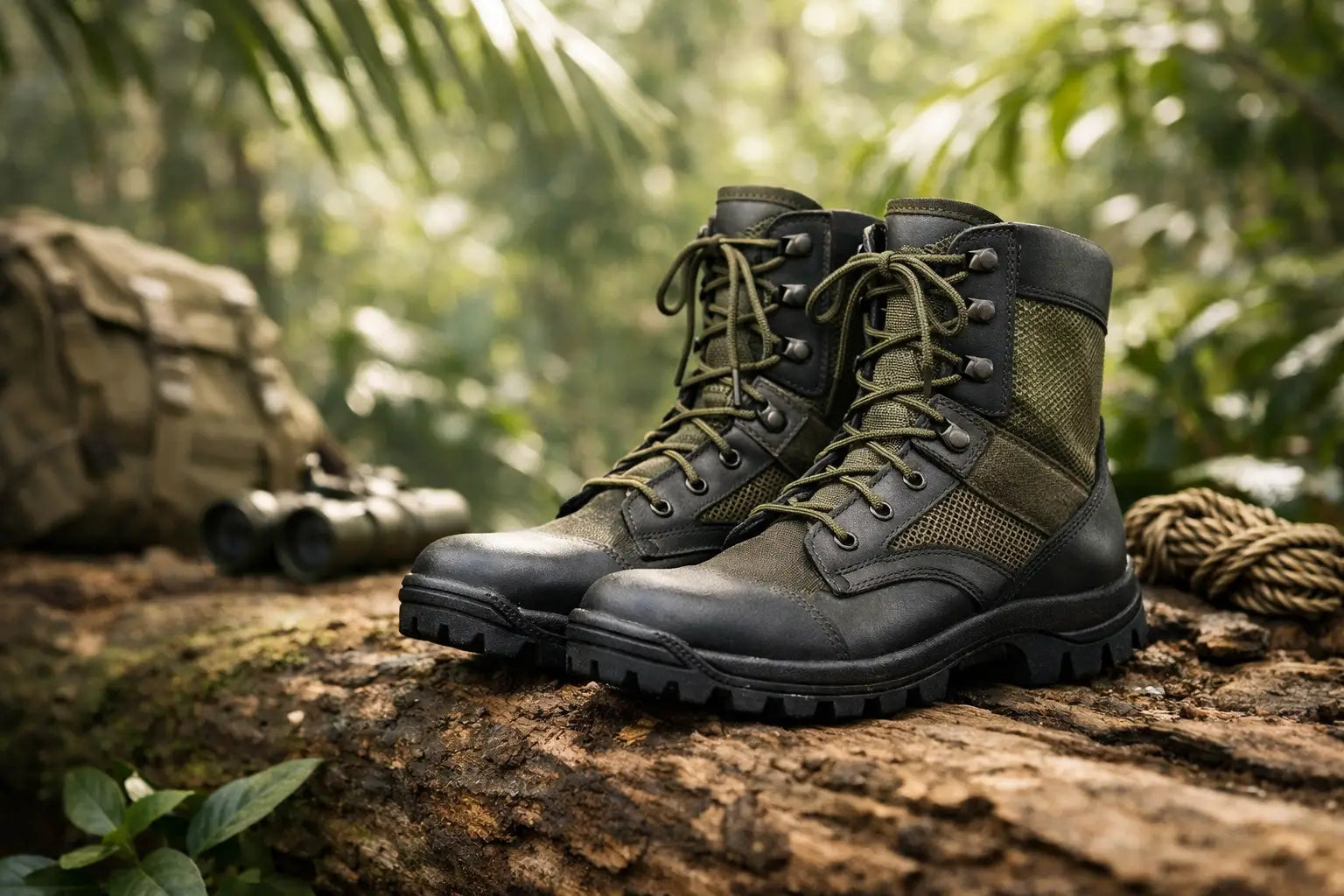
A dry, hard track at midday and a soaked tree line by late afternoon is a familiar British summer pattern. That is where Altberg jungle boots for the summer can make sense: not as a fashion-led warm-weather boot, but as serious field footwear for ground that is warm, wet, overgrown and unlikely to stay predictable for long.
Jungle-style boots are often misunderstood. Their job is not to keep every drop of water out. In sustained wet conditions, water will find its way in over the collar, through trousers or during a crossing. The priority is to reduce water retention, allow the boot to dry efficiently and keep the foot supported while moving under load. For military users, cadets, outdoor workers and tactical users, that distinction matters.
When Altberg jungle boots suit summer conditions
Altberg has a long-standing reputation for making practical, supportive boots with a proper field focus. A jungle boot is most useful when heat, moisture and repeated movement are the main challenges. Think humid training areas, wet grassland, woodland, marshy paths, stream crossings and overseas deployments where rain and high temperatures arrive together.
The benefit is in how the boot manages the inevitable. Traditional waterproof boots rely on a membrane to prevent outside water entering. That works well in cold rain, puddles and ordinary UK hill days, provided water does not come over the top. In warm, saturated terrain, however, a waterproof lining can hold moisture inside once the boot has been flooded. Drying can then take far longer than it should.
Jungle footwear takes a different approach. Breathable textile sections, drainage provision and a less water-retentive build help the boot shed moisture and air out. It is a sensible system when getting wet is unavoidable rather than exceptional.
That does not mean a jungle boot is automatically the best summer boot for everyone. If your days are mainly dry, dusty and on firm tracks, a lightweight patrol or desert-style boot may feel cooler and less substantial. If you are working in cold rain, standing still for long periods, or operating around deep puddles without crossing water, a waterproof boot remains the better choice. Select for the ground and task, not simply the month on the calendar.
What to expect from Altberg jungle boots for the summer
A good jungle boot still needs to be a boot first. Drainage and breathability are of little use if the heel lifts, the sole lacks grip, or the ankle collapses when carrying weight. Altberg’s appeal is that its field boots are built around fit, stability and durability rather than chasing the lowest possible weight.
Support for long days under load
Summer exercises and expeditions still involve webbing, daysacks, weapons systems or heavier loads. On uneven woodland ground, a stable heel cup and secure ankle support reduce unnecessary foot movement inside the boot. This is particularly relevant on descents, side slopes and rough vehicle tracks where fatigue encourages poor foot placement.
A properly fitted boot should hold the heel firmly without crushing the toes. There should be enough length to accommodate natural swelling during a warm day, but not so much room that the foot slides forward. Try boots on with the sock system you actually intend to use, preferably later in the day when your feet are at their largest.
Drainage is a feature, not a fault
Some buyers see drainage points and assume the boot has failed at waterproofing. That is the wrong test. In jungle conditions, drainage gives trapped water a route out after a crossing or prolonged rain. It also reduces the weight and discomfort of a waterlogged boot.
The trade-off is obvious: fine dust, grit and surface water can enter more readily than with a sealed waterproof boot. This is why sock choice and gaiter use deserve attention. A close-fitting, moisture-managing sock helps protect the skin, while lightweight gaiters can reduce the amount of debris coming in over the top without turning the lower leg into a heat trap.
Grip must match the terrain
Summer ground is not always dry ground. Chalk, wet roots, polished stones, mud and long grass can all become hazardous after a shower. A quality outsole needs to provide dependable purchase without collecting so much mud that it turns into a smooth block.
No sole pattern is perfect on every surface. Deep, open lugs generally clear soft mud better, while flatter contact areas may feel more planted on hard, dry ground. Consider where you will spend most of the day rather than focusing on one obstacle at the start of a route.
Socks and foot care are part of the system
The boot receives most of the attention, but hot and wet foot problems usually start with moisture management and friction. Even the right pair of Altbergs will not prevent blisters if they are worn with unsuitable cotton socks, poorly fitted insoles or feet that have not been prepared for repeated wet days.
Choose technical socks that move moisture away from the skin and retain their shape when wet. Merino blends are popular because they manage odour and temperature well, while synthetic blends can dry quickly and offer good durability. The correct choice depends on personal fit and how quickly your feet run hot. Avoid changing to untested socks immediately before an exercise or long tab.
Keep toenails trimmed, address hot spots early and carry a small foot-care kit when operating away from vehicles or accommodation. If boots are repeatedly soaked, take the opportunity to remove insoles and socks during rest periods, dry the feet thoroughly and put on a clean pair of socks. That simple routine can make the difference between manageable discomfort and skin breakdown.
Breaking them in before the field
Do not make a new pair of boots your first choice for a long summer exercise, a selection event or a full day on the hill. Even well-made boots need time for the upper, footbed and wearer to settle into one another.
Start with shorter walks on mixed ground, then build towards longer distances and a realistic carried load. Pay attention to pressure points at the heel, little toe, instep and tongue. Lacing can be adjusted to relieve pressure across the top of the foot or improve heel hold, but it cannot correct a fundamentally wrong size or width.
A boot should feel supportive from the start, not painful in the hope that it will eventually soften. Leather does adapt with use, but persistent pinching, numbness or severe heel lift are signs to reassess the fit.
Care after wet and muddy use
Jungle boots are designed to cope with demanding conditions, but they should not be thrown wet into a kit bag and forgotten. Brush off mud once it has loosened, remove insoles where practical and let the boots dry naturally in a ventilated area. Stuffing them loosely with paper can help draw out moisture, replacing it as it becomes damp.
Do not force-dry boots on a radiator, against a heater or beside a fire. Excessive direct heat can dry leather too quickly, affect adhesives and shorten the life of the boot. Once clean and dry, use the treatment recommended for that particular leather and fabric construction. Over-treating can reduce breathability, so follow the product guidance rather than applying every waterproofing product to hand.
Check laces, stitching, eyelets and outsole wear routinely. A small issue found at home is easier to deal with than a broken lace or separating sole halfway through a wet training area.
Choosing the right pair for your use
Before buying, be clear about whether you need a true jungle boot or simply a lighter warm-weather patrol boot. Jungle-oriented footwear earns its place where water, humidity and saturated vegetation are regular factors. For dry summer training in the UK, a breathable leather-and-fabric patrol boot may offer a more versatile compromise. For colder months and persistent rain, waterproof lined footwear is usually the more comfortable answer.
Also consider dress regulations, unit requirements and the colour or style permitted for your role. Service personnel should always confirm current authorised footwear requirements before purchasing for duty use. Cadets and airsoft users have more flexibility, but will still benefit from choosing a boot built for the terrain rather than appearance alone.
John Bull Clothing stocks field kit for customers who expect their equipment to earn its place. The right boot is the one that fits correctly, matches the conditions and is prepared before the first wet mile. If summer means long grass, warm rain and water underfoot, a properly fitted pair of Altberg jungle boots is a practical piece of kit to have ready.