
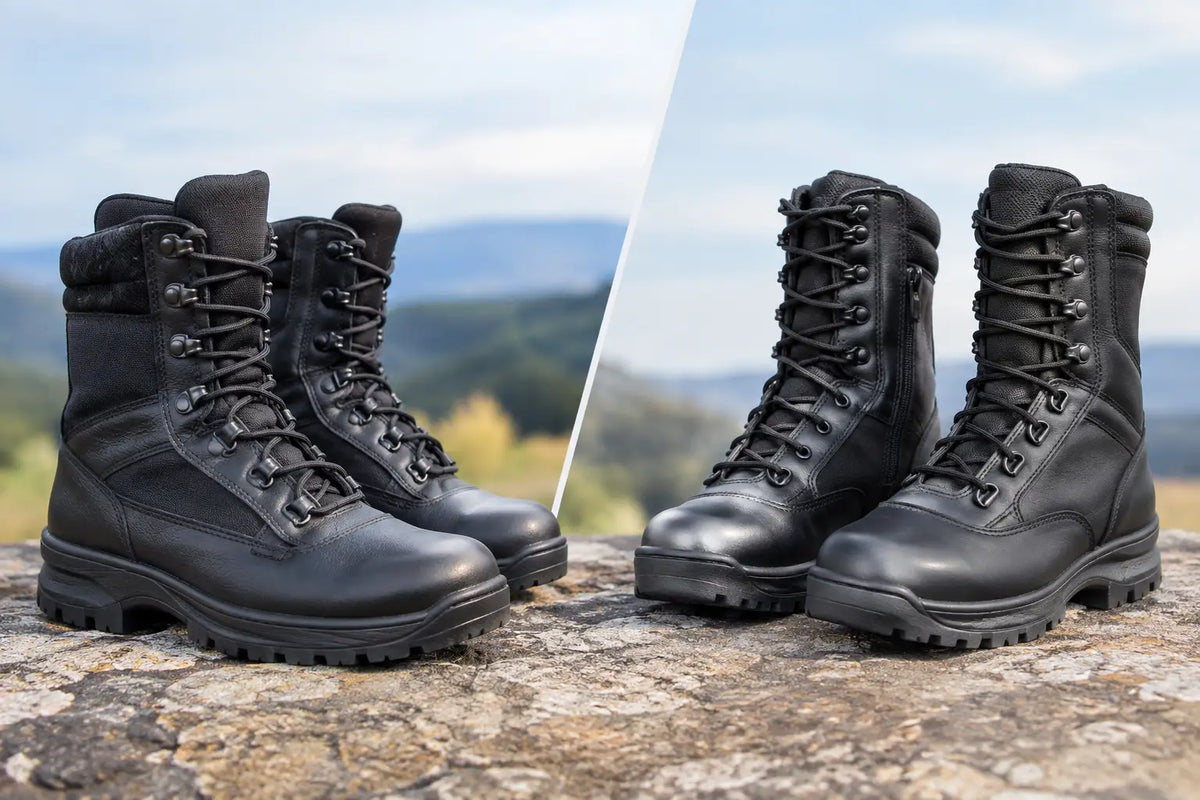
A black patrol boot has to do more than look presentable on the first parade. It has to stay comfortable through vehicle work, station floors, wet pavements, uneven ground and long periods on your feet. In the Altberg Peacekeeper vs Blueline decision, the better choice is not simply the lighter or more heavily built boot. It is the one that suits the way you work.
Both sit firmly in the Altberg tradition: UK-made, service-minded footwear designed around fit, support and repairable quality rather than short-term fashion. Both are credible choices for police, security, military users requiring black duty footwear, and anyone who needs a dependable boot for regular hard use. Their strengths are different, however, and those differences become clear after a full shift rather than at the shop counter.
Altberg Peacekeeper vs Blueline at a glance
The Peacekeeper is generally the more substantial, protective option. It is aimed at users who place a high value on ankle stability, weather protection and underfoot reassurance, particularly when the ground is wet, broken or unpredictable. It suits patrols involving regular walking, standing and outdoor duties where a firmer boot is welcome.
The Blueline is the more agile proposition. It is often favoured where fast-paced patrol work, frequent driving, indoor movement and reduced weight matter most. It remains a proper duty boot, not a lightweight trainer in boot form, but it is designed to feel less cumbersome through a long day.
That means the decision usually comes down to duty pattern. Choose the Peacekeeper if protection and support take priority. Lean towards the Blueline if mobility, a quicker feel and lower fatigue are higher on the list.
Build and protection
Peacekeeper: the more planted option
The Peacekeeper has a reputation for a supportive, confidence-building feel. A more structured upper and secure ankle area can be useful when carrying kit, walking rough verges, working event security or spending long periods outdoors in poor weather. When a boot is expected to take regular knocks and still provide a stable platform, a firmer construction is an advantage.
That support comes with a trade-off. A more protective boot can feel heavier and less flexible than a lighter patrol design, especially during the first few wears. It is not a fault. It is simply the nature of a boot built to hold its shape and protect the foot when conditions deteriorate.
For officers and security staff who regularly step from pavement to grass, gravel, stairwells and vehicle footwells, that planted feel may be exactly what is required. The Peacekeeper is particularly worth considering if previous lightweight boots have left your ankles tired or your feet feeling every edge underfoot.
Blueline: built for moving quickly
The Blueline is better aligned with users who need duty-boot durability without the sensation of wearing a heavy field boot. A lighter, more flexible boot makes a difference when your work involves repeated vehicle entry and exit, foot patrols on hard surfaces, moving around buildings or covering distance at pace.
Less weight on each foot can reduce leg fatigue over a long shift. It can also make the boot feel more natural when kneeling, climbing stairs or reacting quickly. For response work, city-centre patrols and security roles based largely on tarmac, concrete and indoor floors, this can be a meaningful advantage.
The compromise is straightforward: a lighter-feeling boot may not offer the same sense of armour and stiffness as the Peacekeeper when terrain is rough or loads are higher. That does not make it less capable. It makes it better suited to a different working day.
Fit matters more than the name on the side
Altberg boots are respected because fitting is treated as part of performance. The right model in the wrong size is still the wrong boot. Do not assume that your usual trainer size will automatically translate to a duty boot, particularly if you wear thicker socks, use orthotic insoles or have a wider forefoot.
The Peacekeeper's more structured feel can appeal to those who want a secure heel and steady ankle. The Blueline may feel easier straight away for users accustomed to lighter footwear. Initial comfort is useful, but it should not be the only test. A boot should have enough room at the toes for downhill walking and natural foot expansion, while the heel should remain controlled without painful rubbing.
Try boots with the socks you will actually wear on duty. Lace them fully, walk on an incline if possible, and pay attention to heel lift rather than merely judging softness underfoot. Thick cushioning cannot correct a poor fit. In fact, excessive padding can hide a sizing issue until the first long shift.
If your feet are between sizes or differ slightly in volume, fitting advice is worth seeking before committing. A boot that is comfortable for ten minutes indoors may behave very differently after eight hours on patrol.
Waterproofing, breathability and shift conditions
For UK duty use, waterproofing is rarely a luxury. Rain, wet grass, standing water and cold pavements quickly expose the limits of unsuitable footwear. Both the Peacekeeper and Blueline families have been associated with weather-ready patrol use, but exact materials and membrane specifications can vary by version. Check the product specification of the individual boot rather than relying on a general model name.
The practical point is that waterproofing and breathability pull in different directions. A boot that keeps water out well can feel warmer during a humid summer shift or when working mainly indoors. A lighter boot may manage heat better but will still need regular care to maintain its weather resistance.
For predominantly outdoor work, the Peacekeeper's more protective character makes sound sense. For mixed indoor and vehicle-based duty, the Blueline's reduced bulk may be more comfortable, provided the chosen version gives the weather protection you need.
Whatever you choose, treat the leather and fabric components properly. Clean off mud and road salt, allow the boots to dry naturally away from direct heat, and use a suitable conditioning or proofing product for the materials involved. Drying boots on a radiator can harden leather, weaken adhesives and shorten their service life.
Sole grip and underfoot comfort
A patrol boot needs predictable grip, not an aggressive sole pattern that is only useful on a muddy hillside. Urban duty involves wet paving, painted steps, tiled entrances, kerbs and oily car parks. The ideal sole balances traction with stable contact on hard ground.
The Peacekeeper will appeal to those who want a more reassuring, supported ride across mixed surfaces. Its character suits days where the ground may change repeatedly and there is no guarantee of flat, dry footing. It is a sensible choice for rural patrols, event work, dog handlers, security teams covering large sites and outdoor training areas.
The Blueline's advantage is its easier-going movement. If most of your mileage is on hard urban surfaces, a boot that flexes more naturally can be kinder to tired legs. It can also feel less intrusive when driving, where a thick, rigid sole is not always the first choice.
Neither boot can remove the effects of twelve hours standing on concrete. Good socks, sensible lacing and rotating footwear between shifts all help. If you are already managing plantar discomfort, recurring blisters or ankle instability, address the fit and support requirement first rather than choosing purely by weight.
Which Altberg boot suits your role?
Choose the Peacekeeper when your work is regularly outdoor, wet, uneven or load-bearing. It is the better fit for users who prefer a firmer boot, value pronounced ankle support and want a dependable option for demanding ground conditions. It may feel more substantial, but that is often the reason people buy it.
Choose the Blueline when your work is fast-moving, largely urban, vehicle-heavy or based across indoor and outdoor environments. It is a strong option for those who want a professional duty boot that feels lighter on the foot and easier through a busy shift.
For cadets, airsoft users and general outdoor buyers, the same principle applies. Do not buy the Peacekeeper merely because it appears tougher if your use is mostly short walks and hard surfaces. Equally, do not choose the Blueline purely for its lighter feel if you expect regular wet-ground work with a heavier pack.
Make the choice after considering your longest shift
The most useful question is not which boot feels best for five minutes. Ask which one will still work for you at the end of your longest, wettest and most demanding shift. The Peacekeeper offers a more protective, supported platform; the Blueline prioritises mobility and lower-weight comfort. Get the fit right, maintain the boot properly, and either can become dependable duty kit rather than another pair replaced too soon.