
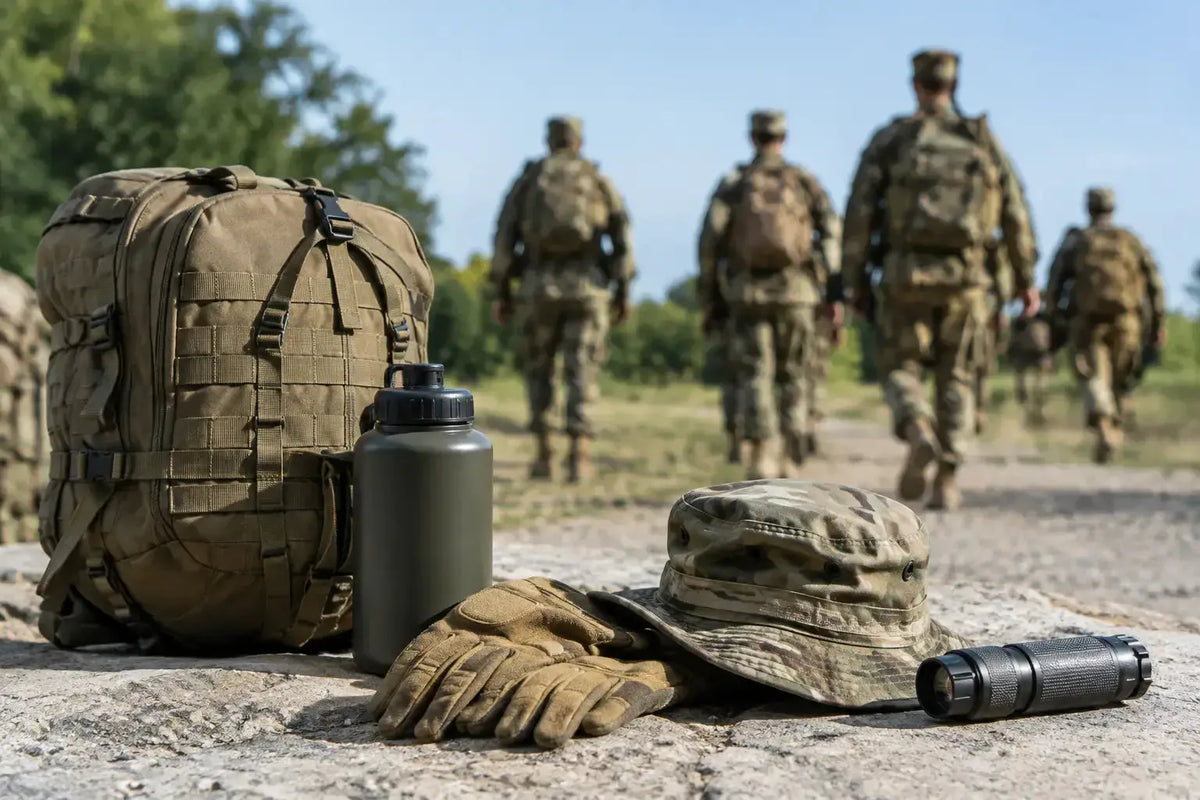
A wet training area finds weak kit quickly. A leaking water bottle, flat torch or soaked notebook can turn a straightforward exercise into an avoidable distraction. The best cadet field accessories are not novelty tactical items. They are dependable, compact pieces of equipment that keep a cadet comfortable, safe and properly organised from first parade through to endex.
For Army Cadet Force, Combined Cadet Force, Air Cadets and Sea Cadets training, always start with the joining instructions and local unit requirements. Some equipment may be issued, restricted or specified for a particular activity. Personal accessories should support that kit, not duplicate it or add unnecessary weight to a bergen.
Best Cadet Field Accessories: Start With the Job
A useful accessory earns its space. It should solve a field problem: carrying water, preserving dry kit, reading a map after dark, recording details, protecting hands or keeping essential items together. The right choice depends on the season, activity and duration. A one-night camp requires less than a multi-day expedition, while a range day, navigation exercise and fieldcraft weekend all place different demands on a cadet’s kit.
Avoid buying equipment simply because it looks military. Oversized pouches, cheap survival tools and imitation tactical gear often add bulk without improving performance. Prioritise proven items from respected field brands, then learn how to use them before taking them on exercise.
Navigation Kit That Works in British Conditions
A reliable baseplate compass is one of the most worthwhile cadet field accessories. It should be clear, easy to read and suitable for use with Ordnance Survey mapping. A compass with a rotating bezel, luminous markings and a lanyard is normally more useful for cadet navigation than a complicated electronic model.
Keep maps protected in a waterproof map case. A transparent case allows the map to be read without exposing it to rain, mud or wet ground. Choose one large enough for the map section being used, with a secure closure and neck cord. Folding a map to the area of work before setting off makes it faster to handle and reduces the chance of losing it in high wind.
A waterproof notebook and pencil are equally valuable. Pens can fail in cold or rain, while a pencil continues to work and can be sharpened with a small sharpener or knife where permitted. Use the notebook for grid references, route cards, timings, orders and contact details. It is a simple item, but disciplined note-taking is part of good field routine.
GPS devices can be helpful where authorised, especially for expedition planning and recording a route. They are not a substitute for map and compass competence. Batteries run down, screens are difficult to read in bright light and electronic navigation may not be allowed during assessed activities.
Light, Water and Personal Administration
A headtorch is preferable to a hand-held torch for most camp and field tasks. It leaves both hands free for cooking, setting up a shelter, checking kit or reading a map. Select a model with a low-output setting for close work and a red-light mode where appropriate. Red light is useful around a harbour area because it is less harsh on night vision, but it does not replace the need for sensible light discipline.
Take spare batteries in a small waterproof bag and carry them separately from loose metal items. Rechargeable headtorches are convenient, but a battery-powered model can be easier to manage on longer weekends where charging points are unavailable. Check the torch before leaving home rather than discovering a problem at last light.
Hydration is another area where simple choices matter. A hard water bottle is easy to clean, tough and practical for routine training. A hydration bladder can make drinking on the move easier, particularly under webbing or a daysack, but it needs careful cleaning and can be punctured if packed carelessly. For most cadets, a bottle plus a cup or mug is a reliable starting point.
Keep personal administration protected. A small waterproof pouch can hold a mobile phone, emergency contact details, cash, travel documents, prescribed medication and a compact power bank if permitted. It should be accessible but secured inside the bergen, not left loose in an external mesh pocket. Cadets should follow unit policy on phone use during training.
Dry Bags: Small Kit, Major Difference
Dry bags are among the most effective ways to organise a bergen. Instead of one large liner containing everything, use separate bags for sleeping kit, spare clothing and personal items. If one section gets wet or needs to be found quickly, the rest of the load stays under control.
Colour-coded bags can help, although there is no need to overcomplicate the system. One colour for dry clothes, one for sleep kit and one for wash kit is enough. A bergen liner remains worthwhile as a final layer of protection, especially during persistent rain or when the pack has to be placed on wet ground.
Compression dry bags save space, but do not force too much into them. Over-compressed insulation can lose loft, and a tightly packed bergen is harder to repack in poor weather. Leave enough room to pack methodically at the end of each day.
Field Comfort Without Carrying Excess Weight
Comfort is not a luxury on exercise. It helps a cadet stay warm, alert and able to carry out tasks safely. The key is selecting small accessories that make a genuine difference.
A neck gaiter or lightweight scarf provides flexible protection against cold, wind and dust. It can be worn around the neck, over the ears or as a simple head covering when conditions change. Gloves are another sensible addition. Choose a pair that allows a secure grip and enough dexterity to handle zips, map cases and small equipment. Bulky gloves may be warmer, but they can be frustrating for navigation and camp tasks.
Foot care deserves the same attention as boots. Pack spare socks in a dry bag, along with blister plasters or a basic foot-care kit. Change wet socks early where possible. A small microfibre towel is also useful at camp because it dries quickly and occupies far less space than a standard towel.
For colder months, hand warmers can be useful as a backup, but they are not a replacement for correct layering, dry gloves and a suitable sleeping system. In warm weather, sun cream, insect repellent and lip balm should be treated as practical field items, not afterthoughts.
Eating and Camp Routine Accessories
A compact mess tin, mug and spork cover most basic camp feeding needs when they are not provided. Metal mugs are durable and can be placed near heat, but they become hot quickly. Insulated plastic mugs are more comfortable to hold but should be kept away from flames. Follow the instructions for the stove or field kitchen being used, and never assume that personal cooking equipment is permitted on every exercise.
A small wash kit should be kept separate from food and sleeping equipment. Include a toothbrush, toothpaste, biodegradable wipes where appropriate, soap, hand sanitiser and any personal medication. Hand hygiene is particularly important when cadets are sharing accommodation, working around food or returning from field tasks.
Paracord is frequently carried, but it should be used with purpose. A short length can help secure a tarp, repair a broken lace or organise kit at camp. It is not a substitute for issued shelter components, and it should never be used for climbing, load-bearing work or improvised safety systems.
Build a Cadet Kit System, Not a Collection
The most efficient cadet kit is familiar kit. Before a weekend away, practise filling a hydration bladder, using the headtorch controls, folding a map into its case and repacking dry bags. Label personal equipment clearly with name and cadet number where required. This reduces lost property and saves time when packing under instruction.
Keep expensive accessories proportionate to the activity. A quality compass and dependable headtorch are sensible long-term purchases. Premium watches, large fixed-blade knives and elaborate survival equipment rarely offer the same value for routine cadet training. Local rules, supervision and the activity risk assessment always take priority.
A good packing check is straightforward: can you find water, navigation equipment, waterproofs, warm layers and light without emptying the entire bergen? If not, reorganise before leaving. Place frequently used items where they can be reached quickly, keep sleep kit dry at the bottom, and protect smaller essentials in clearly separated pouches.
The right field accessories do not make a cadet look more capable. They make it easier to stay prepared, follow instructions and concentrate on the training in front of them.