
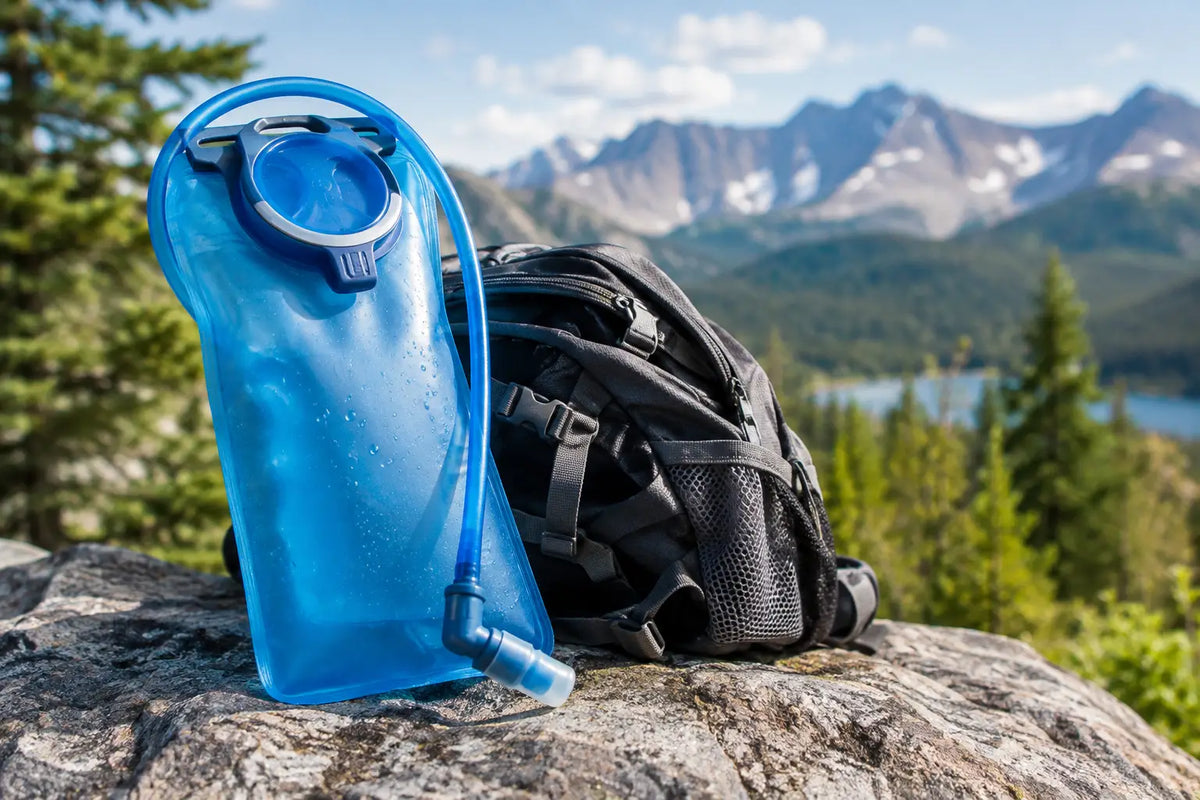
A hydration reservoir is only useful if it delivers water when you need it, stays intact under load and does not turn routine cleaning into a chore. This Camelbak bladder review assesses the practical points that matter to soldiers, cadets, patrol users and outdoor teams: fill access, hose routing, bite-valve performance, durability and care in the field.
CamelBak has long been a familiar name in military and outdoor hydration. Its reservoirs are not the cheapest way to carry water, but the price reflects a system designed around frequent use rather than occasional day walks. For users carrying a daysack, assault pack or plate carrier-compatible hydration pack, that distinction matters.
Camelbak bladder review: what stands out
The principal strength of a CamelBak reservoir is that it is a proven, modular system. The bladder, drinking tube, valve and pack routing all work as a practical whole. A reservoir carries weight close to the back, keeps both hands free and allows controlled drinking while moving, navigating or working through a serial.
Most current CamelBak reservoirs use a wide opening with a sliding closure rather than a small screw cap. This makes filling at a tap or water point quicker and gives proper access for drying and cleaning. It also removes a common frustration with basic bladders: trying to scrub inside a narrow neck without being able to see whether residue remains.
The material feels substantial without being excessively stiff. When placed in a correctly sized hydration sleeve, it lies flat and is less likely to bunch up or fold as the pack is tightened down. That helps keep the load stable, particularly when a full reservoir is carried alongside waterproofs, rations, ammunition or other field essentials.
There is no getting around the weight penalty. Two or three litres of water is two or three kilograms before the rest of the kit is considered. A CamelBak bladder does not make that weight disappear, but it makes it easier to manage than several loose bottles rattling around in a pack.
Capacity and pack compatibility
For most day use, a 2-litre reservoir is a sensible middle ground. It provides enough water for a moderate walk, range day, patrol or warm-weather training period without taking over the pack. A 3-litre bladder suits longer tabs, extended hill days and hot conditions, provided the pack has a dedicated sleeve large enough to hold it safely.
Do not choose capacity on the basis of the longest day you might ever do. Consider access to refill points, temperature, effort level and what else must be carried. A three-litre reservoir can be the right answer for a dry training area with no reliable water source; on a cool UK woodland exercise with frequent resupply, it may simply be unnecessary load.
Check the dimensions of the reservoir against the hydration compartment, not just the stated litre capacity. A tall bladder can interfere with the top of a compact pack, while a wide design may be awkward in a narrow radio or armour-compatible carrier. The hanging point should support the reservoir from the top so the closure is not carrying the full load.
CamelBak reservoirs work particularly well in packs with a protected tube port and routing channels on the shoulder straps. That keeps the tube out of the way of weapon slings, chest straps and snag hazards. If a pack lacks these features, the system still works, but expect to spend more time arranging the hose securely.
Bite valve, flow and hose management
A good bite valve should provide water without requiring a hard pull or repeated squeezing. CamelBak valves are generally dependable in this respect, with a positive shut-off arrangement on many configurations to reduce accidental leaks during transport. The water flow is suitable for drinking on the move rather than forcing the user to stop and wrestle with a bottle lid.
Hose length needs managing. Too much loose tube catches on vegetation, vehicle fittings, webbing and door frames. Too little prevents free movement and can pull at the reservoir connection. Route it down the preferred shoulder strap, retain it with the pack's elastic loops or clips, and leave only enough free length to reach the mouth naturally.
In cold weather, the hose is often the weak point of any hydration system. Water in the tube can freeze before the reservoir does. Insulated tube covers help, but the simplest field habit is to blow water back into the bladder after drinking where appropriate. In sub-zero conditions, carry a bottle as a back-up and avoid relying on one water source alone.
The valve also deserves protection from dirt. On exercise, a cover is worthwhile if the mouthpiece is exposed to mud, sand, dust or vehicle grime. Wiping a dirty valve with a glove and carrying on is a poor substitute for keeping it protected in the first place.
Durability in normal field use
CamelBak reservoirs have earned their reputation because the components are intended for repeated filling, rolling, packing and cleaning. The closure systems are typically more confidence-inspiring than the basic screw-cap bladders supplied with low-cost packs, and replacement parts are widely available across the CamelBak range.
That said, no soft reservoir is indestructible. Dragging a loaded pack over sharp rock, forcing the bladder beside hard-edged tools or crushing it against loose metal equipment can puncture any model. The reservoir should sit in its sleeve, separated from sharp items and protected from abrasion. Never treat it as a waterproof liner for the rest of the pack.
Leaks most often come from poor closure seating, a damaged hose connection or a valve left open, rather than the main body failing without warning. Before heading out, fill the bladder, close it carefully, turn it upside down over a sink and squeeze lightly. It takes less than a minute and is better than discovering a wet sleeping bag or soaked comms kit halfway through a journey.
Cleaning is part of the system
The best reservoir is one that gets cleaned after use. Leaving water inside for days, particularly in warm weather or after adding electrolyte tablets, creates odour and residue. A wide-opening CamelBak bladder makes this task more manageable, but it still needs a routine.
After ordinary water use, empty the reservoir, rinse it thoroughly and allow it to dry fully with the opening held apart. Do not seal it while damp. For deeper cleaning, use cleaning tablets or a mild reservoir-safe method, then rinse both bladder and tube until no cleaning taste remains. A dedicated brush kit is useful for users who rely on a reservoir week after week.
Avoid filling it with sugary drinks, milk-based products or anything likely to leave a film. Sports mixes can be used where required, but they demand a more thorough clean straight afterwards. If the water tastes stale, the tube smells unpleasant or you can see residue, stop treating it as a minor issue and clean it properly.
Storage is simple: dry it completely, keep it open where possible and protect the valve from dust. Some users store a clean, dry reservoir in the freezer to discourage residual growth, but full drying remains the key requirement. Do not store it folded tightly for long periods if that puts a permanent crease into the material.
Is a CamelBak bladder worth the extra cost?
For occasional casual use, a less expensive reservoir may be enough. If it only comes out for a few summer walks, the advantages of better hose fittings, closure design and spare-part availability may not justify the difference. The value of CamelBak becomes clearer with regular use, more demanding load carriage and situations where a leak or blocked valve is more than an inconvenience.
It is also a strong choice for users who already have a compatible military pack or hydration carrier. Rather than replacing an otherwise serviceable pack, fitting a trusted reservoir can improve the entire water-carrying setup. For a cadet on day training, a security professional on extended duty or an outdoor user building dependable kit over time, that is usually money spent in the right place.
A bladder is not a complete hydration plan. Carry purification capability where required, account for refills, and retain a bottle for mixing drinks, sharing water or dealing with a frozen hose. Used alongside sensible water discipline, a CamelBak reservoir is reliable, easy to drink from and well suited to hard, repeated use. Fill it, check it, route it properly and keep it clean - then it can get on with the job without demanding attention.