
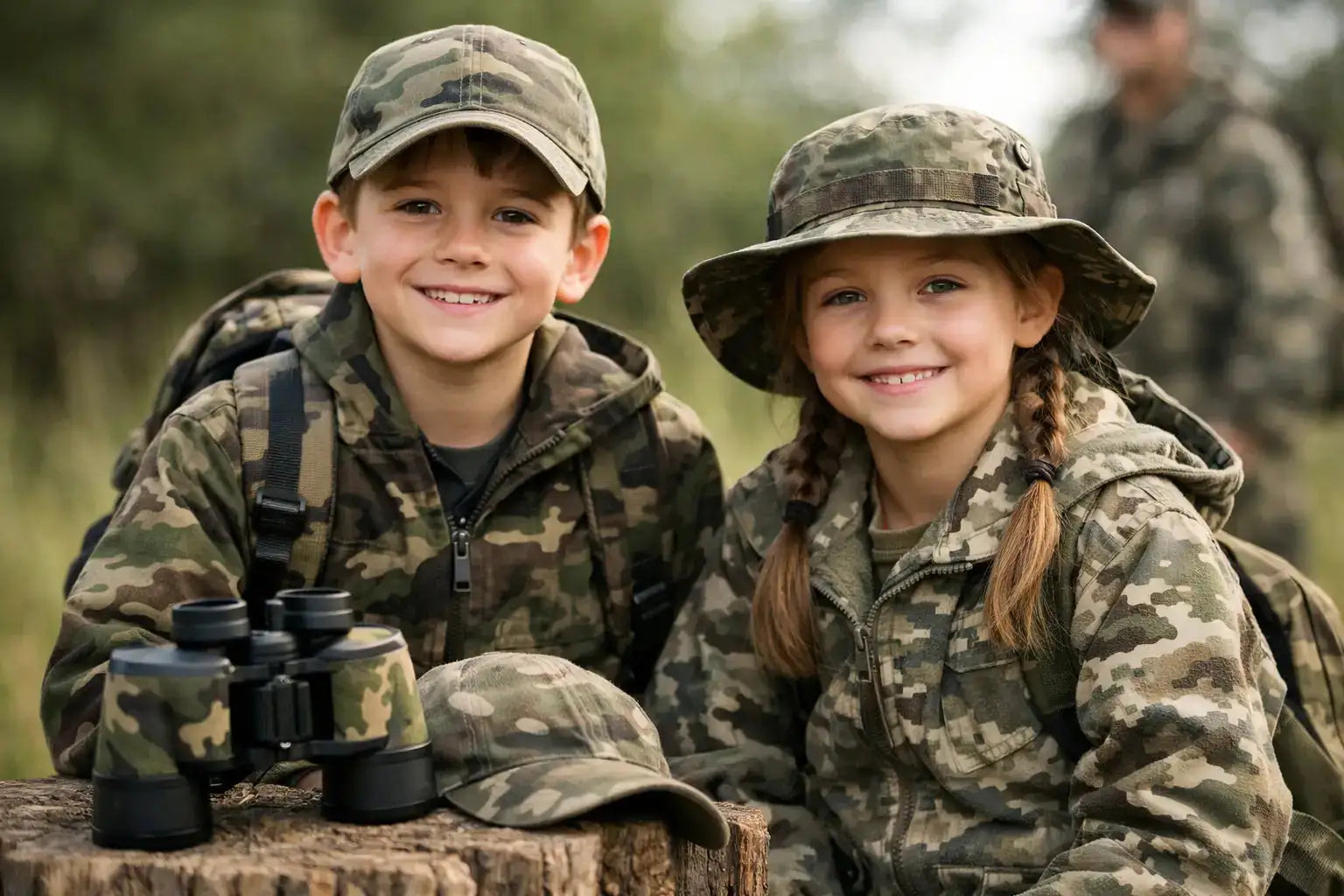
Mud on the knees, grass stains on the sleeves and a growth spurt just as term starts - buying children’s camouflage clothing usually comes down to one thing: getting kit that can take wear without becoming a nuisance to use. For parents, cadet leaders and family buyers, the right choice is less about novelty and more about fit, fabric and how the clothing will actually be worn.
That matters because not all camouflage clothing for children is built for the same job. Some pieces are aimed at light dress-up use, some suit general outdoor wear, and some are a better match for cadet activities, events and regular field use. If you want value from the purchase, it helps to look past the pattern first and judge the garment as practical kit.
What good children's camouflage clothing should do
A decent set of children’s camouflage clothing should be comfortable enough to wear for hours, tough enough to cope with repeated washing, and simple enough for adults to size with confidence. If a jacket looks the part but feels stiff, rubs at the neck or restricts movement, it will spend more time on a hook than in use.
For younger children, ease of wear usually matters most. They need clothing they can move in, sit in and run around in without constant adjustment. For older children in cadets, airsoft training environments or supervised outdoor activities, durability and pocket layout become more relevant. In both cases, overcomplicated design is rarely helpful.
The best buys tend to balance military styling with everyday practicality. That means hard-wearing fabric, usable fastenings, sensible room for layering and enough structure to hold up after repeated wear. It does not need to be over-engineered, but it should not feel flimsy either.
Fit matters more than the pattern
When people shop for children's camouflage clothing, the print often gets all the attention. In practice, fit is what decides whether the garment gets worn. Children need enough room through the shoulders, seat and knees to move properly, but too much excess fabric can make trousers drag and jackets bunch awkwardly.
Sizing can be uneven across brands and styles, especially in military-inspired clothing. Age-based sizing is useful as a guide, not a guarantee. If the child is between sizes, think about intended use. For occasional wear, a slightly looser fit may be fine. For active use, too much spare fabric can get in the way.
Layering also changes the answer. A smock or field jacket worn over a hoodie in colder weather needs more allowance than a lightweight shirt for summer use. Trousers need enough room to bend and kneel, but not so much that the waist constantly needs tightening. Adjustable waists and cuffs are a genuine advantage here, not just a nice extra.
Jackets, trousers and one-piece options
Two-piece camouflage sets are the most flexible choice for most buyers. They are easier to size, simpler to replace if one part wears out first, and more practical across changing weather. A child may outgrow trousers before a jacket, or vice versa, so separate pieces often make better long-term sense.
One-piece options can work for younger children or themed use, but they are less adaptable. They are also less convenient for day-long wear. For regular outdoor use, separate jacket and trouser combinations are usually the safer buy.
Fabric and construction - where value really sits
A camouflage garment can look convincing on a hanger and still disappoint after a few outings. Fabric weight, stitch quality and fastening strength are what tell you whether it is worth buying. Thin material may be acceptable for occasional fancy dress or indoor use, but it will not stand up to rough ground, crawling, climbing or repeated washing.
A practical mid-weight fabric is often the best choice. It gives enough resilience for general outdoor use without becoming too heavy or restrictive. Reinforced stitching at stress points, decent button attachment and properly finished seams all make a difference. These are the details that separate field-ready clothing from short-term costume wear.
Breathability matters as well. Children run hot when active, and heavy synthetic fabric can become uncomfortable quickly. If the clothing is intended for spring and summer use, lighter material with reasonable airflow will be more useful. For colder months, the better approach is often layering rather than choosing an overly thick camouflage outer garment.
Pockets and practical features
Pockets are part of the appeal, but they should still be functional. Cargo pockets on children's camouflage trousers are useful for gloves, small kit or everyday bits and pieces, provided they are secure and not oversized to the point of flapping about.
Look for straightforward closures and features that a child can manage without help. Drawcords, cuff adjustments and waist tabs can all be useful, but only if they are durable and easy to use. Complicated fittings tend to become dead weight.
Choosing children's camouflage clothing for different uses
Not every buyer is solving the same problem, so the right garment depends on where and how it will be used. That sounds obvious, but it is where many poor purchases start.
For casual wear and outdoor play, comfort and washability come first. Children need clothing they can put through hard use without adults worrying over every scrape or mark. In that setting, soft but durable fabric and easy sizing matter more than exact military styling.
For cadet-related use, appearance often needs to be tidier and more consistent. That does not always mean full-spec issue-style kit, but it does mean garments should look presentable, fit correctly and hold their shape. If the clothing may be used alongside boots, belts or other military-style accessories, a cleaner fit and more structured construction are usually worth paying for.
For themed events, school activities or costume-style use, budget may be the deciding factor. That is perfectly reasonable, provided expectations stay realistic. Lighter garments can be suitable for occasional wear, but they are unlikely to last in the same way as better-made field clothing.
Airsoft and supervised tactical play sit somewhere in the middle. Children involved in that sort of activity need freedom of movement and basic toughness, but not every family needs the heaviest fabric available. It depends on frequency of use and the terrain involved.
Pattern choice and realism
Camouflage pattern is usually a style decision first, but there is still a practical side to it. Some buyers want a classic British military look. Others simply want a recognisable camouflage print that children enjoy wearing. Either is valid.
What matters more is consistency across the garment. Poorly printed patterns and low-grade material often fade quickly, especially after repeated washing. If trousers lose colour after a handful of uses, the whole set starts to look tired. Better fabric and print quality keep the clothing looking sharper for longer.
There is also a common sense point here. For most family buyers, children’s camouflage clothing does not need to match exact operational specifications. If authenticity matters, it is worth choosing from a specialist military retailer rather than a general dress-up supplier. That tends to produce a better result in both look and lifespan.
How to make the kit last longer
Even well-made children’s clothing has a hard life. Knees, elbows, seat panels and cuffs take most of the punishment, so those are the areas to inspect first when comparing options. If they look weak from the outset, they probably are.
Washing care is part of the value equation too. Easy-care garments that wash clean and dry without fuss are far more useful to busy households than pieces that need special handling. Follow the care label, avoid over-washing if the clothing is only lightly used, and check fastenings before laundering. It sounds basic, but it extends the life of the garment.
It is also worth buying for the season ahead rather than for one weekend. A little room for growth is sensible. Buying several sizes up is not. Oversized kit wears badly, looks untidy and is less comfortable for active use.
When specialist retailers make more sense
If you are comparing options, there is a clear difference between generic camouflage clothing and product selected by a military outfitter. Specialist ranges are more likely to focus on useful features, dependable construction and recognisable military styling rather than novelty value alone.
That is particularly relevant for cadet families and buyers who already know what decent field clothing should feel like. They are not just looking for a camo print. They want trousers that move properly, jackets that layer well and clothing that can handle real use. A specialist retailer such as John Bull Clothing is better placed to meet that requirement because the category sits alongside the rest of the military kit buyers already understand.
A sensible buying approach
The safest way to buy children's camouflage clothing is to start with use, then fit, then fabric. Pattern comes after that. If the clothing is comfortable, durable and suited to the job, it will earn its place in the wardrobe. If it only looks the part, it usually becomes a wasted purchase.
For most buyers, the best result is straightforward - choose clothing that works as hard as the child wearing it. That way, whether it is for cadets, outdoor wear or general use, the kit does what it should without fuss.