
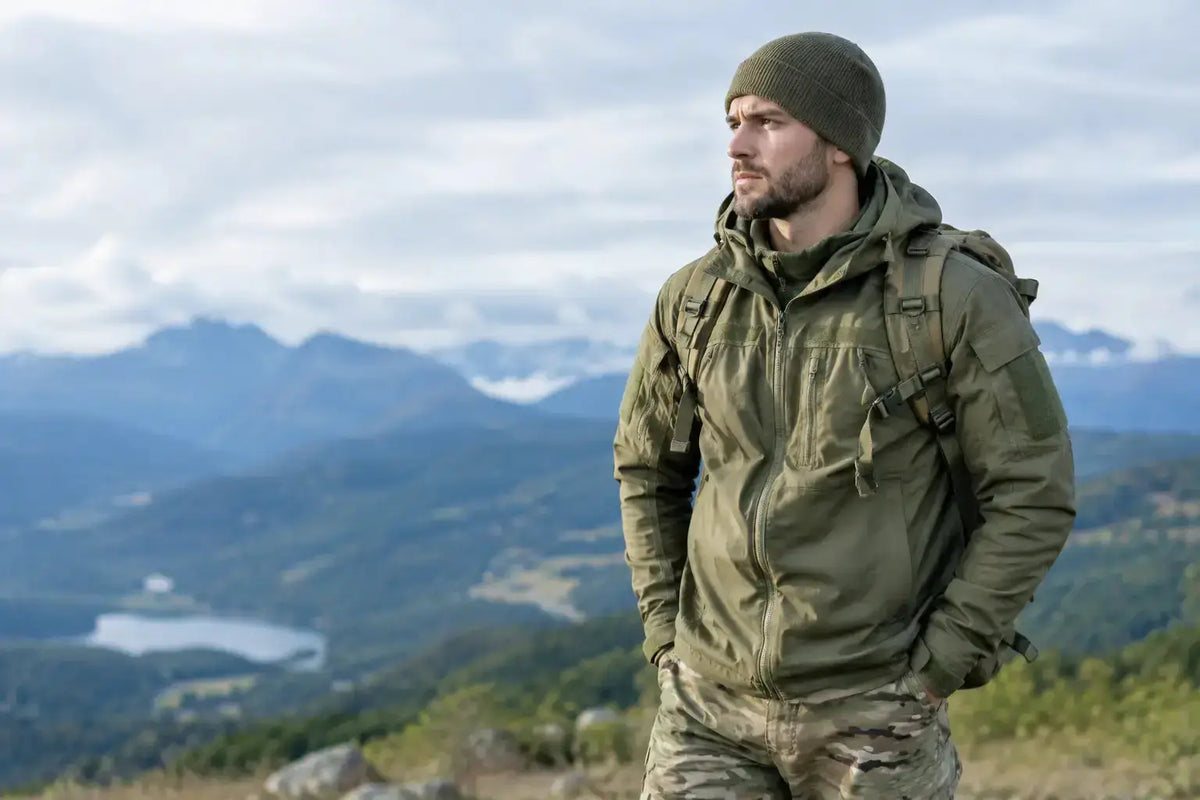
A jacket that looks the part is not necessarily the right one for a wet range day, a night exercise or a long patrol. Military jackets need to work with the rest of your clothing system, protect you from the conditions and allow you to move without fighting your kit. The right choice comes down to the task, the season and what you will wear beneath it.
Military jackets are part of a layering system
The most useful way to choose a jacket is to start with the layer it is meant to provide. A waterproof shell keeps rain and wind off your working layers. An insulated jacket holds warmth during static periods, rest stops and cold camps. A softshell offers breathable weather resistance for active work, while a smock gives durable outer coverage, practical storage and a familiar field layout.
Trying to make one garment do every job usually means accepting compromises. A heavily insulated waterproof jacket can be excellent on a cold, exposed duty, but too warm for tabbing or hill work. A lightweight shell packs down well and protects against rain, yet provides little warmth by itself. For most year-round outdoor use, a shell combined with fleece or insulation is more adaptable than one bulky coat.
Serving personnel should always follow unit dress instructions and any requirements relating to issued personal protective equipment. For cadet activity, security work, airsoft and general outdoor use, the same principle applies: select kit for the environment and the level of exertion, rather than camouflage pattern alone.
Choosing military jackets by job
Waterproof shells for prolonged wet weather
A waterproof jacket is the first choice when rain is likely to be persistent rather than occasional. Look for a proper waterproof membrane, taped seams and an adjustable hood that moves with your head without restricting vision. A storm flap, adjustable cuffs and a hem drawcord also matter. These details stop water being driven through openings when the weather turns.
Breathability deserves equal attention. During active movement, moisture from inside the jacket can be as uncomfortable as rain from outside. Underarm vents or pit zips allow heat to escape quickly, particularly when wearing webbing or a rucksack. A longer cut gives better coverage when standing still, but can feel restrictive when climbing, kneeling or working from a vehicle.
A waterproof shell is only as effective as its upkeep. Dirt, body oils and fabric softener can reduce breathability and weaken the water-repellent finish. Clean it as directed by the manufacturer, then reproof when water no longer beads on the outer fabric.
Softshells for movement and variable conditions
Softshell jackets suit active tasks in cool, breezy and changeable weather. They are generally quieter, more flexible and more breathable than a hard shell, making them useful for navigation, range preparation, dog walking, training and everyday field use. Their stretch and lower bulk also work well beneath load-carrying equipment.
The trade-off is straightforward: a softshell is water resistant, not a replacement for a waterproof in sustained rain. It will shed a shower and block wind effectively, but it eventually wets through. Carry a waterproof outer layer if the forecast or ground conditions call for it.
Choose a fit that leaves room for a base layer and mid-layer without loose fabric catching on webbing, weapon slings or vehicle fittings. Check where the pockets sit once a belt or plate carrier is on. High chest pockets are often more accessible than lower hand pockets when wearing a waist belt.
Insulated jackets for cold, static periods
Insulated jackets are for retaining heat, not for hard physical effort. They earn their place when you are on stag, waiting for transport, sitting in a hide, working around camp or cooling down after exercise. Synthetic insulation remains a dependable option in damp UK conditions because it continues to provide warmth if it becomes wet and dries relatively quickly.
The amount of insulation should match the temperature and how much time you will spend inactive. A lighter insulated layer can be worn under a shell in cold rain. A heavier jacket is better kept in a daysack until needed, preventing overheating and unnecessary moisture build-up during movement.
For field use, consider a full-length zip, an insulated hood and pockets large enough for gloved hands. A jacket that compresses into a pack is valuable, but do not prioritise pack size over durable fabric and a design suited to the job.
Smocks for traditional field use
A military smock remains a practical choice where durable outer fabric, coverage and carrying capacity are more valuable than minimal weight. The longer body length helps keep out wind and mud, while large bellow pockets can hold gloves, a notebook, a map case, ration items or a small field dressing. Many users also prefer the familiar cut over a combat shirt and base layers.
Most smocks are not a substitute for a fully waterproof membrane jacket. Some are treated to resist light rain, and the closely woven fabric can perform well in dry, windy or showery conditions. In persistent rain, wear a dedicated waterproof layer or accept that the smock is an outer utility garment rather than rain protection.
Fit matters as much as fabric
Try a jacket with the layers you genuinely use. A trim fit that feels smart over a T-shirt may become restrictive over a fleece, body armour or a combat shirt. Raise your arms, crouch, reach forward and sit down. If the hem rides up sharply or the shoulders bind, it will be more noticeable after several hours outside.
Sleeve length is particularly worth checking. Cuffs should still cover the wrist when reaching for a handlebar, map or vehicle controls. Adjustable cuffs help seal out wind and rain, but they should also work with gloves. For patrol and security work, a quiet fabric and a hood that can be stowed or removed may be preferable to a bulky design with unnecessary external features.
Camouflage and colour should be selected for the intended setting and any dress requirement. MTP-style patterns are familiar for British Forces-inspired use, while olive, black and plain earth tones can be more suitable for security, shooting, outdoor work and everyday wear. The best pattern is the one appropriate for where you are operating, not simply the most conspicuous option on the rail.
Features worth paying for
Useful jacket features are those that improve protection, access or durability under real use. Reliable two-way zips make it easier to access trousers, belt kit or a holstered item without fully opening the jacket. Reinforced elbows and shoulders help where packs and repeated contact cause wear. Well-designed hood adjustment keeps rain off the face without creating a loose, noisy mass behind the head.
Pocket layout should be assessed with your load carriage in mind. There is little value in six large pockets if a chest rig makes them inaccessible. Internal pockets can protect documents, phones and batteries, while external chest pockets suit items needed quickly. Avoid overloading any jacket pocket, as it can pull the garment out of position and restrict movement.
Do not overlook zips, stitching and fabric weight. These are less exciting than camouflage or branding, but they often determine whether a jacket remains dependable after repeated training weekends, wet walks and regular use. Established field brands are worth considering where their construction, sizing and replacement support suit the role.
Build a jacket setup that earns its space
For many users, a dependable three-part arrangement is more useful than collecting several similar jackets: a breathable waterproof shell for rain, a softshell or smock for day-to-day field work, and a packable insulated layer for cold stops. This covers a broad range of UK conditions without forcing one garment beyond its strengths.
Before buying, think through the conditions you face most often, the kit you wear over or under the jacket, and how much time you spend moving compared with standing still. A properly chosen jacket should disappear into the job: dry when it needs to be, warm when activity stops, and never the reason you have to alter your plan.