
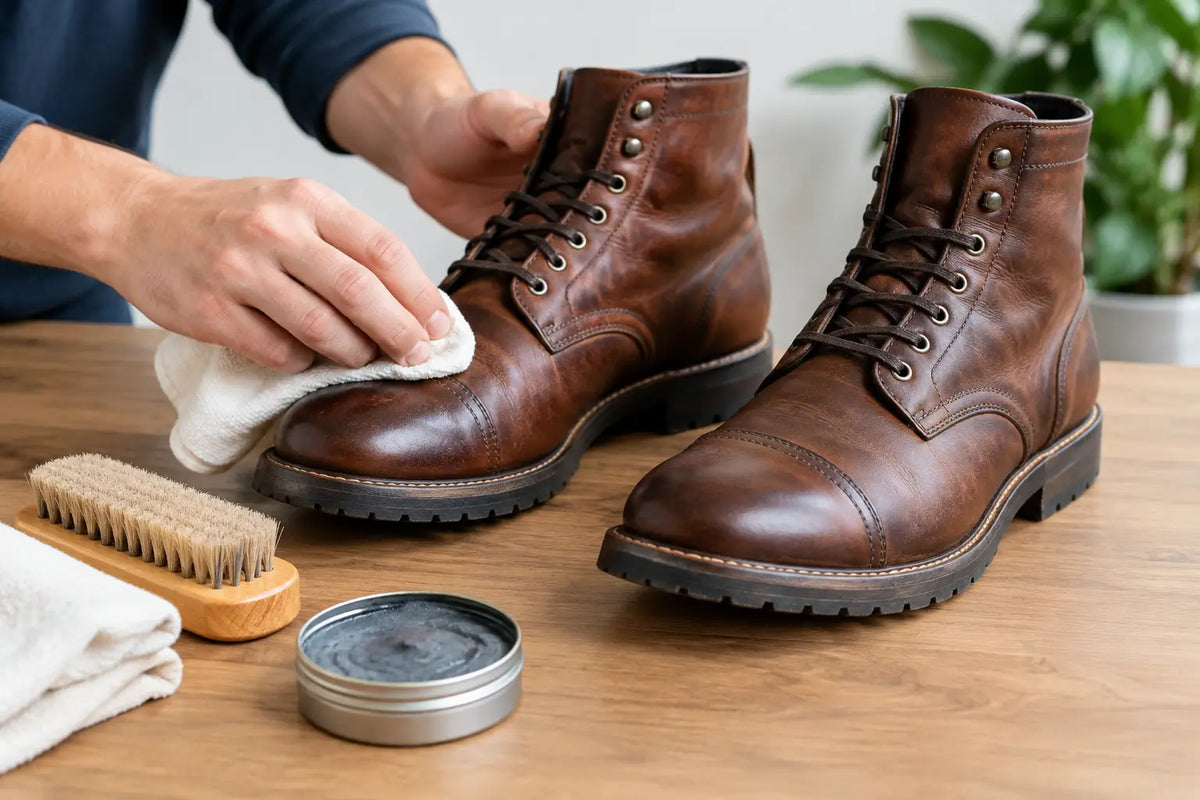
A pair of leather boots can look sound after a wet tab, range day or long shift, yet still be carrying grit in the seams and drying out at the flex points. Knowing how to clean and apply Leder-Gris properly prevents that gradual damage. The aim is not to make boots shiny. It is to keep the leather supple, weather-resistant and dependable when you need it.
Leder-Gris is a leather treatment designed for smooth leather boots. Used correctly, it conditions the leather and helps maintain resistance to rain, mud and repeated wet-dry cycles. Used too heavily, or applied over dirt and damp leather, it can leave a sticky surface, soften the boot more than intended and attract more grime. Preparation matters as much as the treatment itself.
What You Need Before You Start
Set aside enough time for the boots to dry naturally before and after treatment. You will need a soft brush, a clean cloth or sponge, lukewarm water and Leder-Gris. A smaller brush is useful for cleaning around eyelets, welt stitching and the join between the upper and sole.
Remove the laces before cleaning. This gives access to the tongue, the lower eyelets and the leather folds that are easily missed. It also stops cleaning residue and treatment building up on the laces. If the footbeds are removable and the boots have become wet inside, take them out and dry them separately.
Check the leather type before proceeding. Leder-Gris is intended for smooth leather. It is not the right treatment for suede, nubuck or fabric panels, as it can darken the surface and alter the finish. On boots combining leather with fabric, keep treatment on the leather sections unless the boot manufacturer's care guidance says otherwise.
Clean the Boots Before Applying Leder-Gris
Start dry. Brush off loose mud, dust, sand and dried vegetation from the uppers, sole edges and stitching. Pay particular attention to the creases across the forefoot and behind the heel. Abrasive grit left in these areas works against the leather every time the boot flexes.
Once loose dirt is removed, wipe the boots with a cloth or sponge dampened with lukewarm water. Do not soak the leather or hold the boots under a running tap. The objective is to lift remaining dirt, not saturate the upper. Work steadily around the seams, tongue gusset, eyelets and welt, where mud tends to settle.
For stubborn dirt, use a soft brush with a little water and gentle pressure. Avoid harsh household cleaners, washing-up liquid, solvents and detergent. They can strip existing treatments and dry the leather unnecessarily. If boots have been exposed to saltwater or road salt, clean this off promptly with fresh water, then wipe them down thoroughly.
After cleaning, leave the boots to dry at room temperature. Open the tongue fully and remove the footbeds where possible to improve airflow. Stuffing the boots lightly with plain paper can help draw out moisture, but replace it if it becomes wet. Keep them away from radiators, airing cupboards, fires and direct heat. Fast drying can shrink, harden or crack leather, and may affect adhesives and waterproof linings.
The leather should be clean and dry to the touch before Leder-Gris is applied. It does not need to be bone-dry after a normal clean, but it must not feel damp or cold from retained moisture. If the boots were properly soaked, give them longer. Rushing this stage wastes treatment and risks trapping moisture in the leather.
How to Apply Leder-Gris Evenly
Use a small amount first. Leder-Gris is most effective when worked into the leather in a thin, controlled layer rather than laid on thickly. A clean cloth, applicator sponge or bare fingers will all work. Fingers are particularly useful around stitching and awkward panels because you can feel where the treatment has been absorbed.
Apply the treatment in small circles, working one section at a time. Begin at the toe and move across the vamp, sides, heel counter and tongue. Give extra attention to flex areas, seams and the line where the upper meets the sole. These are the points most exposed to water ingress and repeated movement.
Do not neglect the gusseted tongue. On patrol, hill ground or wet grass, water often reaches the tongue and lace area before it reaches the main upper. Work a light coating into the leather folds without leaving visible clumps of product around the eyelets.
A light first coat is normally enough for boots that are regularly maintained. If the leather is noticeably dry, has been through sustained wet conditions or has not been treated for some time, allow the first coat to settle before deciding whether a second light application is needed. The leather should look fed and even, not greasy.
Leder-Gris can darken leather and may soften it slightly while it is being absorbed. That is generally normal, especially on new or pale-coloured leather. For operational, field and walking boots, protection and condition take priority over a high-polish finish. If appearance is critical for a formal pair, test treatment on an inconspicuous area first and follow the footwear maker's recommendations.
Treat Stitching and Flex Points Properly
Stitching is not just cosmetic. It is a potential route for moisture and a common place for dirt to abrade the leather. Press a small amount of Leder-Gris along exposed stitching with a fingertip or soft brush. Do the same at the toe crease, ankle flex points and heel seam.
Avoid packing excess treatment into the gap between the sole and upper. A thin worked-in layer is sufficient. Heavy build-up around the welt or sole edge can hold dirt and make future cleaning harder.
Let the Boots Rest, Then Buff Off Excess
Once treated, leave the boots in a cool, dry place for several hours or overnight. Keep them away from direct heat. This gives the treatment time to settle into the leather rather than sitting on the surface.
Before wearing them, wipe away any surplus with a clean dry cloth. The boot should feel conditioned, not tacky. Relace the boots only once the tongue and eyelet area are dry to the touch. If you have applied too much, do not add more product. Let the boots stand, then buff the surface gently with a cloth.
How Often Should You Use Leder-Gris?
Frequency depends on how the boots are used, not on a fixed calendar date. Boots used daily in wet ground, on ranges, for dog walking or in field training will need more attention than boots worn occasionally in dry conditions. A quick clean after muddy use and treatment when the leather begins to look dry is a sound routine.
As a practical guide, inspect boots after any sustained exposure to rain, wet grass, snow, mud or salt. If water no longer beads or the leather looks pale at the flex points, clean and re-treat them. For regularly used work or outdoor boots, a light application every few weeks may be appropriate. Over-treating is rarely useful, particularly on boots that need to retain a firm, supportive feel.
It also depends on the boot construction. Full-grain leather patrol and walking boots usually benefit from routine conditioning. Lined boots, including waterproof membrane models, still need the outer leather maintained because wet, neglected leather reduces breathability and takes longer to dry. However, always follow any specific care guidance supplied by the boot manufacturer.
Common Mistakes That Shorten Boot Life
The most common error is applying treatment to mud-covered boots. Leder-Gris locks in whatever is on the surface, including abrasive grit. The second is drying wet boots on a radiator or beside a fire. This may feel efficient, but it is one of the quickest ways to leave leather stiff and prone to cracking.
Another mistake is treating boots only when they are leaking. Leather care is preventative maintenance. A light, regular application on clean leather is more effective than trying to restore boots after months of neglect. Finally, do not assume more product means more protection. A thin, well-worked layer gives a better result than a heavy coating that remains on the surface.
A disciplined boot-care routine takes little time, but it protects one of the most important pieces of field kit. Clean boots after hard use, allow them to dry naturally, then apply Leder-Gris sparingly and evenly. Your boots will be better prepared for the next wet track, long march or working day.