
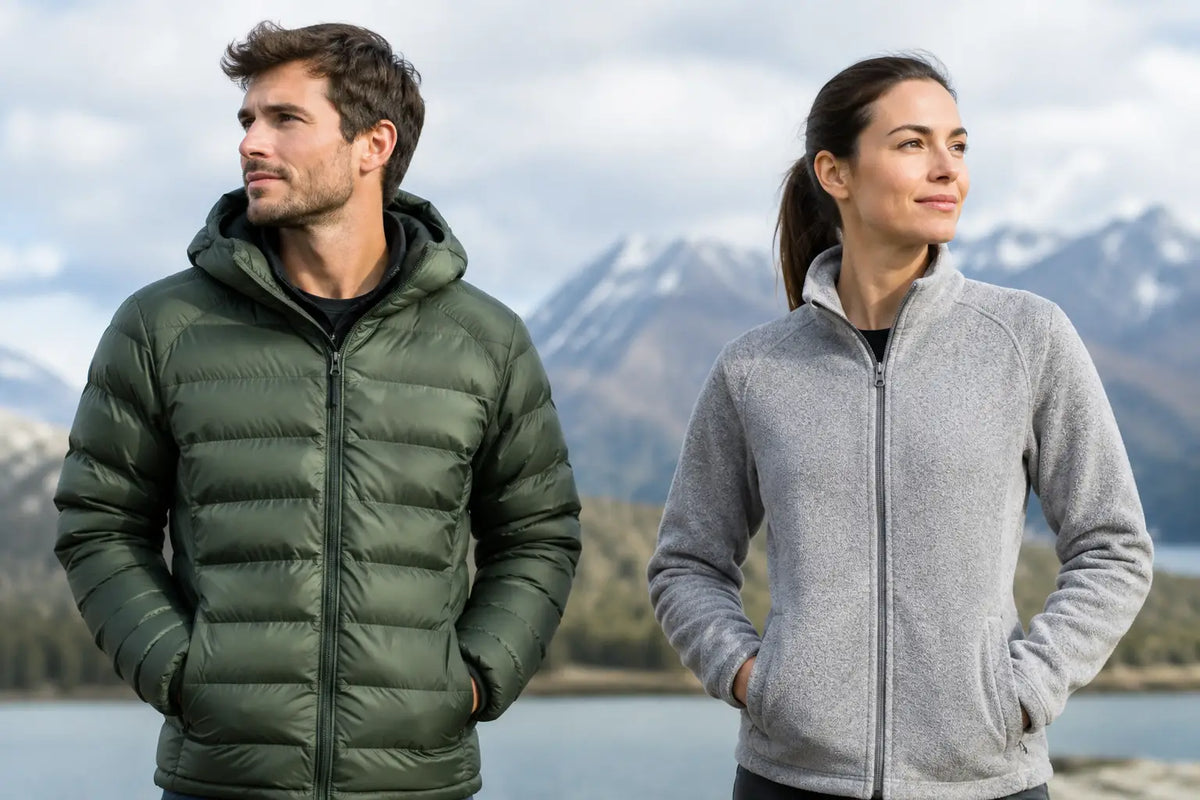
A cold start, a static sentry position or an exposed overnight stop quickly settles the insulated jacket vs fleece question. Both are useful field layers, but they manage warmth, moisture and movement very differently. Choosing the wrong one can leave you sweating during a tab, chilled once you stop, or carrying a layer that earns no place in your bergen.
The practical answer is not that one is better in every condition. A fleece is usually the more versatile working layer for active use. An insulated jacket is the faster route to serious warmth when activity drops, weather closes in or you need to retain heat at rest. Most well-prepared outdoor users, cadets and service personnel benefit from understanding where each layer sits in a proper clothing system.
Insulated Jacket vs Fleece: The Main Difference
A fleece creates warmth by trapping air within a deep, brushed synthetic fabric. It is breathable, quick-drying and comfortable under a shell. It works best when your body is producing heat through walking, patrolling, climbing, fieldcraft or routine camp tasks.
An insulated jacket uses either synthetic fill or down to trap a larger volume of warm air in a lighter, more compressible package. It is intended to retain heat with less effort from the wearer. That makes it particularly effective during halts, at a firing point, around camp, after exercise or when standing in cold wind.
In simple terms, fleece is a working insulation layer; an insulated jacket is a warming layer for lower-output periods. There is overlap, but that distinction makes selection far easier.
When a Fleece Is the Better Field Layer
A good fleece earns its place because it deals well with changing effort levels. Put one over a wicking base layer on a cool march and it will add warmth without immediately turning into a sauna. If conditions worsen, add a waterproof or windproof shell over the top. The fleece continues to insulate even if it becomes damp from sweat, drizzle or condensation.
Better breathability during movement
Fleece is generally the better choice for sustained movement. Its open structure allows moisture vapour to escape more readily than a padded jacket, especially when worn beneath a breathable shell. This matters on undulating ground, during loaded walking and when working hard in cold weather.
A midweight fleece is often sufficient for three-season UK use when paired with the right base layer and outer shell. In colder months, a heavier fleece can work well, but remember that bulk builds quickly under combat clothing, webbing and a pack.
Useful under waterproofs and smocks
A fleece layers cleanly beneath a field jacket, smock or waterproof shell. It has no loose insulation to compress into flat spots, and it is less likely to snag when adding or removing outer layers. Tactical users should pay attention to collar height, zip arrangement and pocket placement. Chest pockets can be useful, but may be inaccessible beneath webbing or a plate carrier.
Fleece also dries quickly. It may feel unpleasant when wet, but it is unlikely to lose all of its insulating ability and can often be dried through body heat and movement. For wet woodland, training areas and changeable British conditions, that reliability is a significant advantage.
The limits of fleece
Fleece is not naturally windproof, and wind can strip away its warmth rapidly. A heavy fleece may also be surprisingly bulky for the insulation it provides. When you stop moving in cold conditions, particularly on ridgelines or open ranges, a fleece alone can become inadequate very quickly.
When an Insulated Jacket Is the Better Choice
An insulated jacket comes into its own when you need immediate warmth with minimal layering. Pull it on during a halt, after a navigation leg, while cooking, or when waiting for transport, and it traps the heat you have already generated. This is why a lightweight insulated jacket is often carried rather than worn for much of the day.
Static tasks and cold camps
If you expect long periods standing, observing, fishing, supervising cadets, operating a vehicle or sitting around camp, prioritise insulation. A fleece relies more heavily on continued movement to feel effective. A properly insulated jacket gives you a greater margin when temperatures fall and fatigue sets in.
For cold, damp British weather, synthetic insulation is usually the more practical choice. It retains useful warmth when damp, dries faster than down and is well suited to kit that may be compressed, unpacked and worn repeatedly through a wet exercise. Quality synthetic jackets are also straightforward to use as an outer layer in light showers, although they are not a replacement for a waterproof shell.
Down versus synthetic insulation
Down offers exceptional warmth for its weight and packs down very small. It is a strong option for dry, genuinely cold conditions, travel and low-output camp use where keeping weight down matters. Its weakness is moisture. Wet down loses loft and, with it, much of its insulating performance.
Synthetic fill is heavier and less compressible for equivalent warmth, but it is more forgiving in UK field conditions. If your jacket may be exposed to rain, wet vegetation, condensation inside a bivi or persistent damp, synthetic insulation is the sensible operational choice.
The limits of insulated jackets
Padded jackets can overheat quickly during hard movement. Once sweat builds inside the garment, you may be warmer for a short period but colder later when you stop. They can also be vulnerable to sparks, abrasion and snagging around rough ground or camp work, depending on face fabric.
An insulated jacket should therefore be easy to vent or remove. A full-length zip, a close but comfortable hood, and a cut that allows it to go over other layers are practical features, not marketing details.
Build Your System Around Activity, Not the Forecast
The forecast tells you what may fall from the sky. Your activity tells you what you should wear. A four-degree day can feel comfortable in a base layer and fleece when carrying a load uphill, then bitterly cold during a ten-minute halt in exposed wind.
For active days, start with a moisture-wicking base layer and add fleece insulation according to temperature and effort. Carry an insulated jacket in a dry bag or pack pocket for stops. This approach avoids the common mistake of starting too warm, soaking your base layers, then struggling to recover warmth later.
For mostly static use, reverse the priority. Wear a base layer and fleece if needed, but make sure you have an insulated jacket with enough room to fit over them. Being able to throw it on without removing webbing or disrupting your working layers is particularly useful in the field.
A windproof layer can change the performance of both garments. Worn over fleece, it cuts heat loss and creates a highly adaptable system. Worn over an insulated jacket, it adds weather protection but may reduce breathability. Use it when wind or light rain demands it, not by default during high exertion.
Fit, Features and Compatibility With Kit
Fit should reflect how the garment will be used. A fleece worn beneath a shell needs a close, non-restrictive fit through the shoulders and arms. Too loose and it can bunch under a jacket; too tight and it limits movement or traps less warm air.
An insulated jacket intended as a stop layer needs slightly more room. Test whether it fits over your fleece, combat shirt or softshell without pulling across the shoulders. It should still allow you to handle a stove, use a map, shoulder a rifle safely where appropriate, or work with gloves on.
Look for hard-wearing face fabrics if the jacket will see regular field use. A helmet-compatible hood is useful for exposed work, while a simple insulated collar may suit those wearing caps, comms headsets or webbing. Avoid relying on hand pockets alone for storage: hip-belt and webbing placement can make them unusable. Internal dump pockets are valuable for drying gloves, batteries or a damp hat using body heat.
Colour and finish matter as well. Neutral, field-appropriate colours suit military, security and outdoor use, while bright colours may be more suitable for civilian hillwalking where visibility is a priority. Select kit that matches the environment and role, rather than assuming one finish works for every task.
A Practical Choice for UK Conditions
For most people building a dependable system, buy the fleece first if you do not already own one. It is useful across more seasons, works well under waterproofs and copes with active work. Then add a synthetic insulated jacket as your packable cold-stop layer. That pairing covers far more ground than either garment used alone.
Those heading into dry, cold environments or travelling light may prefer a down jacket, provided it can be kept dry. Conversely, someone spending long periods static on winter ranges may want a heavier insulated jacket and a lighter fleece for movement.
John Bull Clothing customers often need equipment that performs beyond a short walk from the car park. Prioritise layers that can tolerate repeated packing, wet ground, abrasion and changing workloads. The right jacket is the one that still works when the temperature drops, the rain arrives and the job is not yet finished.
Before your next cold-weather day, wear your planned layers with the pack, webbing or outer shell you will actually use. Ten minutes of testing at home will tell you more about fit, mobility and access than any specification alone.