
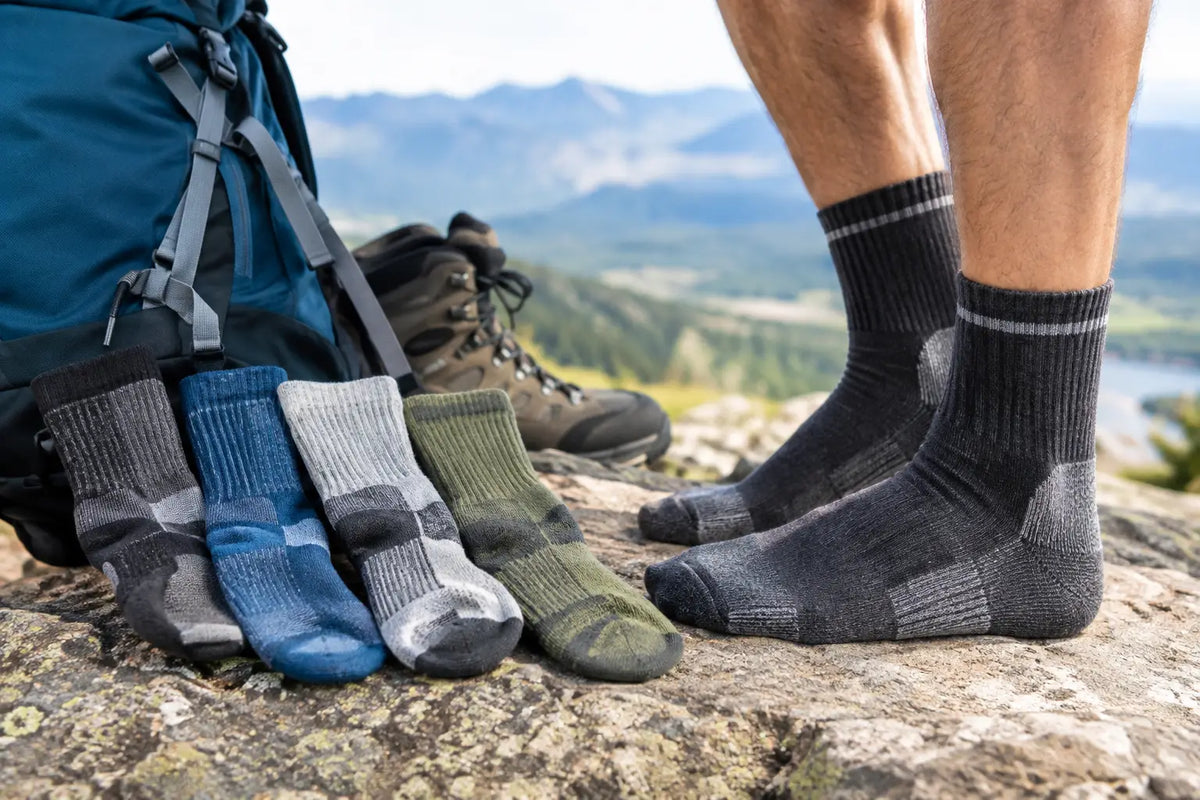
A hot spot halfway through a tab is not a minor irritation. Left alone, it becomes a blister, then a change in gait, then a problem that can spoil a patrol, exercise, hill day or long shift. So, which socks prevent blisters? The short answer is close-fitting technical socks that manage moisture, reduce movement inside the boot and provide cushioning where your feet take the load.
The longer answer matters because no sock can compensate for boots that are the wrong size, soaked-through footwear or an already damaged foot. The right pair is part of a system: correctly fitted boots, dry feet, sensible pacing and early action when friction starts.
Which socks prevent blisters in boots?
For most military, tactical and outdoor use, the best anti-blister socks are merino-blend or synthetic technical socks with a secure fit, reinforced heel and toe sections, and cushioning suited to the boot and activity. A well-made walking or combat sock should sit flat against the foot, with no loose fabric around the heel, arch or toes.
Merino wool blends are a dependable choice for long periods in boots. Merino helps regulate temperature and continues to insulate when damp. It also manages odour better than many fully synthetic options, which is useful on multi-day exercises or travelling when a fresh pair is not always available. Pure merino can wear faster under heavy use, however, so nylon or polyamide reinforcement is valuable around the heel and toe.
Synthetic socks made from polyester, nylon and similar technical fibres are often quicker drying and hard-wearing. They work particularly well for hot-weather training, physically demanding shifts and wet conditions where boots may not dry overnight. The trade-off is that they can retain odour more readily than merino. For many users, a merino-synthetic blend offers the best balance of comfort, drying time and service life.
Avoid ordinary cotton socks for marches, field use and extended time in boots. Cotton absorbs sweat, holds moisture and loses its shape once wet. That damp, bunched fabric increases friction precisely where blisters form.
Fit matters as much as fibre
A sock should be snug without restricting circulation. If it slides down at the calf, twists around the foot or leaves folds at the toes, it is working against you. Friction comes from movement, so every crease inside a boot is a potential hot spot.
Look for a shaped left and right construction where available, along with an elasticated arch band and a cuff that stays in place. Flat or hand-linked toe seams are worthwhile for anyone prone to rubbing across the tops or ends of the toes. A padded heel can help, but excessive bulk may make an otherwise well-fitting boot too tight.
This is why sock thickness cannot be chosen in isolation. A thick cushioned sock may protect feet in a roomy cold-weather boot, yet cause pressure and overheating in a close-fitting patrol boot. Conversely, a thin sock in a boot with too much internal volume can allow the foot to move, particularly on descents. Try socks with the boots you will actually wear, ideally later in the day when feet have expanded slightly.
Choose cushioning for the task
Light-cushion socks suit warm conditions, running, lightweight boots and users who prefer a precise boot feel. They dry quickly and take up less room, but provide less protection under heavy loads.
Medium cushioning is the most versatile option for general field use, dog walking, hill walking, cadet activities and everyday wear in combat boots. It gives useful support under the sole without making the boot feel overly tight.
Heavy cushioning is suited to cold weather, longer static periods, stiff leather boots and heavy load carriage. It can reduce impact and improve warmth, though it needs sufficient room in the boot. If your toes feel compressed or your feet become unusually hot, step down in thickness rather than forcing the fit.
Why double-layer socks can help
Double-layer socks are designed so the two layers move against each other instead of allowing the skin to rub against the sock. For people who repeatedly blister on the heel, ball of the foot or toes, they can be highly effective. They are especially worth considering for loaded marches, long-distance walking and breaking in compatible boots.
The alternative is a thin liner sock beneath a main walking sock. A synthetic or silk-style liner transports moisture away from the skin while creating a friction layer between the two socks. This setup can work well in cold or wet conditions and gives flexibility, as liners can be changed quickly during the day.
There is a limit. Two pairs of socks inside boots that are already close-fitting can restrict toe space, create heat and cause different pressure problems. Double-layer systems only work when the boot has the volume for them. Test them on shorter distances before relying on them for an exercise or event.
Sock height and boot compatibility
For ankle boots, socks should extend above the boot collar. A cuff that finishes at the collar tends to be pulled down as you walk, exposing skin to rubbing. With combat and high-leg boots, choose a crew or knee-length sock that remains comfortably above the top of the boot.
The material around the lower leg should provide enough hold to stay up without leaving deep marks. This is particularly relevant when boots are worn for a full shift or when carrying weight, as legs and feet can swell over the day. A tight cuff will not prevent blisters if it compromises comfort elsewhere.
Do not ignore your boots and foot condition
Even the best socks cannot correct heel lift, a crushed toe box or a boot that is too narrow across the forefoot. If blisters consistently form in the same place, inspect the boot before buying more socks. Heel blisters often point to movement at the rear of the boot. Blisters on the little toe or side of the foot can indicate a width issue. Blisters beneath the forefoot may result from heat, mileage, worn insoles or excessive sliding on descents.
Keep toenails trimmed straight across and file any sharp edges. Dry feet thoroughly before putting on socks, especially between the toes. On long days, carry a spare pair and change them when the first pair becomes saturated. A fresh sock can make a real difference after water crossings, heavy rain or prolonged work in warm conditions.
At the first sign of a hot spot, stop if the situation permits. Dry the area, smooth the sock, check for grit and apply suitable blister tape or a protective dressing. Continuing until pain becomes severe rarely saves time. It usually costs more time later.
A practical sock choice for field use
For general use in combat boots, start with a medium-cushion merino-blend sock with reinforced heel and toe panels, a flat toe seam and a secure arch fit. Pack a second pair for any full day outdoors. For hot-weather training or faster movement, choose a lighter technical option. For winter, longer static work or a heavy pack, move to a heavier cushioned sock only if the boot still gives your toes proper room.
If you have a known problem area, test a double-layer sock or liner system during training rather than on a major march. Keep notes on where discomfort starts, what the weather was doing and which boots you wore. That simple routine is more useful than guessing.
John Bull Clothing's specialist boot and fieldwear range is built around this practical approach: select socks as working kit, not as an afterthought. A pair that fits the boot, suits the conditions and stays dry for longer gives your feet the best chance of finishing the day intact.
The aim is not the thickest sock or the most expensive fabric. It is a stable, dry interface between foot and boot. Get that right before the miles build up, and a hot spot is far less likely to become the part of the day you remember.