
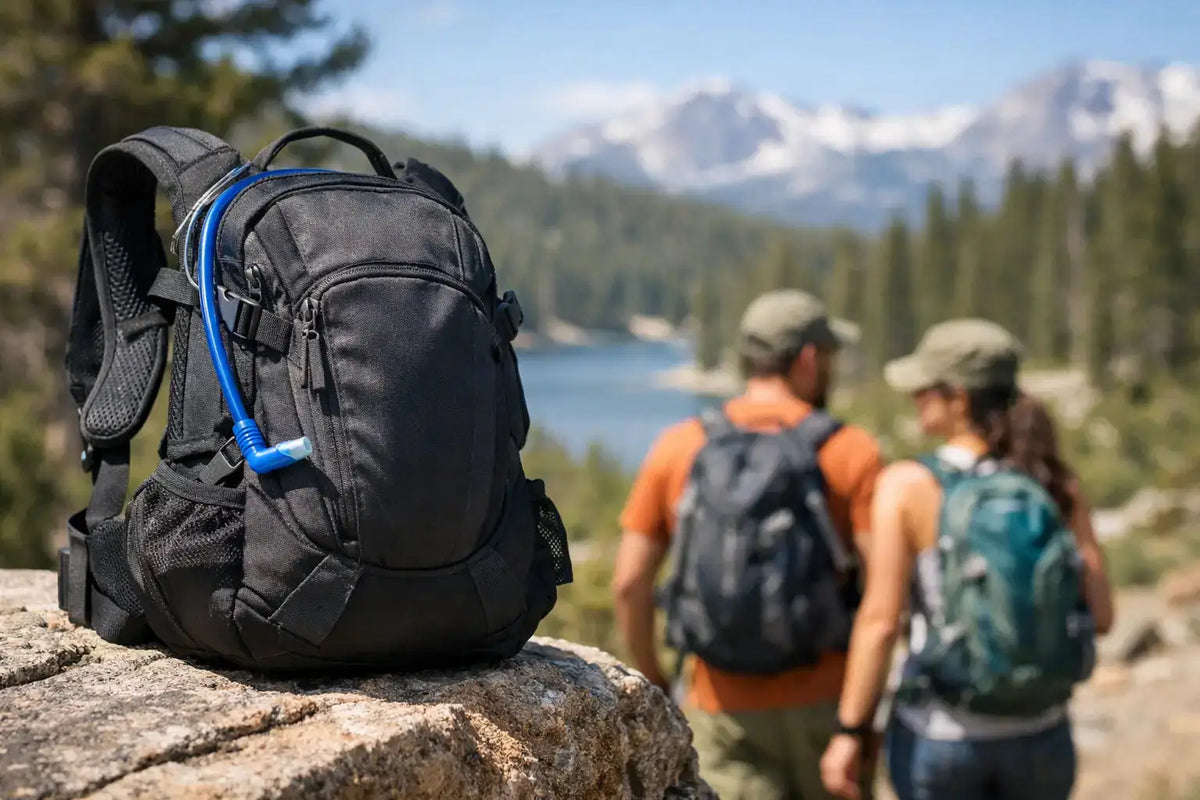
A water bottle clipped to webbing will get you by until it starts knocking against your kit, runs dry at the wrong moment, or forces you to stop moving just to take a drink. That is usually the point when the question shifts from why invest in a camelbak bag to whether you can afford not to. For military users, cadets, patrol staff and serious outdoor buyers, hydration is not a nice extra. It is part of how you maintain pace, focus and output over time.
CamelBak has held its place for a reason. The brand is widely recognised because it solves a simple operational problem properly - carrying water in a way that is accessible, stable and suitable for hard use. A good CamelBak bag is not just a pouch with a bladder thrown in. It is a piece of load-carrying equipment designed around movement, access and reliability.
Why invest in a CamelBak bag for field use
The strongest reason is efficiency. If you can drink without stopping, removing gloves, or shrugging off your pack, you tend to drink more regularly. That matters in warm weather, on long tabs, during range days, on exercise, or while covering ground where stopping is inconvenient. Small, regular intake is often more practical than waiting until you are already thirsty and reaching for a bottle.
That sounds basic, but in field conditions basic details matter. Hydration affects concentration, decision-making and physical output. Whether you are on a training area, moving through rough ground, or working a long outdoor shift, easier access to water usually means better hydration discipline.
There is also the matter of load stability. A properly designed hydration pack sits closer to the body than many improvised options. That reduces bounce and keeps the load more controlled when walking, running, climbing or getting in and out of vehicles. Anyone who has spent time in poor-fitting kit knows the difference straight away.
It is not only about water capacity
One mistake buyers make is assuming all hydration systems are broadly the same. They are not. Capacity matters, but so do harness design, back profile, hose routing, closure system and how easy the reservoir is to fill and clean.
CamelBak bags are generally built with these details sorted from the outset. The reservoir is the core of the system, and that is where cheaper alternatives often show their weakness. Bite valves that leak, awkward fill openings, poor-tasting plastics and hoses that kink all become irritating very quickly. In a shop, those flaws can seem minor. After a full day outdoors, they are not.
A better bag also earns its keep through layout. Some users want a low-profile hydration carrier to integrate with existing webbing or body armour. Others need extra space for essentials such as gloves, rations, admin items or a lightweight layer. The right CamelBak model gives you that flexibility without turning a hydration solution into an oversized burden.
Better hydration habits without breaking stride
A CamelBak bag changes how you use water because it removes friction. If the hose is there at shoulder level, you are more likely to take regular drinks while moving. If your only option is stopping, unfastening kit and reaching into a side pocket, you will often put it off.
That matters for more than comfort. It supports a steadier pace and fewer avoidable dips in energy, especially on long days. For cadets and less experienced outdoor users, it also encourages better routine. For experienced users, it simply makes an already understood requirement easier to manage.
Durability where cheaper packs usually fail
Kit that looks acceptable on first inspection can still let you down under real use. Stitching, zip quality, strap attachment points and fabric abrasion resistance all tell the real story. CamelBak has a strong reputation because its products are built for repeated use, not occasional fair-weather outings.
If your kit is going to be thrown into the boot, dragged across rough ground, worn over layers and used repeatedly in poor weather, construction quality matters. Paying less up front only makes sense if the item lasts. If you replace a poor hydration pack after one hard season, the savings disappear.
Why invest in a CamelBak bag instead of a standard backpack
A standard backpack can carry water, but it is not designed around drinking on the move. That is the key difference. You can put bottles in side pockets or stash a reservoir in a generic day sack, but the overall setup is usually less tidy, less stable and less accessible.
CamelBak bags are designed with hydration as the primary function, not an afterthought. Hose routing is more secure. Internal compartments are shaped around reservoir carriage. Weight distribution tends to be better for the intended load. The result is a cleaner setup with fewer improvised fixes.
For users who already carry larger packs, a dedicated CamelBak bag can also make sense as a separate short-duration option. There are plenty of situations where you do not need a full bergan or patrol pack but still need dependable water carriage. A compact hydration bag covers that middle ground well.
Useful for military, patrol and outdoor crossover
One reason CamelBak remains popular is that it translates well across roles. A soldier on exercise, a cadet on a field weekend, a police or security user on extended outdoor duty, and a hillwalker covering distance all need dependable hydration. The exact loadout changes, but the requirement does not.
That crossover value matters when buying your own kit. A well-chosen CamelBak bag can serve for training, leisure, travel and day-to-day outdoor use. It is not a niche purchase unless you choose a very specialised model. For many buyers, that wider utility helps justify the spend.
The trade-off is cost, but that is only part of the picture
The obvious hesitation is price. CamelBak is rarely the cheapest option on the shelf. If you need only occasional use for short walks or light casual wear, a budget hydration pack may be enough. Not every buyer needs top-tier kit for every task.
But if the bag is going to be used regularly, under load, in mixed weather, or alongside other field equipment, quality starts to matter more than sticker price. Better materials, a more reliable reservoir and a more stable carry system can mean less hassle and longer service life. That is usually where the value sits.
There is also the issue of confidence. When you trust your gear, you stop thinking about it. That applies to boots, waterproofs, sleeping systems and hydration equipment alike. A CamelBak bag is often worth the investment because it becomes one less thing to worry about.
Choosing the right model matters
Not every CamelBak bag will suit every role. Low-profile carriers work well when you are integrating with tactical gear or want minimal bulk. Larger packs suit longer days where you need room for extra kit alongside water. Some users want a streamlined setup for movement; others need all-day practicality.
That is why the buying decision should start with use case, not brand name alone. Think about duration, how much additional kit you need to carry, whether you will wear it over armour or outer layers, and how important a slim profile is. A good brand helps, but the right model is what makes the investment worthwhile.
If you are already used to military-style equipment, you will know that fit and purpose are everything. The best hydration bag is the one that works with your load carriage, not against it.
What you are really paying for
When people ask why invest in a CamelBak bag, they are often really asking what sits behind the price. The answer is not branding on its own. You are paying for a proven hydration system, dependable construction, practical design and a product that has earned trust through repeated hard use.
That does not mean every user must buy one. It means the investment makes sense when hydration is a routine part of how you operate outdoors. If your use is serious enough that poor kit becomes a recurring annoyance, then a well-made CamelBak bag is usually money spent in the right place.
For buyers who value proven field kit over gimmicks, that is the real point. Good equipment should reduce admin, support performance and stand up to repeated use without fuss. If a hydration bag does those three things consistently, it has already justified its place in your kit list.
When water access needs to be quick, reliable and built into how you move, buying once and buying properly is usually the smarter decision.