
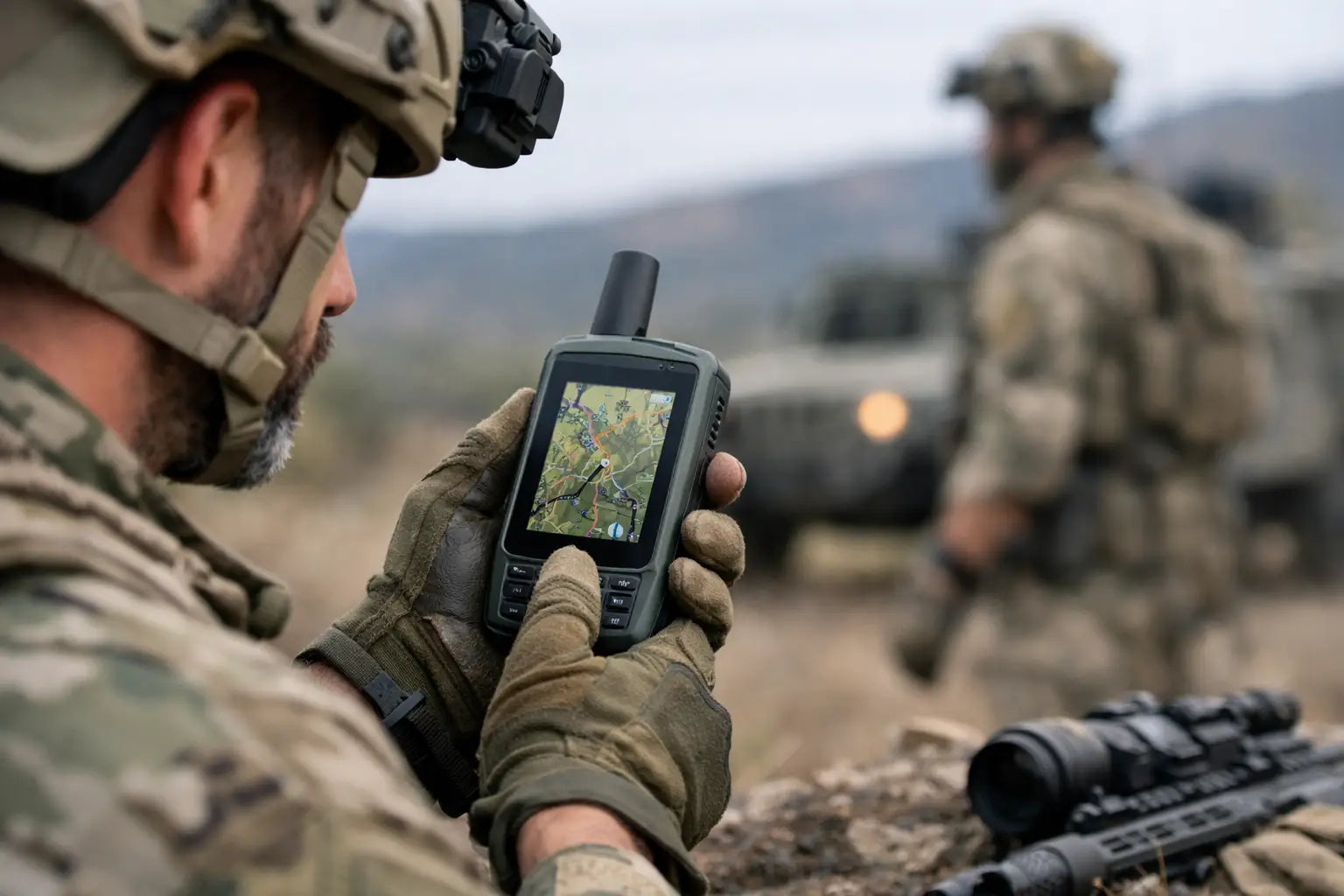
A GPS that works well on a Sunday hill walk can become a liability once gloves are on, weather closes in and you need a position fix quickly. That is where a Garmin military GPS earns its place. For military users, cadet instructors, security teams and serious outdoor users, the question is not simply whether a unit can navigate. It is whether it can do so reliably under pressure, in poor light, in bad weather and after being knocked about in the field.
Why a Garmin military GPS stands apart
Garmin has long held a strong reputation in field navigation because its devices are built around practical use rather than novelty. That matters if you are selecting kit for dismounted movement, vehicle use, training areas, expedition work or general fieldcraft. A military-spec GPS is expected to take abuse, keep a fix and remain legible when conditions are far from ideal.
The main difference between a basic outdoor GPS and a more military-relevant Garmin unit comes down to durability, control layout and compatibility with real-world operating needs. You are looking for housing that can handle rough treatment, screens that remain readable outdoors, and button-based operation that still works with gloves or wet hands. Touchscreens have their place, but many users still favour physical controls for straightforward reliability.
There is also the matter of confidence. In the field, kit has to justify the weight it adds to your load. If a navigation device drains too quickly, struggles under tree cover or becomes awkward to use under stress, it stops being an asset.
What matters most when choosing a Garmin military GPS
Battery performance should sit near the top of your list. Long endurance is not just convenient. It affects how much spare power you need to carry and how much admin is involved in keeping the device operational across longer periods away from mains charging. Some users will prefer replaceable AA batteries because they are easy to source and swap in the field. Others may be content with rechargeable systems if their pattern of use is shorter or vehicle-supported. Neither is automatically better. It depends on how you work.
Durability is the next practical filter. A proper field GPS should cope with rain, mud, vibration and knocks without becoming precious kit. That means looking at water resistance, casing strength and overall build quality. If the device is going to live in webbing, a bergen lid pocket or a vehicle dash area, it needs to tolerate repeated hard use rather than occasional care.
Accuracy is another area where headline claims do not always tell the full story. Most decent Garmin units will perform well in open ground. The difference shows up in woodland, steep terrain and built-up areas where signal conditions become less forgiving. Multi-band or multi-GNSS support can help, but so can a strong antenna design and sensible device positioning.
Screen clarity matters more than many buyers expect. You need to read the display quickly in bright daylight, low cloud, drizzle or under a red lens torch. Bigger screens can improve map reading, but they also add size and weight. Smaller units pack easily and tend to feel more secure in the hand, though they can be slower to interpret when you are moving.
Mapping, grid references and field use
For UK users, mapping compatibility is often the deciding factor. A GPS is only as useful as the map data and coordinate system it supports for the ground you are actually working on. If your training, exercise or outdoor use is UK-based, clear handling of grid references and appropriate map support will matter more than flashy global features you may never use.
A good Garmin military GPS should let you work cleanly with waypoints, routes and track logs. Those functions sound basic, but they are the core of practical navigation. You may be plotting RVs, marking vehicle positions, recording a route for later review or simply ensuring you can backtrack accurately in poor visibility. The device should make those jobs quick and logical.
There is a trade-off here. More advanced mapping and navigation features usually bring more menu depth. That can be useful for experienced users, but it can also slow things down if the interface is cluttered. If speed and simplicity matter more than detailed mapping layers, a more straightforward unit may be the better choice.
Button controls or touchscreen?
This is one of the more useful questions to ask before buying. In military and tactical settings, button-operated GPS units still make a lot of sense. They are easier to use with gloves, less affected by rain and generally more predictable when you need to make a quick input under stress.
Touchscreen models can offer stronger map interaction and faster route planning, especially for users already familiar with smartphones and digital mapping. They can also be more intuitive for occasional users. The drawback is that touch response can become frustrating in wet or cold conditions, and a cracked screen is rarely a minor inconvenience.
For many buyers, the answer comes down to role. If the device is for regular fieldcraft, navigation training and rough outdoor use, buttons remain a solid choice. If the unit will spend more time in vehicles, on training tasks or in mixed outdoor and recreational use, touchscreen models may be worth considering.
Size, weight and how you carry it
Navigation kit has to fit the rest of your loadout. A larger GPS may offer better screen readability and more battery capacity, but it also competes for pouch space and adds weight to already busy equipment. For dismounted use, compact units are often easier to stow on webbing, in a chest pocket or on a shoulder strap where they can be reached without rummaging through a pack.
Mounting options are worth checking as well. Some users need a unit that can transfer easily between hand use and a vehicle mount. Others simply need something they can secure with a lanyard and trust not to disappear into the undergrowth during a halt. These are small details until they start affecting speed and kit discipline.
Who actually needs a Garmin military GPS?
Not every buyer needs a top-tier device. If you are a cadet instructor running local exercises, a capable and durable handheld with sound battery life may be enough. If you are working in security, search support, expedition leadership or regular field training, you may benefit from stronger mapping options, tougher construction and faster signal performance.
There is also a place for Garmin GPS units among airsoft users and tactical enthusiasts, particularly those building realistic field setups or navigating larger rural sites. The same applies to serious hillwalkers and bushcraft users who want a harder-wearing unit than a general leisure GPS.
The key is to buy for use, not for the product sheet. Too much device can be wasteful. Too little can become expensive once you start replacing gear that was never suited to the job.
Common buying mistakes
One of the most common mistakes is assuming that any rugged-looking GPS is fit for military-style use. Appearance is not the same as field reliability. Another is buying on screen size alone, then finding the unit awkward to carry or too power-hungry for extended trips.
Some buyers also overlook how they will power the device in practice. A rechargeable unit may look neat on paper, but if your pattern of use involves days away from charging points, replaceable battery support can be far more practical. The reverse can also be true. If you mainly run shorter tasks and already carry a power bank, rechargeable may suit you perfectly well.
It is also worth thinking about familiarity. A GPS with every function under the sun is no advantage if you have not learned its menus before stepping off. A simpler unit that you understand properly will usually serve you better.
Is a Garmin military GPS worth the money?
For the right user, yes. Garmin devices typically command stronger prices because they are built around dependable outdoor use, broad accessory support and established mapping capability. That does not mean every model is automatically the right buy, but it does mean the brand has credibility where reliability matters.
A cheaper unit can look attractive at first glance, especially for occasional use. The problem comes when screen readability is poor, controls feel flimsy or signal performance falls away in difficult terrain. Navigation equipment is not the place to save a small amount and accept a large compromise.
For buyers sourcing dependable field kit from a specialist outfitter such as John Bull Clothing, the advantage is not just brand recognition. It is access to equipment that makes sense alongside the rest of a practical loadout, whether that means bergen carriage, wet weather use, cadet training or hard-use outdoor work.
A Garmin military GPS is best viewed as part of a wider navigation system rather than a magic answer on its own. Map, compass, battery planning and user competence still matter. Get those foundations right, choose a unit that matches your role, and you end up with kit that earns its place every time you head into the field.