
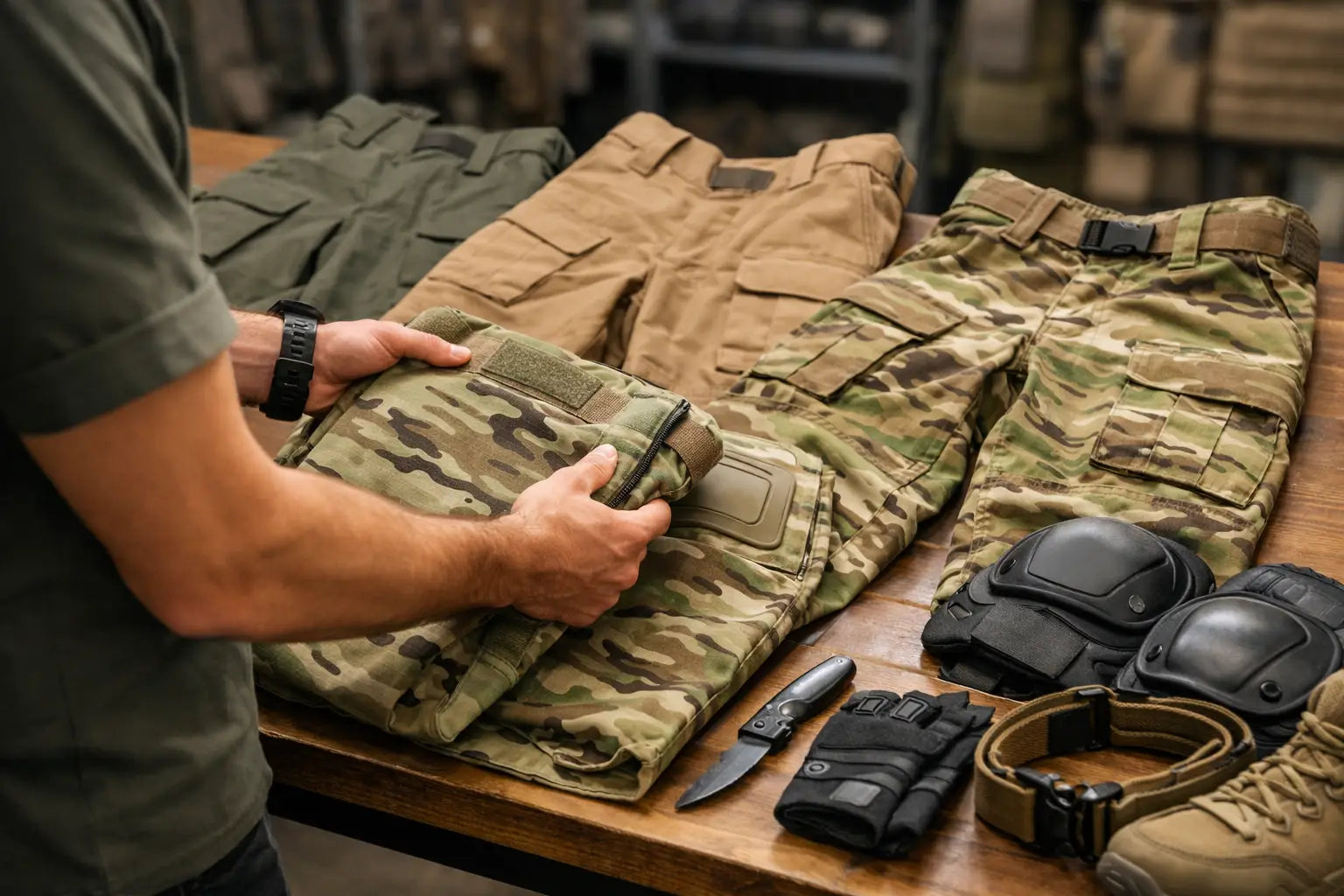
Combat trousers that look right on a product page can be a poor choice once you are kneeling on wet ground, moving with loaded pockets, or wearing them for a full day on exercise. If you are working out how to choose combat trousers, the right starting point is not camouflage pattern or price - it is what you actually need them to do.
A good pair should match the job, fit properly over the full day, and stand up to hard use. That sounds straightforward, but the differences between one pair and another matter more than many buyers expect. Fabric weight, pocket layout, knee design, waistband cut and weather suitability all affect performance in the field.
How to choose combat trousers for the job
The first question is where and how they will be used. Trousers for cadet training, dog walking and occasional range days do not need the same specification as trousers used for repeated field work, patrol tasks or demanding outdoor use.
If you are buying for regular wear, start with durability and comfort rather than appearance. Hard-wearing fabric, strong seat and knee areas, secure pocket closures and a fit that allows movement should come first. If the trousers are mainly for light use, you may not need reinforced panels or heavier construction, and a lighter pair can be more comfortable over long periods.
It also helps to think about season. A heavier polycotton trouser can make sense in cooler months or rough terrain, but in warm weather it may feel too hot and hold more moisture than you want. A lighter ripstop option can be better for mobility and ventilation, though there is always a trade-off if the fabric is too light for the ground and tasks involved.
Fit matters more than most buyers think
Poor fit ruins otherwise decent kit. Combat trousers should give you enough room through the seat and thigh to crouch, climb and kneel without binding, but they should not be so loose that excess fabric catches or shifts under webbing and belt kit.
Waist sizing is only part of the picture. The rise, seat and leg cut all change how the trousers sit when moving. Some wearers prefer a straighter, traditional cut for general field use. Others want a more modern cut with shaped knees and a neater lower leg. Neither is automatically better - it depends on your build, your boots and whether you need more room for layering.
Length is just as important. Trousers that are too short can ride up when kneeling or stepping over obstacles. Too long, and they bunch badly around the ankle and heel. If you wear boots daily, judge the trouser with boots on, not in socks on the bedroom floor.
Waist adjustment and belt compatibility
A solid waistband should sit comfortably with a belt and not pinch once pockets are loaded. Side adjusters can help fine-tune fit, especially if you sit between sizes. Wide belt loops are worth having if you use a proper duty or tactical belt rather than a standard casual belt.
If you expect to carry items in the trouser pockets, allow for that when choosing size. A pair that fits perfectly when empty can feel tight and awkward once a mobile phone, notebook, gloves or small kit are added.
Fabric choice: what really matters
When buyers ask how to choose combat trousers, fabric is usually where the biggest practical difference sits. Not all combat trousers are built from the same cloth, and the label tells you a lot about expected performance.
Polycotton remains a dependable all-round choice. It balances durability, structure and reasonable comfort, and it suits general military-style and outdoor use well. A ripstop weave is often worth having because it helps limit tear spread if the fabric gets nicked or snagged.
Pure cotton can feel comfortable, but it is slower to dry and less suitable in persistently wet conditions. At the other end, synthetic-heavy fabrics can dry quickly and keep weight down, but some wearers find them less comfortable against the skin or noisier in movement.
There is no perfect fabric for every task. For mixed UK conditions, many buyers are best served by a durable polycotton or ripstop trouser that can handle brush, kneeling and repeated washing without becoming stiff or thin too quickly.
Reinforcement and stretch panels
Reinforced knees and seat panels are useful if you spend time kneeling, crawling, working outdoors or using the trousers regularly rather than occasionally. They add life to the garment and usually justify the extra cost.
Stretch panels are a different question. They can improve comfort and movement, particularly around the gusset or knee, but they are not essential for everyone. Some wearers value the extra mobility; others prefer simpler construction with fewer points of wear. If reliability and straightforward field use are your priority, simple and strong still has a lot going for it.
Pocket layout should suit your kit
Pocket count is easy to overvalue. More pockets do not always mean better trousers. What matters is whether the pockets are secure, accessible and placed where they remain useful when sitting, kneeling or wearing other kit.
Large cargo pockets are the obvious feature on most combat trousers, but check the closure. Buttons can be secure and dependable. Hook-and-loop is quicker, though it can be noisy and wear over time. Press studs sit somewhere in between. The best option depends on whether speed, silence or long-term durability matters more to you.
Pocket depth matters as much as size. Shallow cargo pockets can spill contents when moving. Rear pockets may be useful for light items, but many field users ignore them because they become uncomfortable when seated. Smaller utility pockets for mobile phones, torches or multitools can be genuinely useful if they are well placed, but they should not create bulk around the thigh.
A simple rule applies here: buy for the kit you actually carry. If your trouser pockets are always empty because everything sits on belt order or in a pack, a cleaner design may be the better choice.
Knees, seat and movement
Good combat trousers should work with the body rather than against it. Articulated knees, a gusseted crotch and sensible panel design all make a difference during longer wear.
If you spend time on rough ground, knee areas deserve close attention. Some trousers are cut simply, which can be perfectly serviceable for general use. Others use shaped knees or accept knee pad inserts. That is more relevant for tactical training, airsoft, security use or tasks involving regular kneeling on hard surfaces. The added bulk is worthwhile for some users and unnecessary for others.
Seat construction also tells you whether the trouser is built for use or just styled to look the part. Double fabric in high-wear areas is rarely a bad sign. Cheap stitching in the seat and inside leg usually shows itself quickly.
Weather and terrain change the right answer
British conditions are rarely tidy. A pair that feels ideal on a dry training day can be miserable in rain, mud or dense undergrowth. Think about your usual ground conditions before choosing.
For wet and cool conditions, slightly heavier fabric can be more reassuring and resistant to abrasion. For warmer months, lighter fabric with decent breathability can keep you more comfortable over a long day. In woodland or scrub, snag resistance becomes more important than low weight. On ranges, campsites or dry tracks, comfort and movement may matter more.
Camouflage pattern has its place, but it should be chosen after cut, fabric and practical features. If the trouser is uncomfortable, wears out quickly or carries badly, the pattern will not rescue it.
Build quality is often visible before first wear
You can usually spot a stronger pair of trousers by looking closely at the basics. Stitching should be even and clean, with no loose threads around stress points. Pocket flaps should lie flat and fasten securely. Fabric should feel substantial enough for the intended use, not thin for the sake of a lower price.
Check bar tacks or reinforcement at pocket corners and other high-stress areas. Look at zip quality if the design uses one. Inspect the inside seams if possible. None of this is glamorous, but it is the difference between trousers that last and trousers that start failing after a few outings.
Price matters, but cheapest rarely means best value in field clothing. If the trousers are for regular wear, it usually makes more sense to buy a dependable pair once than replace a poor pair twice.
How to choose combat trousers without overbuying
There is a temptation to buy the most feature-heavy option available. Sometimes that is the right call, especially if you know exactly why you need reinforced knees, extra utility pockets or specialist construction. Often, it just means paying for features you will not use.
Most buyers are better served by choosing a proven, practical specification that fits well, handles British conditions and matches the level of use expected. For cadets, general outdoor wear, surplus users and many enthusiasts, a durable all-round pair is often the smarter choice than a highly specialised design.
A specialist military outfitter such as John Bull Clothing is useful here because the range tends to reflect real-world use rather than fashion-led labelling. That matters when you want kit that performs properly, not just trousers with a tactical look.
The right combat trousers should disappear once you put them to work. If you are not thinking about the waistband, the knee movement, the pocket closures or the fabric dragging in the wet, you have probably chosen well.