
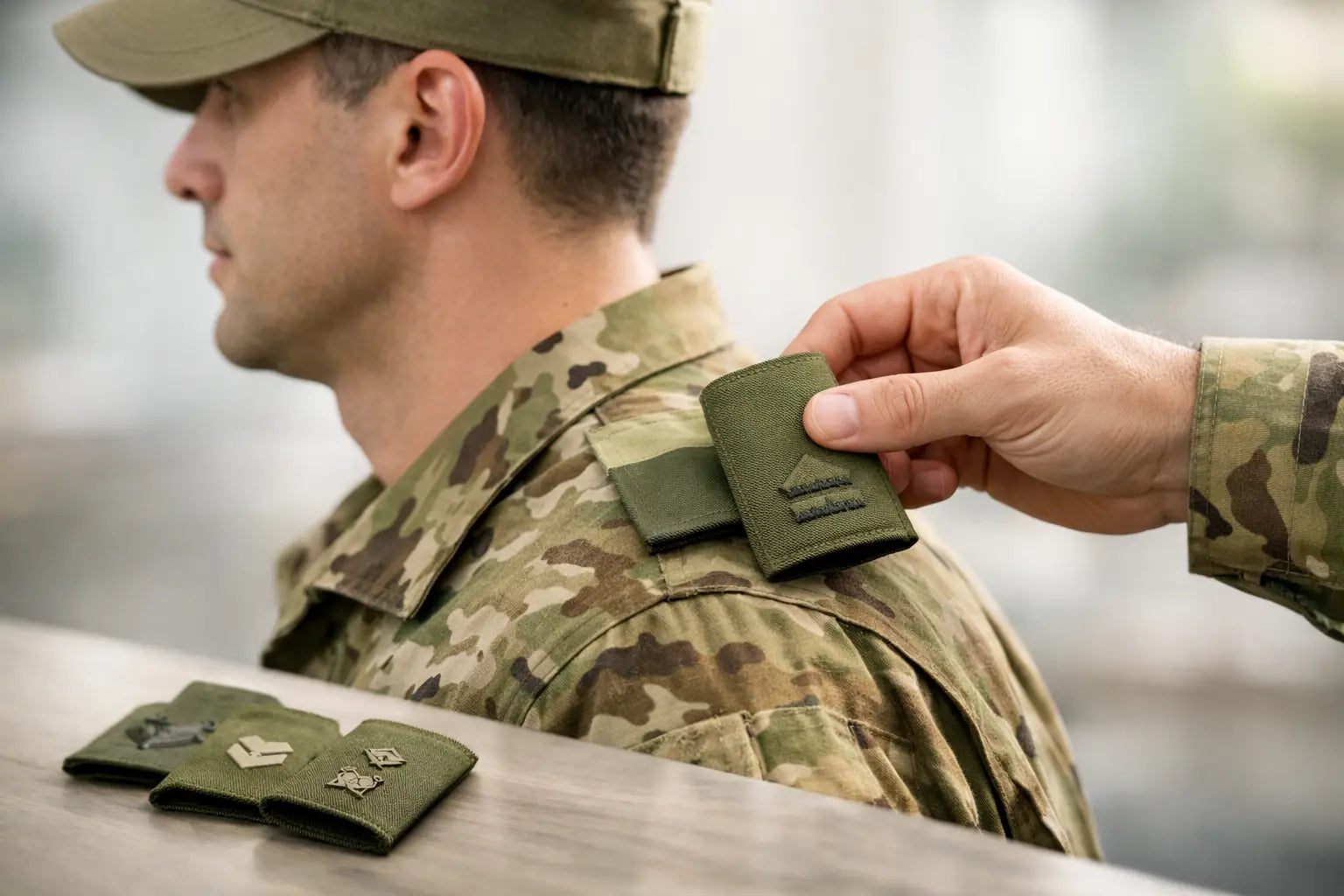
If your rank slide is sitting twisted, riding too low, or facing the wrong way, it stands out straight away. Knowing how to wear rank slides properly is not about fuss for the sake of it. It is about looking correctly turned out, keeping insignia clear, and matching the standard expected for your unit, cadet force, or dress requirement.
Rank slides are simple kit, but they are often worn incorrectly. Usually, the problem is not the slide itself. It is placement, orientation, or using the wrong slide for the garment. A clean, correctly fitted slide gives a sharper appearance on parade, in training areas, and during day-to-day wear where authorised.
How to wear rank slides on the shoulder
In most cases, rank slides are worn on the shoulder epaulettes of a shirt, jumper, combat jacket, smock, or similar uniform item designed to take them. The slide fits over the epaulette and should sit flat, with the rank clearly visible from above and from the front quarter.
The closed end of the slide goes towards the collar, while the open end passes over the epaulette from the shoulder end. Once in place, it should be pulled up so it sits neatly and does not sag. If the slide is too loose, it can shift during movement and start to look untidy very quickly.
The wording or insignia must face the correct direction. In simple terms, the rank should be readable the right way up when viewed from the head down towards the shoulder. If it looks upside down to someone standing in front of you at normal eye level, it is probably fitted the wrong way round.
That sounds obvious, but it is one of the most common mistakes, especially with new cadets, mixed kit setups, or second-hand uniform items where slides have been removed and refitted in a hurry.
Check the garment before fitting rank slides
Not every shoulder tab is the same. Some epaulettes are broad and structured, while others are narrower or softer, particularly on lighter shirts and certain surplus garments. Before fitting the slide, check that the uniform item is actually intended to take rank slides and that the slide size matches the width of the epaulette.
A proper fit matters. If the slide is too narrow, it will pinch and sit high at the edges. If it is too wide, it may rotate or creep. Neither looks correct, and both can make otherwise good kit appear badly assembled.
This is where buyers often come unstuck. A rank slide that suits one jumper may not suit a lightweight shirt in the same way. British Forces-style clothing, cadet uniform, surplus items and privately purchased field kit can vary. It is worth checking dimensions rather than assuming one size fits every shoulder board.
Service dress, parade wear and working kit
How to wear rank slides can vary slightly depending on the order of dress and the garment involved. On parade or formal occasions, the priority is a crisp, centred appearance with clean, undamaged slides that match the rest of the dress standard. Faded slides, frayed edges, or mismatched insignia are far more noticeable against smarter uniform.
On working kit or in field use, the same basic rules apply, but there is a practical balance. The slide still needs to be secure and legible, yet garments may be heavier, bulkier, or used with body armour and webbing. In those cases, you are looking for secure fit first, then clean presentation.
If your unit or organisation has specific standing orders, those take priority. Dress regulations always override general advice.
Getting the position right
Once the slide is threaded onto the epaulette, it should sit high enough to look intentional and tidy, but not so tight against the collar that it bunches the garment. On most shirts and jackets, the slide should cover the epaulette evenly and lie flat along its length.
The fastening at the end of the epaulette, whether buttoned or otherwise secured, should remain properly closed. Do not force an oversized slide over a fastened tab if it strains the fabric. It is better to remove the fastening, fit the slide correctly, and then refasten the epaulette.
Keep both sides even. A surprisingly common issue is one slide sitting further forward than the other. On inspection, that immediately gives an uneven look. Fit one side, then check the other in a mirror before wearing the garment out.
Left and right side consistency
Rank slides are generally worn on both shoulders where the uniform is designed for them. The key point is consistency. The same rank, same style, same condition, and same height on each shoulder.
Mixing a newer slide on one side with a visibly faded one on the other rarely looks acceptable, especially on parade dress. The same applies if one slide carries different lettering, embroidery style, or backing shade. Small differences become obvious on the shoulder line.
Common mistakes when wearing rank slides
Most issues come down to four things: incorrect orientation, poor fit, wrong garment, or worn-out slides. All are easy enough to fix once you know what to look for.
Slides fitted upside down are the classic error. After that comes loose slides that drift down the epaulette and start to hang badly. Another problem is trying to fit rank slides onto garments that were never meant to carry them, which usually leads to twisting or bunching.
Condition matters as well. A slide with loose stitching, fading, bent edges, or heavy wear can let down otherwise smart kit. If the rest of your uniform is squared away, tired insignia becomes more obvious, not less.
There is also the question of appropriateness. Not every environment, event, or organisation uses the same rank identifiers in the same way. Cadet forces, re-enactment groups, surplus users, and airsoft players may all wear British-style rank slides, but the standard for accuracy and authorisation can differ. If you are wearing rank insignia as part of actual service, cadet duty, or formal dress, follow the relevant regulations rather than guesswork.
How to wear rank slides with cadet and surplus uniform
For cadets, the main aim is straightforward: wear them neatly, wear the correct rank, and make sure they are easy to read. Newer wearers often focus on getting the badge or wording right and overlook whether the slide itself is straight. A two-second check before falling in usually sorts that.
With surplus uniform, there can be more variation. Older garments may have differently sized epaulettes, softer fabric, or signs of prior wear. That does not stop you wearing rank slides properly, but it does mean you may need a slide that matches that specific piece of clothing rather than relying on a general set.
If you are building out British military-style kit for events, displays, or practical use, consistency across the whole setup matters more than chasing a quick fix. Properly matched slides look better and stay put for longer.
Keeping rank slides in good order
Rank slides do not need much maintenance, but they do benefit from basic care. Keep them clean, dry, and flat when not in use. If they are embroidered, avoid crushing them into overloaded kit bags where the edges can curl.
If a slide becomes badly creased or misshapen, replacing it is usually the better option. Trying to rescue a tired item can leave you with rank that still looks substandard. For parade, inspections, and formal wear, fresh insignia is often the simplest answer.
It also helps to keep a spare pair in your locker, bergen, or kit layout if rank slides are part of your regular dress. They are small items, easy to misplace, and awkward to be without when you need them at short notice.
Choosing the right rank slides
The right slide is the one that matches your rank, your unit requirement, and the garment you are actually wearing. That sounds basic, but it is worth stating because many problems start at purchase stage. Buyers choose by title alone, then realise the format, colour, or width is wrong for their shirt or jumper.
A dependable military outfitter such as John Bull Clothing is useful here because specialist range matters. Rank slides are not generic fashion accessories. They need to correspond with recognised military-style clothing, correct terminology, and practical wear.
Before buying, check the intended use. Is it for cadet uniform, service-style knitwear, combat clothing, or parade dress? Does the background colour suit the garment? Is the slide width appropriate for the shoulder strap? Those details make the difference between kit that looks right and kit that looks improvised.
If you are ever unsure, the safest approach is simple. Match the slide to the specific garment, fit it so the closed end sits towards the collar, keep the insignia upright and centred, and replace anything that looks tired. Rank slides are a small part of the uniform, but they carry more weight than their size suggests. Get them right, and the rest of your turnout looks sharper straight away.