
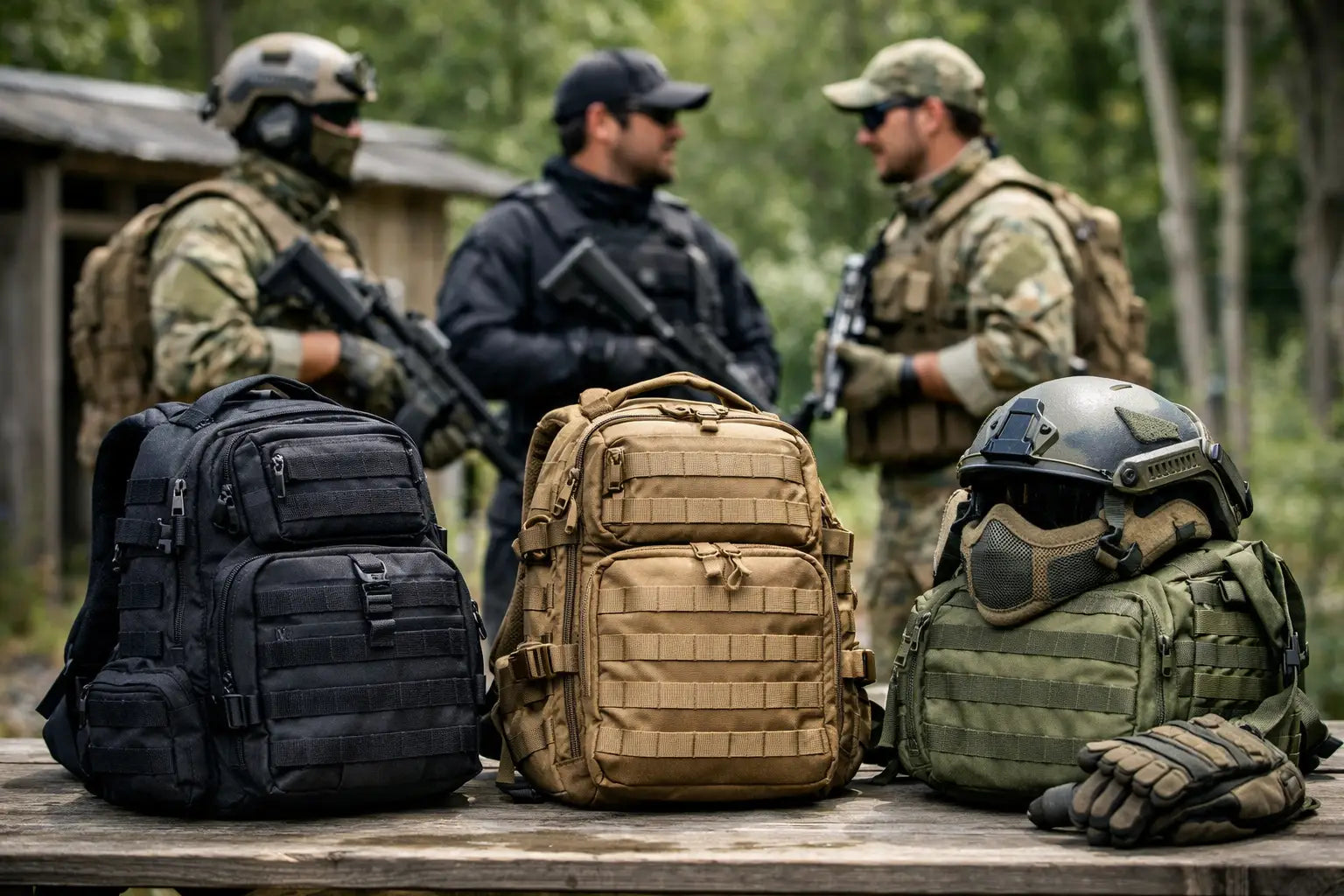
A backpack that drags on branches, rattles loose magazines or throws your balance off is a liability long before the first objective. The best tactical backpacks for airsoft carry the equipment you genuinely need, stay close to the body and suit the way you play - whether that is a short woodland skirmish, an all-day site game or a self-sufficient milsim.
A tactical pack is not simply a larger version of a day bag. It needs sensible compartment layout, hard-wearing fabric, usable attachment points and shoulder straps that remain comfortable over webbing or body armour. The right choice comes down to load, duration and how much of your essential kit is already carried on your rig.
What an airsoft backpack needs to do
For most players, a pack is support equipment rather than fighting load. It carries water, spare gas or batteries, food, wet-weather layers, a basic repair kit and personal items while your magazines, radio and immediate medical kit stay accessible on your chest rig, belt kit or plate carrier.
That distinction matters. An oversized bag encourages overpacking, catches on cover and can make it awkward to shoulder a rifle. A compact tactical day pack, properly loaded, is usually more useful than a large rucksack stuffed with equipment that will not be used during the day.
Durability should be judged by more than a camouflage pattern. Look for dense fabric, reinforced stress points, dependable zip pulls and stitching that is tidy and consistent around shoulder straps, grab handles and compression straps. A pack will be put down on wet ground, scraped through woodland and loaded into vehicles. Field kit must tolerate that treatment.
Choose capacity before features
Capacity is the first practical decision. Litres are useful as a guide, but compartment shape and internal organisation matter just as much.
12 to 20 litres for skirmish days
A compact pack in this range suits players running a chest rig or plate carrier who only need water, a snack, spare batteries, a speedloader, eye-protection supplies and a lightweight waterproof layer. It sits neatly against the back and is less likely to interfere with movement through buildings, narrow paths or dense woodland.
This is often the best option for regular weekend airsoft. It is large enough for support kit without becoming a burden. If you run a hydration bladder, check that the pack has a dedicated sleeve and a protected route for the drinking tube.
20 to 35 litres for longer games
For all-day events, colder weather or games where you need more consumables, a medium tactical pack gives useful extra room. You can carry a warmer layer, lunch, spare gloves, batteries, gas, water and a small tool roll without packing everything tightly into one compartment.
This size works particularly well for players travelling to a site in full kit, then keeping the pack at a safe area or vehicle between games. Compression straps are valuable here. When the bag is not full, they stop the load shifting and keep the profile controlled.
35 litres and above for milsim support
A larger rucksack is justified for multi-day milsim events, extended patrol scenarios or occasions where you must carry shelter, sleeping equipment, more food and additional clothing. For normal walk-on games, it is excessive.
Before choosing a larger pack, consider your wider load-carrying system. A substantial rucksack and a bulky plate carrier can conflict at the shoulders and upper back. Some players are better served by a smaller assault pack combined with carefully selected belt kit or webbing.
The features that earn their place
MOLLE or PALS webbing is useful when it solves a specific carrying problem. It allows pouches for a first-aid kit, utility items or additional water, but covering every panel with accessories creates snag points and unnecessary weight. Keep external pouches limited to equipment that needs quick access or will not fit properly inside.
A separate hydration compartment is one of the most worthwhile features. A bladder keeps water weight close to the back and avoids loose bottles moving around inside the main compartment. For hot summer games, plan for more water than you think you will need. A hydration carrier from a trusted field brand such as CamelBak remains a sensible choice where drinking capacity is the priority.
Clamshell or wide-opening designs make a difference when searching for a particular item. A narrow top-loading pack can work for clothing and larger items, but it is less convenient for finding a battery, spare fuse or pair of dry gloves in poor light. Internal mesh pockets and zipped organisers are useful for small essentials, provided they do not take over the main storage space.
Quiet hardware is worth considering. Loose buckles, metal zip pulls and dangling straps can make more noise than expected when moving through woodland. Secure excess webbing with elastic retainers or tape it neatly. This also prevents straps catching on door handles, branches and vehicle interiors.
Fit matters more than camouflage
A tactical backpack should sit high and close to the torso, not hang low over the hips. Tighten the shoulder straps until the load is stable, then use the sternum strap to stop them spreading under movement. Do not pull it so tight that it restricts breathing or makes a plate carrier uncomfortable.
If the pack includes a waist belt, use it for heavier loads and longer distances. On a small day pack, a simple removable waist strap may be enough to control bounce while running. For milsim loads, a padded hip belt transfers a meaningful amount of weight away from the shoulders.
Try the pack with the equipment you actually wear at games. A bag that feels comfortable over a T-shirt can be awkward over a combat jacket, radio harness and armour carrier. Pay attention to the shoulder strap spacing and the top of the back panel. If either presses against your carrier's shoulder straps, discomfort will build quickly.
Camouflage has a place, particularly for woodland or themed events, but it is secondary to fit and construction. Olive green, coyote and muted earth colours are practical across most UK sites. Black suits urban-style games but can become noticeably hot in direct sun and may stand out in green woodland.
Pack your airsoft bag for access, not volume
Place dense, heavy items close to the back panel. Water, gas and batteries should not sit at the outer edge of the pack where they pull the load backwards. Softer equipment, such as a waterproof jacket or spare clothing, can fill gaps and protect more delicate items.
Keep batteries in a secure pouch or small protective case, especially if they share a compartment with tools or metal accessories. Gas bottles should be upright where possible and protected from knocks. Never leave them in excessive heat, including a vehicle on a warm day.
Your emergency kit should be immediately identifiable. At a minimum, carry supplies appropriate to minor cuts, blisters and site use, and know the site's emergency procedure. A clearly marked pouch mounted where you can reach it is more practical than a loose collection of plasters at the bottom of the bag.
It also pays to separate clean and wet kit. A dry bag or waterproof liner keeps spare layers, socks and electronics protected if the pack is placed on wet ground or caught in a heavy shower. UK game days have a habit of changing conditions halfway through the brief.
Common mistakes when buying an airsoft backpack
The most common error is buying military-looking kit without checking how it carries. A large, inexpensive bag can appear well equipped with webbing and pockets, yet have thin shoulder straps, poor stitching and zips that fail under a realistic load. A simpler, well-made pack is usually the better investment.
Another mistake is using the backpack as a replacement for accessible fighting load. Reloads, a radio, eye-protection wipes and any item needed during a contact should not require you to remove the pack. Arrange your rig first, then choose a bag to support it.
Finally, avoid building a pack around every possible scenario. For a standard day, take the essentials and leave the rest at base. A lighter bag improves mobility, reduces fatigue and makes the equipment you do carry easier to find.
Selecting the right pack for your game
For fast skirmishes, choose a low-profile 12 to 20 litre pack with hydration compatibility and enough organisation for batteries and personal items. For longer woodland games, step up to a 20 to 35 litre design with compression straps, a rain cover or liner and room for layers. For milsim, prioritise load transfer, durability and compatibility with your shelter and sleeping system over external tactical styling.
At John Bull Clothing, the sensible approach is to match the pack to the job, then build the rest of your loadout around it. A pack that stays balanced, keeps water available and leaves your immediate equipment where you can reach it will serve you better than the biggest bag on the rack.