
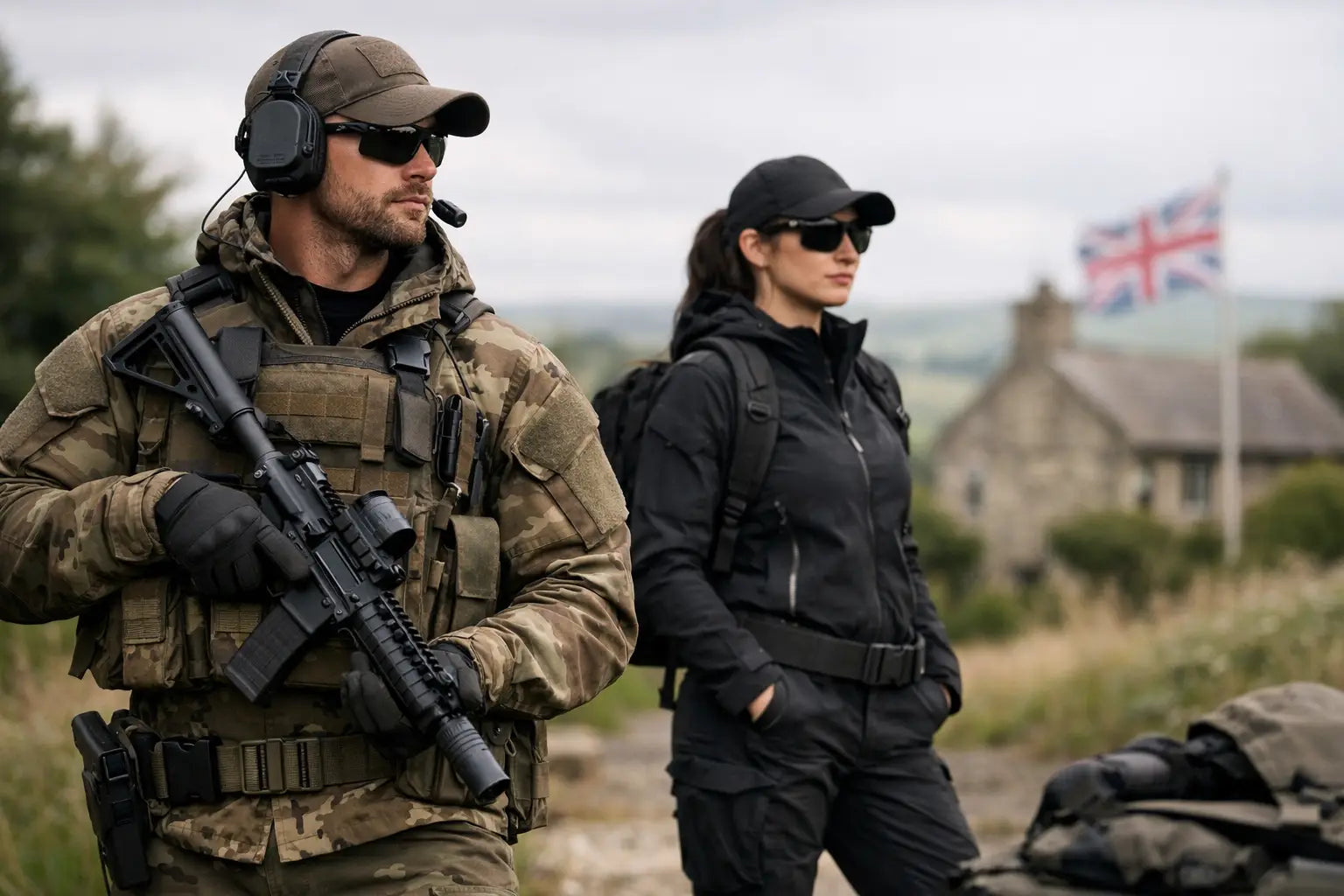
A pair of combat trousers is only useful if it still works after wet grass, vehicle seats, kneeling, a loaded belt and repeated washes. That is the standard behind the tactical clothing trends UK buyers are moving towards in 2026. The strongest shift is not towards louder camouflage or more pockets for their own sake. It is towards dependable clothing that layers properly, fits the task and holds up when the weather turns.
For serving personnel, cadets, security staff, airsoft players and outdoor users, tactical clothing remains function-first. Good kit needs to give freedom of movement, manage moisture, carry essential items sensibly and work with boots, body armour, webbing or a rucksack. Style follows utility, not the other way round.
Tactical Clothing Trends UK Buyers Are Choosing
Better fabrics, not heavier fabrics
Older military-style clothing often relied on weight for durability. Modern tactical garments are increasingly using ripstop polycotton, stretch-woven panels, reinforced knees and quick-drying finishes to achieve the same aim with less bulk. That matters in Britain, where a day can start cold and dry, become wet by lunchtime and finish with a sharp wind.
Polycotton combat trousers remain a sensible all-round choice. They are hard-wearing, easier to care for than specialist softshell fabrics and generally cope well with regular field use. Stretch fabric can improve comfort around the seat, knees and gusset, particularly for climbing, driving or moving from standing to kneeling. The trade-off is that high-stretch garments can be less resistant to abrasion and heat, so they are not automatically the best choice for every job.
Look for reinforcement where wear actually occurs: knees, seat, pocket edges and belt loops. A lighter trouser with well-placed reinforcement is usually more useful than a heavy design that restricts movement throughout the day.
Layering has replaced the one-jacket approach
The UK climate makes a single do-everything jacket a poor bet. Tactical clothing is increasingly built around modular layers: a breathable base layer, a warm mid-layer and an outer shell selected for wind, rain or rough ground. This gives the wearer more control over temperature than a bulky insulated jacket worn from first light to last.
A moisture-wicking base layer is particularly useful under combat shirts, fleece or waterproofs. It helps reduce the cold, clammy feeling that develops after hard movement followed by a stop. Mid-layers are becoming less bulky too, with grid fleeces and lightweight insulated jackets offering warmth without making it difficult to wear webbing or a day sack.
Waterproof shells are still essential, but breathability and pack size now matter as much as headline waterproofing. A shell that stays at the bottom of a rucksack because it is noisy, stiff or too warm is not useful kit. For routine dog walking, range use or low-intensity patrol work, a softshell may be the more practical outer layer. For prolonged rain, exposed ground or static work, carry a proper waterproof as well.
Combat trousers are becoming more task-specific
Cargo pockets are not disappearing, but the best current designs are more disciplined in their layout. Large external pockets can snag on vehicle interiors, brush and doorways, while overloaded thigh pockets affect movement. The trend is towards flatter-profile storage, secure closures and pockets positioned so they remain accessible with a belt, plate carrier or jacket in use.
Knee-pad compatibility is another feature worth considering. Integrated pad pockets make sense for range work, airsoft, search activity and jobs involving frequent kneeling. However, they add fabric and can feel unnecessary on a long walk. If you only occasionally need protection, separate knee pads may offer better value and flexibility.
Fit is also improving. Tactical trousers no longer need to be either skin-tight or excessively baggy. A properly cut seat, articulated knees and a gusseted crotch provide movement without surplus material catching on kit. Allow enough room for a base layer in colder months, but avoid sizing up so far that the waistband needs constant adjustment.
Camouflage, Plain Colours and Professional Use
Camouflage remains relevant where it has a practical purpose. British MTP and compatible patterns are familiar choices for military-style field clothing, cadet activities and airsoft. They break up the wearer’s outline in mixed terrain and match much of the wider ecosystem of packs, pouches and equipment already in use.
For security, range instruction, travel and everyday outdoor use, plain colours are often the better option. Olive green, coyote, black and earth tones retain the hard-wearing tactical appearance without drawing unnecessary attention. This is particularly useful when clothing must look professional around the public or when a full camouflage pattern is not suitable for the role.
There is no single correct colourway. Match the garment to the environment, the rest of your kit and any unit, site or organiser requirements. For operational or organised activities, always follow the relevant dress policy rather than assuming a commercially available pattern is authorised.
The return of practical field shirts
Combat shirts are now a common choice wherever body armour or load carriage is worn for extended periods. Their close-fitting, breathable torso fabrics reduce bulk beneath a carrier, while tougher sleeves provide abrasion resistance and space for identification patches. They are not a replacement for every field shirt, though.
A conventional lightweight shirt offers better versatility when armour is not being worn. It can be layered over a base layer, worn open for ventilation when appropriate and used across a wider range of outdoor tasks. For hot, active work under armour, a combat shirt earns its place. For general field use, a well-made shirt and sensible layering may be the more adaptable system.
Less novelty, more useful detail
The most worthwhile tactical clothing trends are usually found in small construction details. Two-way zips, adjustable cuffs, proper belt loops, ventilation zips, drainage eyelets and secure pocket closures all have a direct effect on use. None of them is glamorous, but each can prevent irritation during a long day.
Buyers are also paying more attention to compatibility. A jacket should allow access to trouser pockets. A waistband should work with a duty belt. Sleeves should not ride up beneath gloves, and a hood should turn with the head rather than block peripheral vision. These are the checks worth making before committing to a garment.
Avoid choosing solely by pocket count or an aggressive-looking cut. Extra features add weight, bulk and potential failure points. The best tactical clothing has only the features that support the job at hand.
Building a Useful Tactical Clothing System
Start with the conditions you actually expect to face. Someone attending weekend airsoft events needs different priorities from a security professional on foot patrol, while a cadet parent may reasonably value easy washing and room to grow over advanced technical fabric. Clothing should be selected as a system, not as isolated items.
A dependable starting point is a hard-wearing pair of combat trousers, a breathable base layer, a practical field shirt or combat shirt, a warm mid-layer and a waterproof outer shell. Add gloves, headwear and suitable boots according to weather and activity. This covers most UK use without filling a wardrobe with specialist garments that rarely leave the hanger.
When trying on tactical trousers or jackets, wear the belt and layers you normally use. Squat, step up, reach overhead and sit down. Check whether the waist pulls, whether the knees bind and whether you can reach key pockets. A good fit in front of a mirror can reveal its weaknesses quickly once you start moving.
Durability also includes care. Brush off mud, close zips and hook-and-loop fastenings before washing, and follow the garment label rather than relying on the hottest cycle available. Reproof waterproof outer layers when water stops beading on the surface. Simple maintenance extends service life and helps expensive kit keep doing its job.
At John Bull Clothing, the useful approach is straightforward: choose trusted, field-relevant clothing for the conditions, then make sure it works with the rest of your equipment. The right garment does not need to make a statement. It needs to remain comfortable, practical and reliable when the ground is wet, the load is heavy and the day runs longer than planned.