
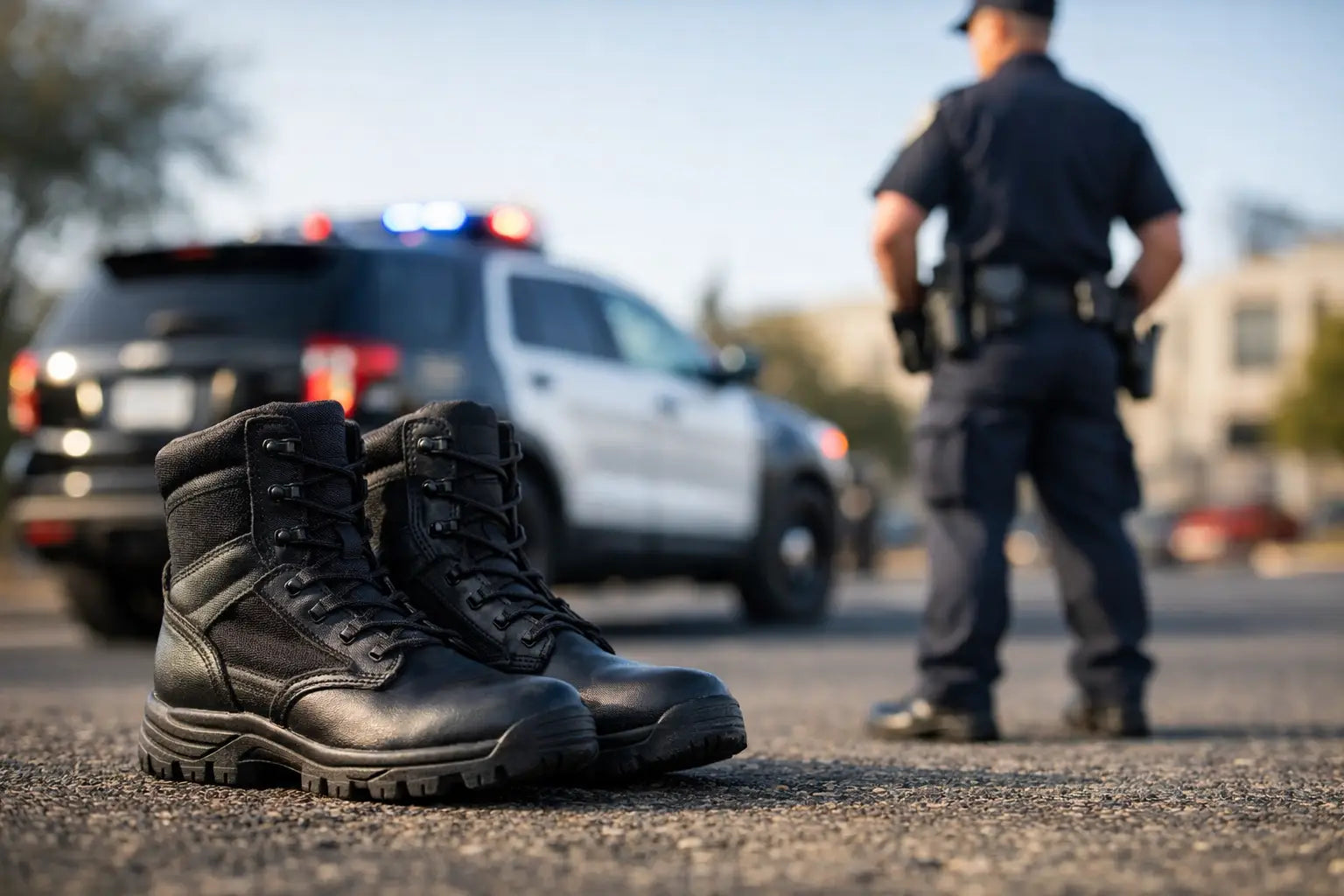
A patrol boot is not judged in the first five minutes of a fitting. It is judged after hours on hard pavement, repeated vehicle entry and exit, wet stairwells, uneven ground and the final walk back to the station. This police patrol boots review focuses on the features that make a practical difference for officers, security staff and anyone who needs dependable black tactical footwear.
The right pair should protect and support without becoming a burden. That sounds straightforward, but patrol footwear involves compromises. A heavily protected boot may offer excellent ankle stability, yet feel tiring during a long foot patrol. A lightweight boot may feel quick and comfortable out of the box, but can wear faster or offer less protection in poor weather. The best choice depends on your role, shift pattern, terrain and local uniform requirements.
Police Patrol Boots Review: The Core Requirements
A patrol boot must be fit for sustained use rather than occasional outdoor wear. Grip, support, waterproof protection and durability are the foundations, but each must be considered alongside fit. A technically impressive boot that rubs your heel or pinches your toes will not perform well on a twelve-hour shift.
Police and security work can move rapidly between environments. One shift may mean standing on concrete, driving, walking residential streets, attending an incident in rain or working around loose gravel and mud. Footwear needs enough sole stability for uneven surfaces while remaining flexible enough for normal walking, kneeling and working pedals safely.
Appearance also matters. Many forces and employers require plain black boots with a restrained profile and no unnecessary bright branding. Check the relevant dress policy before choosing a style, particularly if you are purchasing non-issued footwear.
Fit Comes Before Every Other Feature
Boot size is only the starting point. Patrol boots should hold the heel securely, leave enough room for natural toe movement and support the foot without excessive pressure across the instep. Try boots on later in the day where possible, when feet are slightly more swollen, and wear the socks you intend to use on duty.
A boot that feels tight in the shop rarely improves after a few shifts. Leather and fabric uppers can soften, but they will not change a fundamentally poor fit. Equally, do not buy a loose fit expecting thick socks to solve it. Heel lift causes rubbing, reduces stability and makes long periods on foot unnecessarily uncomfortable.
Width and volume matter
Two people wearing the same size can need very different boots. Wider feet may benefit from brands known for generous fitting, while a narrow heel may require a more secure lacing system. Foot volume matters too. A high-volume foot can feel compressed under a waterproof membrane, particularly when paired with thick winter socks.
Lace the boot properly before making a judgement. A well-designed lacing system should let you lock the heel in place while adjusting tension over the forefoot and ankle. Speed hooks can make daily fitting quicker, although they should be smooth and secure enough not to snag laces or trouser hems.
Sole Grip for Pavement, Stairs and Wet Ground
A patrol sole should provide reliable traction on wet paving, painted surfaces, grass and loose ground. Deep, aggressive lugs are useful in mud, but an extremely open tread can carry stones and feel less stable on hard urban surfaces. For routine police and security work, a balanced tread pattern is often more useful than a specialist mountain sole.
Look for a sole compound designed to remain grippy in the wet, rather than focusing only on how deep the tread looks. Hard compounds can be durable but may feel less secure on slick ground. Softer rubber can improve grip but may wear sooner, especially for staff who cover significant mileage on tarmac.
The sole should also have enough torsional stability to prevent the foot from twisting excessively on uneven ground. That does not mean the boot should feel rigid. A patrol boot still needs a natural flex point at the forefoot for walking, crouching and driving.
Ankle Support Without Excess Bulk
High-leg boots are common for patrol use because they can help protect the ankle on kerbs, rough ground and uneven surfaces. Support is not simply a matter of collar height, however. A tall but soft boot can provide less control than a mid-height boot with a well-shaped heel cup and secure lacing.
For predominantly urban shifts, a mid-cut patrol boot may offer a sensible balance between mobility and support. For rural patrols, event work, dog handling or roles that regularly involve rough terrain, a more supportive high-leg design can be worthwhile. The trade-off is weight and heat retention, particularly during warmer months.
If you have previous ankle injuries, do not rely on a boot alone to solve the problem. Good fit, suitable insoles and professional advice where needed are more useful than simply choosing the tallest available boot.
Waterproofing: Useful, but Not a Free Upgrade
Waterproof membranes are valuable for regular work in rain, wet grass and standing water. They help keep feet dry and can make a substantial difference to comfort on a cold night shift. They also tend to reduce breathability compared with non-waterproof boots.
For officers working mostly in vehicles, custody environments or indoor security settings, a breathable leather or fabric patrol boot may be more comfortable than a fully waterproof model. For rural, neighbourhood and outdoor event duties, waterproofing is usually a stronger priority.
No boot remains waterproof if water enters over the collar. Wet weather trousers, gaiters for specialist use and sensible route choices all play a part. Waterproof boots also need routine care. Clean off mud and road grime, allow them to dry naturally away from direct heat and apply the appropriate treatment for the upper material. Drying a soaked leather boot against a radiator can damage the leather and shorten its service life.
Leather, Fabric or a Combination Upper?
Full-grain leather patrol boots are valued for durability, weather resistance and the way they can mould gradually to the foot. They generally require more care and can feel heavier during the break-in period, but a quality leather boot can give long service when maintained correctly.
Fabric and leather combination boots often reduce weight and improve ventilation. They can be a sensible choice for fast-moving work or warmer conditions, although exposed fabric sections may show wear sooner than full leather. Synthetic boots can be lighter still and are often easy to clean, but long-term durability varies greatly between models.
There is no single best material. Consider the conditions you actually work in, not just the worst weather you might encounter once a year.
Comfort Over a Full Shift
Cushioning underfoot matters when standing on concrete or walking on hard pavement for hours. A supportive footbed can reduce fatigue, but overly soft cushioning is not always better. Feet need stable support, particularly when carrying a duty belt or other equipment.
A removable insole is useful because it allows the boot to dry more thoroughly and makes replacement straightforward. Some users benefit from aftermarket insoles, especially where arch support is required. Make changes gradually and test them on shorter wear periods before relying on them for a full shift.
Do not overlook socks. A good pair of moisture-managing patrol socks helps reduce friction, controls heat and improves the fit of the boot. Cotton socks tend to hold moisture and are less suitable for long, active duties.
Durability and Value in Patrol Footwear
The cheapest boot is not always the lowest-cost option. A low-priced pair that loses grip, splits at the flex point or breaks down internally after a few months is poor value if it has to be replaced repeatedly. Look closely at stitching, sole attachment, lace hardware and reinforcement around the toe and heel.
A replaceable or repairable construction can be an advantage on premium boots, but it is only worthwhile if the upper, fit and support remain sound. For many users, dependable cemented construction from a proven tactical or outdoor brand is entirely suitable. The key is buying for the workload rather than the label.
At John Bull Clothing, the strongest options are usually those from established boot makers with a clear record in military, police and field use. Product reviews are helpful, but read them with context. A reviewer using boots for weekend dog walks may have different priorities from someone completing regular night patrols.
Break In Your Boots Properly
Even comfortable boots need a controlled break-in period. Wear them at home, then on short walks, before committing to a demanding shift. Check for pressure points at the heel, little toe and top of the foot. Address small problems early with proper sock choice, lacing adjustments or suitable insoles rather than waiting for blisters.
Keep boots clean, dry and correctly treated, and inspect the tread before it becomes visibly worn. A patrol boot earns its place through quiet reliability: secure footing in the rain, stable support when the shift runs long and comfort you do not have to think about.