A cap badge is a small item with a great deal attached to it. Army cap badges identify regiment, corps or unit heritage at a glance, and the correct pattern, finish and fitting matter whether the badge is for a beret, a cadet uniform, a collection or a presentation piece. It is not simply a case of choosing a design that looks right.
For serving personnel, the badge worn is governed by current dress regulations and unit direction. For veterans, families and collectors, the key considerations are authenticity, period, condition and intended display. Getting those details right shows proper respect for the regiment and avoids buying an unsuitable badge.
What army cap badges represent
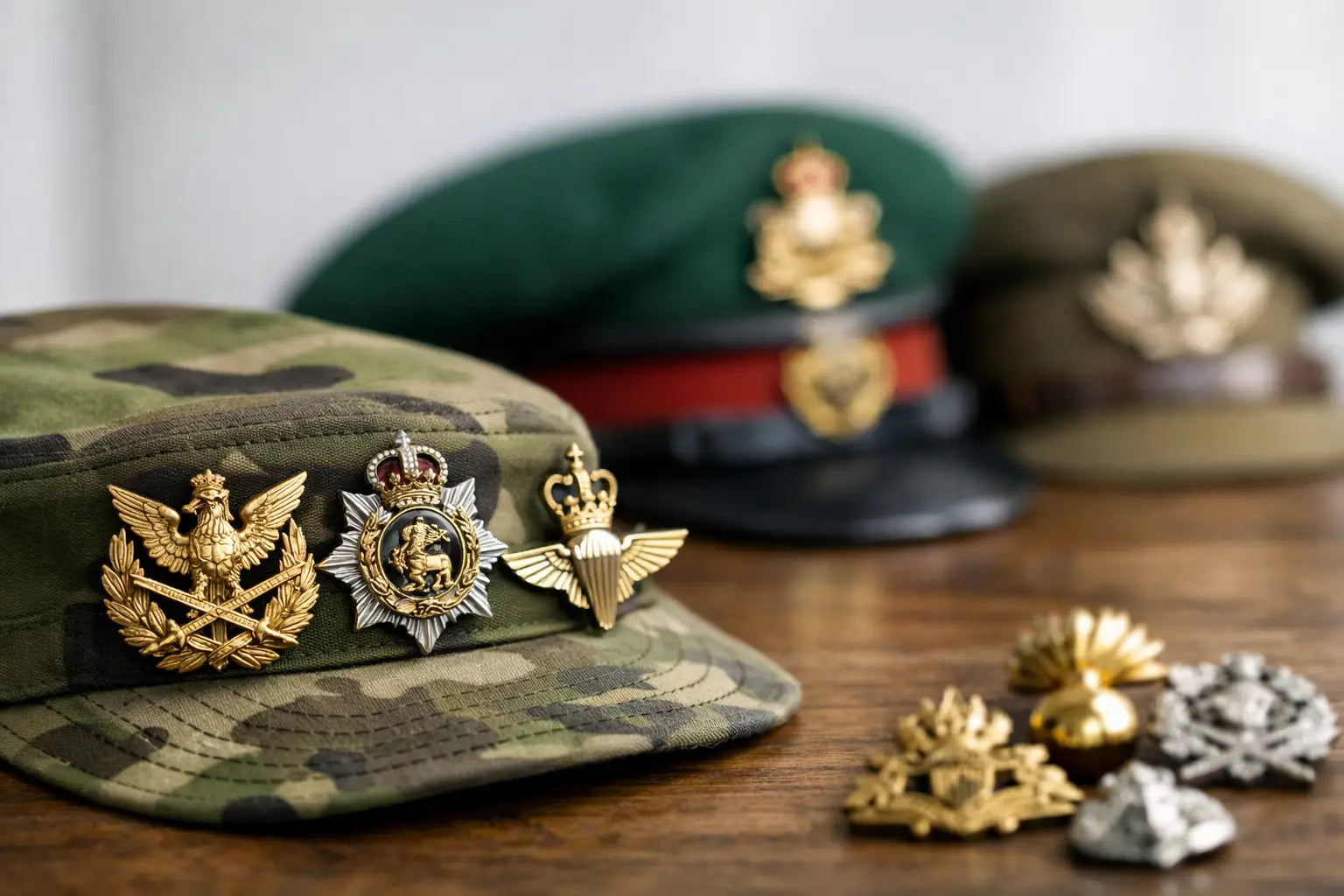
British Army cap badges carry a regiment or corps identity in metal, embroidery or fabric. Their designs often incorporate established symbols such as crowns, animals, weapons, wreaths, mottos and battle honours. These details are not decorative extras. They reflect a unit's history, role and traditions.
A badge may be worn on a beret, field service cap or other authorised headdress, depending on the unit and order of dress. The same regiment can also have related insignia, including collar dogs, shoulder titles, stable belt fittings, rank slides and blazer badges. They are connected, but they are not interchangeable.
This matters particularly when buying a gift. A cap badge for the Parachute Regiment, Royal Artillery, Royal Engineers or a county regiment carries a specific association. If the recipient served in a particular unit, use that unit as the starting point rather than selecting a generic Army design.
Choosing the correct army cap badge
The right badge depends first on its purpose. A serving soldier should follow their chain of command and current dress instructions, especially where amalgamations, postings or ceremonial duties are involved. Cadets should check the requirements of their detachment or contingent before purchasing, as approved headdress and insignia can differ by organisation.
For a veteran or family member, establish the full regiment or corps name, and where possible the years of service. Regimental structures have changed considerably over time. A historic county regiment may have been amalgamated into a larger modern regiment, and the current cap badge may not be the one worn during the individual's service.
Check the unit, period and pattern
A badge can be correct in general terms but wrong for a particular era. Crown style, title scroll, construction and fastening method can all help identify a period pattern. Collectors often distinguish between original issue, later manufacture, re-strikes and commemorative items. None is automatically a poor choice, but each should be described honestly and priced accordingly.
Original badges may show wear, patina or service marks. That can add historical interest, although it may make them less suitable for a polished display. New manufacture badges are usually the practical option for authorised wear, replacements, cadet use and clean presentation pieces. A reproduction should never be presented as an original, particularly when buying for a collector.
If the badge is intended for a regiment frame, statue, shadow box or memorial display, visual condition usually takes priority. Choose a clean example with clear detail and a finish that matches the rest of the presentation. A badge with bent lugs or heavy verdigris may still have collecting value, but it needs careful handling.
Match the badge to the headdress
Most metal cap badges use two lugs on the rear. These pass through the beret or cap and are secured with a split pin, backing plate or similar fitting. Do not force the lugs through thick material or bend them repeatedly. Metal fatigue can weaken the fixing and make a serviceable badge difficult to wear.
Some badges use a slider, while others are cloth, embroidered or fitted to a specific backing. The correct system depends on the badge and headdress. A metal badge designed for a beret will not necessarily sit correctly on a peak cap, and a cloth formation sign is not a substitute for a cap badge.
Before fitting, check that the badge sits level and centrally according to the relevant dress instructions. A loose or crooked badge looks poor on parade and can be lost easily in the field. If you are unsure which fitting is required, compare the rear of the badge with the headdress rather than relying on the front design alone.
Metal, anodised and cloth badges
The finish affects both appearance and use. Traditional stay-brite badges have a bright, polished look and are commonly associated with ceremonial or barrack dress. They are durable and easy to maintain, though scratches can be visible under close inspection.
Anodised aluminium badges are lightweight and often used where a lower-shine appearance is preferred. They can be a sensible choice for routine wear, but the finish can mark if it is cleaned aggressively. A soft dry cloth is normally enough for day-to-day care.
Cloth and embroidered insignia are usually selected for field clothing, tactical headwear or specific unit dress. They are less reflective and better suited to garments where metal fittings would be impractical. Their trade-off is that fine detail may be less pronounced than on a metal badge, particularly at distance.
There is no single best finish. A bright badge may be right for formal wear and a regimental presentation item, while a subdued version is more appropriate for field use where authorised. The operational requirement, unit policy and intended garment should lead the decision.
Fitting a cap badge properly
A badge should be fitted only after the beret or cap has been shaped and checked for fit. Trying to reposition a badge several times can enlarge the holes in the material and leave the fabric looking untidy. Mark the centre point carefully, then attach the badge with the approved fitting.
With lug-mounted badges, keep the lugs straight where possible and use a suitable retaining method behind the fabric. Do not rely on tape as a permanent fix. It can fail in wet weather, leave residue and make removal more difficult.
For presentation use, protect the rear of the badge from the mounting board with an appropriate backing material. This prevents pressure on the lugs and reduces the risk of marking the display. If the badge is being mounted alongside medals, photographs or shoulder titles, allow enough space for each item to be read clearly rather than crowding the frame.
Care, storage and handling
Cap badges last well when kept dry, clean and protected from knocks. After wear, wipe away moisture and fingerprints with a soft cloth before storing the item. Avoid harsh metal polish unless you are certain it suits the finish. Over-polishing can remove protective coatings, soften detail and leave an unnaturally bright surface on older badges.
For long-term storage, keep badges in a dry box, drawer organiser or lined display case away from direct sunlight and damp. Do not store bare metal badges loose with keys, buckles or other hardware. Small scratches quickly spoil a high-shine finish.
Collectors should avoid altering an original badge to make it look newer. Straightening a slightly bent lug or removing surface dirt may be reasonable when done carefully, but heavy polishing and replacement parts can reduce historical value. When condition is uncertain, preserve rather than restore.
Buying for service, collection or a gift
A practical purchase begins with a few clear details: the regiment or corps, whether the badge is current or historic, the required mounting type, and whether it is for wear or display. That information narrows the choice quickly and prevents the most common mistakes.
For a gift, ask discreetly about the recipient's service history and avoid assuming that a family surname points to a particular regiment. A properly matched cap badge, paired with a regiment frame or a carefully chosen presentation item, is far more meaningful than a generic military ornament.
John Bull Clothing customers often shop across both field kit and regimental accessories, but the same rule applies to every purchase: choose equipment and insignia for the job they need to do. A cap badge deserves that level of care because it represents more than a piece of uniform hardware.
When in doubt, confirm the regiment, period and intended form of dress before committing. A correctly chosen badge will sit properly on the headdress, look right in a display and carry the unit identity with the respect it merits.