
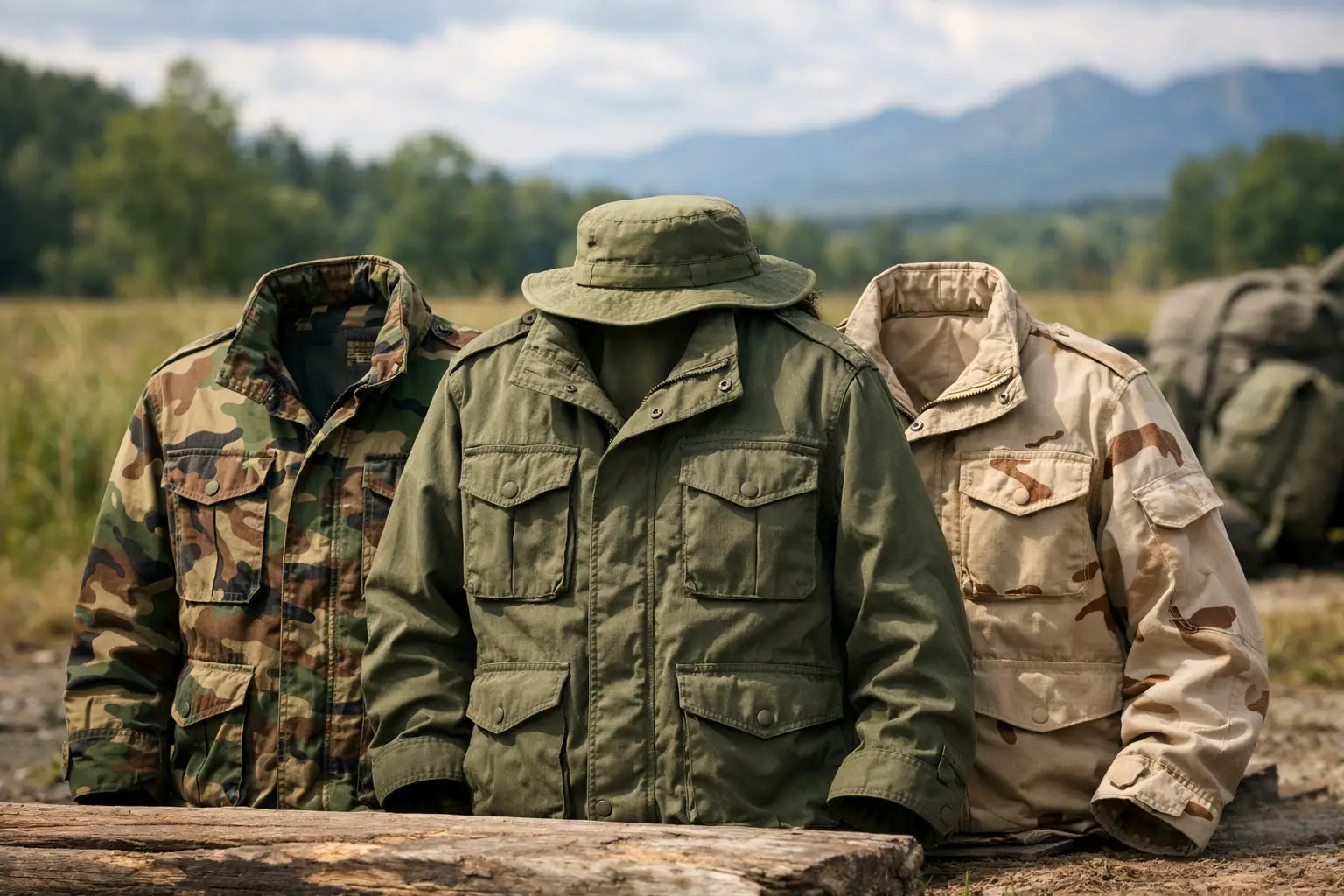
A surplus jacket can be one of the most useful pieces of kit in the wardrobe - provided you buy it for the job it can actually do. This army surplus jackets review looks beyond the camouflage pattern and military label to assess the points that matter: condition, weather protection, layering room, pocket layout and long-term serviceability.
For military personnel, cadets, airsoft players and outdoor users, surplus clothing has an obvious appeal. It is often hard-wearing, practical and designed around movement rather than fashion. But a jacket that served well as part of a layered issue system may not be the right answer for a wet dog walk, winter patrol, hill day or static range session. The best choice depends on the environment and the rest of your kit.
What Makes an Army Surplus Jacket Worth Buying?
A proper military jacket is generally built to meet a clear requirement. That may mean generous pockets for field items, hard-wearing fabric at high-wear areas, a longer cut to protect the lower back, or enough room beneath it for insulating layers and webbing. Those details are why genuine surplus remains popular long after a particular pattern has left issue.
The main advantage is function-first design. A field jacket does not need a fashionable slim fit if it has to accommodate a shirt, fleece or smock underneath. Large chest pockets are more useful when wearing gloves. A substantial zip, storm flap and adjustable cuffs make a noticeable difference when conditions turn poor.
There are trade-offs. Military garments can be heavier and bulkier than modern civilian outdoor jackets. Some older fabrics are highly durable but less breathable, while many surplus jackets were designed as part of a complete clothing system rather than as a single waterproof solution. Buying on appearance alone is how people end up disappointed.
Army Surplus Jackets Review: Genuine Issue vs Reproduction
The first distinction to make is between genuine issued stock and reproduction clothing. Neither is automatically better, but they suit different buyers.
Genuine surplus jackets offer military provenance and, depending on the item, a very high standard of construction. British DPM, MTP and older European field garments often have practical pocket arrangements, strong stitching and fabrics selected for sustained use. They can be excellent value when the condition is good and the sizing is understood. For collectors, veterans and those who want original kit, genuine issue has obvious appeal.
The downside is variation. Surplus stock may have been stored for years, issued previously or come from mixed production runs. A jacket described as used may show fading, names or unit markings, repaired seams, missing buttons or a softened water-repellent finish. These are not always faults, but they must be reflected in the condition and price.
Reproduction jackets are normally more consistent in sizing and finish. They are a sensible option for cadet activities, airsoft, costume use and regular everyday wear where matching items or a clean, uniform appearance matter. Quality varies widely, however. A reproduction may copy the look of an issue garment without matching its fabric weight, reinforced areas or stitching standard.
If operational usefulness is the priority, inspect the specification rather than trusting the pattern. If authenticity is the priority, genuine condition, labels and provenance deserve closer attention.
Fabric, Weather Protection and Warmth
A jacket’s fabric tells you more about its likely performance than its camouflage does. Traditional cotton-rich field jackets and smocks are tough, quiet and comfortable, particularly in cool, dry conditions. They often handle abrasion well and are less prone to the loud rustle associated with some synthetic shells. Their limitation is sustained rain. Once saturated, cotton-rich fabric becomes heavier and dries slowly.
Polycotton combat jackets balance durability with quicker drying times. They work well as a wind-resistant outer layer in mild weather and are particularly useful when you expect to be moving. They are not a substitute for waterproofs in prolonged rain.
For wet conditions, look for a purpose-built waterproof jacket with a membrane, taped seams and a properly designed hood. Military surplus waterproofs can offer strong coverage and generous cuts, but breathability differs greatly by generation and material. A waterproof that keeps rain out but traps perspiration inside is less comfortable on a fast tab, steep ascent or active shift.
Insulated surplus jackets deserve the same scrutiny. Some are very warm for their weight and ideal for static duties, fishing, camp use or cold-weather travel. Others were intended as liner layers and rely on a shell above them. Check whether the garment is windproof, whether it has an adjustable hem and cuffs, and whether the insulation is suitable for your expected temperature range. Warmth without moisture management can become a liability once activity increases.
Fit Matters More Than the Label Size
Military clothing sizes are not always comparable with high-street sizing. A label may use chest and height measurements, a NATO size, or a national system that gives little immediate guidance. A 180/104-style marking, for example, normally relates to the wearer’s height and chest measurement rather than the garment’s finished dimensions.
Measure a jacket you already use successfully, particularly across the chest, sleeve and back length. Then allow for the layers you intend to wear. A combat shirt under a jacket needs less room than a fleece and insulated mid-layer. If you plan to wear body armour, a plate carrier or webbing, a short civilian-style cut can ride up and leave gaps where you do not want them.
Sleeve length is worth checking carefully. Sleeves that appear long in the shop may become exactly right when reaching forward, shouldering a pack or using trekking poles. Equally, a very long hem can restrict access to belt kit or interfere with a harness. There is no universally correct fit - it depends on whether the jacket is for field movement, static work, casual wear or load carriage.
Check These Details Before You Commit
Condition should be assessed methodically, especially with used surplus. Start with the closure system. Test the main zip, press studs, buttons and hook-and-loop tabs. A jacket with a damaged zip is not necessarily unusable, but repair costs can remove the apparent saving.
Look next at stress points: underarms, elbow panels, shoulder seams, pocket corners and cuff edges. These areas reveal genuine wear more clearly than slight fading. Check that drawcords still operate, hood adjustments are complete and pocket drainage holes have not been blocked or damaged.
On waterproof garments, inspect the inner coating or membrane for peeling, cracking and sticky areas. Older coated fabrics can deteriorate in storage even when the jacket has seen little field use. On insulated garments, look for flattened filling, uneven loft and damaged lining. A clean exterior is not proof of sound performance.
It is also sensible to consider the pattern and colour in context. DPM, MTP, olive green and solid earth tones all have different uses. Camouflage may be required for airsoft or permitted training environments, while a plain field jacket can be the more practical option for general outdoor work, travel or everyday wear.
Where Surplus Jackets Perform Best
A lightweight combat jacket is a dependable outer layer for dry, changeable weather, range days and active outdoor work. Add a fleece or softshell underneath and it becomes a flexible three-season option. A heavier smock brings greater coverage, storage and wind resistance, making it useful for slower movement, fieldcraft and hill use where carrying small essentials on the body is helpful.
Cold-weather insulated jackets suit static tasks, campsite evenings and low-output activity. Keep a packable waterproof available if rain is likely. For regular wet-weather use, a modern waterproof shell is usually the more efficient choice, even if a surplus jacket remains the preferred durable layer beneath it.
This is where a specialist range is useful. John Bull Clothing customers often need kit that works with boots, gloves, packs and load-carrying equipment rather than a jacket chosen in isolation. Matching the outer layer to the task is more useful than chasing a particular issue pattern.
Care That Extends Service Life
Wash surplus clothing only when required and follow the garment label where present. Excessive washing can fade camouflage, reduce water repellency and wear hook-and-loop fastenings. Close zips and fasteners before washing, remove loose dirt after use and dry garments thoroughly before storing them.
For waterproof pieces, use a cleaner intended for technical fabrics rather than ordinary detergent, which can leave residues and reduce performance. Reproofing may restore the outer fabric’s ability to shed water, but it will not repair a failing membrane or damaged coating. Small tears, loose buttons and worn drawcords are usually worth repairing early.
The strongest surplus purchase is not always the cheapest jacket or the most recognisable pattern. Choose one with sound closures, the right fabric, enough room for your system and a condition grade you can trust. A well-selected field jacket will earn its place through repeated use, not through the label sewn into the neck.