A hot brew after a wet tab is not a luxury, but the wrong military cooking equipment can still turn a simple meal into wasted fuel, burnt hands and a pack full of soot. Field cooking kit needs to work with the water, fuel, space and time you actually have available - not just look convincing on a kit list.
The best setup is rarely the largest one. It is the system that lets you safely boil, heat and eat with the least fuss, while fitting the task, weather and load plan. A cadet on a weekend exercise, a hillwalker travelling light and a soldier building a sustainment load may all need hot food, but their priorities will differ.
Start With the Job, Not the Stove
Before choosing a burner or mess tin, establish what the cooking kit must do. Boiling water for brews and ration pouches calls for a very different arrangement from cooking proper meals for two people. Consider how many people the kit supports, how long you will be out, whether resupply is possible, and what fuel can be carried safely.
For short-duration use, speed and simplicity usually matter most. A compact stove, a metal mug or small pot, and enough fuel to boil the required water can be sufficient. For longer exercises, fishing trips or vehicle-supported camps, a larger pot, wind protection and a more efficient fuel plan can save time and weight over several days.
There is also a difference between a personal cooking system and group equipment. Every member of a section carrying a full stove and pan set is unnecessary duplication. Equally, relying on one group stove leaves everyone waiting if it fails or the fuel runs out. A sensible compromise is a personal method for hot water, backed by shared cooking capacity where the task allows.
Core Military Cooking Equipment
A practical field setup consists of a heat source, a vessel, a way to handle it, fuel, and a method of cleaning and storing it. Missing one part can make the rest much less useful.
Stoves and Fuel Types
Gas cartridge stoves are popular because they are quick to light, easy to control and clean in use. They suit camps, training areas and outdoor trips where compatible cartridges are available. Their limitations are obvious in cold weather, at altitude and in exposed conditions, where output can drop and a small burner can struggle in the wind. Cartridge availability also needs planning, especially when travelling or deploying.
Liquid-fuel stoves offer a stronger option for extended use and colder environments. They can be highly effective, but require more skill, routine maintenance and care when priming. They are not the first choice for someone who only needs to heat a ration pack occasionally. If you choose one, practise with it before relying on it away from camp.
Solid-fuel burners and tablets are compact, quiet and simple. They are useful as a lightweight emergency option or a basic brew setup, particularly when bulk matters more than speed. The trade-off is slower boil times, limited heat control and residue on cookware. They also require a stable base and patient supervision.
Wood-burning stoves avoid the need to carry all your fuel, but they depend on dry material, take longer to prepare and may be unsuitable in restricted areas or periods of high fire risk. They are best viewed as a situational tool, not a guaranteed primary heat source.
Whatever fuel you select, carry it in the correct container, keep it separate from food where possible, and follow site rules. Never use a stove inside a tent, vehicle, enclosed shelter or other poorly ventilated space. Carbon monoxide is colourless, odourless and dangerous.
Pots, Mess Tins and Mugs
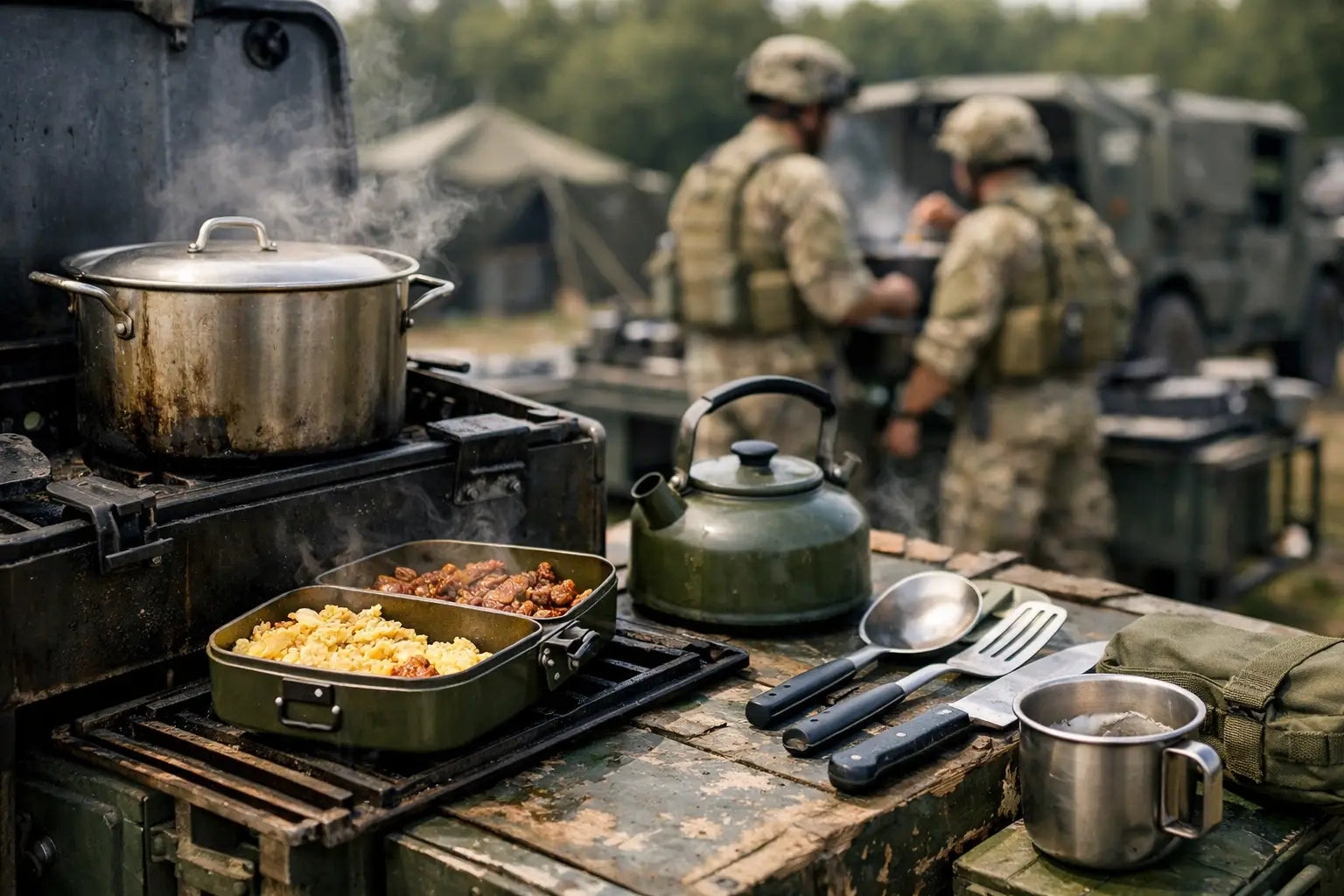
Mess tins remain popular because their rectangular form packs efficiently and provides a useful eating vessel as well as a pan. A nested set can hold a burner, lighter, cloth and small ration items, keeping the cooking system together. Aluminium versions are light and heat quickly, although they can dent. Stainless steel is generally tougher but heavier and slower to warm.
A single metal mug or pot can be the better choice for a fast-moving individual. Look for a capacity that handles your normal water requirement without being filled to the rim. A lid improves boil times, keeps debris out and conserves fuel. Folding handles reduce pack size, but check that they lock securely and can be gripped when the vessel is hot.
Non-stick cookware makes cleaning easier, but coatings can be damaged by aggressive scrubbing, metal utensils and direct flame. Plain metal cookware is less refined, yet often the more dependable field option. It accepts hard use and is easier to keep serviceable when appearance is not the priority.
Windshields, Supports and Heat Control
A stove that boils quickly on a calm bench can perform poorly on an exposed hillside. A windshield or integrated heat exchanger can significantly improve fuel efficiency, but it must be compatible with the stove. Do not wrap a windshield tightly around a gas cartridge stove unless the manufacturer specifically permits it - trapped heat can create a serious hazard.
Choose a level, firm cooking position away from dry grass, tent fabric, webbing and loose kit. Small folding bases can prevent a stove sinking into mud or soft ground. In cold conditions, insulating a cartridge from frozen ground may help maintain performance, but keep any material clear of flame and do not heat the cartridge directly.
Water Is Part of the Cooking System
Field food depends on safe water. Carrying a good stove without a reliable water plan is a common oversight, particularly where dehydrated meals or ration components need several hundred millilitres at a time.
Boiling is effective when carried out properly, but it costs fuel and time. Water treatment tablets, filters and compatible bottles may reduce fuel demand, depending on the source and the treatment method. They do not all deal with the same contaminants, so read the instructions and allow the full contact time. Cloudy water may need filtering first.
Keep untreated and treated water clearly separated. A dedicated dirty-water bottle, collapsible container or marked reservoir prevents avoidable mistakes when tired, cold or working in poor light. If your meal plan requires two litres of drinking water plus cooking water, calculate that before leaving the water point rather than after setting up camp.
Packing, Cleaning and Fuel Discipline
Cooking equipment earns its place when it packs as one contained unit. Store the stove, ignition source, fuel, utensil and cleaning cloth inside the pot or mess tin where possible. This reduces lost items and stops dirty cookware contaminating the rest of the bergen.
Carry at least two independent ignition methods. A lighter is quick, while stormproof matches or a ferro rod provide backup. Keep them dry and accessible rather than buried at the bottom of the pack. In poor weather, the difference between a protected lighter and a soaked one can be the difference between a hot drink and a long, cold evening.
Clean cookware while it is still warm, using a small amount of water and a non-abrasive cloth or scrubber suited to the material. Food residue attracts wildlife, smells unpleasant and makes the next meal harder to prepare. Dispose of wastewater responsibly and leave the cooking area as you found it.
Fuel discipline matters just as much as kit choice. Measure your normal boil time at home with the same pot, stove and water volume you will use outdoors. Then add a realistic margin for wind, cold and extra brews. Guesswork is how a two-day fuel supply becomes an empty cartridge after the first evening.
Build a Setup You Will Actually Use
There is no single best loadout. A compact gas stove and metal mug may be ideal for a day on the range or a quick overnight. Mess tins with solid fuel can suit a traditional, low-bulk arrangement. For prolonged cold-weather use, a liquid-fuel stove and larger pot may justify their extra weight and complexity.
The common requirement is reliability. Choose compatible components, practise lighting and packing them, and test the full system in controlled conditions before trusting it in the field. John Bull Clothing customers tend to know that dependable kit is not necessarily the most complicated kit - it is the kit that still works when hands are cold, daylight is gone and the weather has closed in.
Build your cooking setup around the way you operate, then keep it clean, complete and ready in the pack. When the stop is short and conditions are poor, a straightforward hot meal is one less problem to solve.