
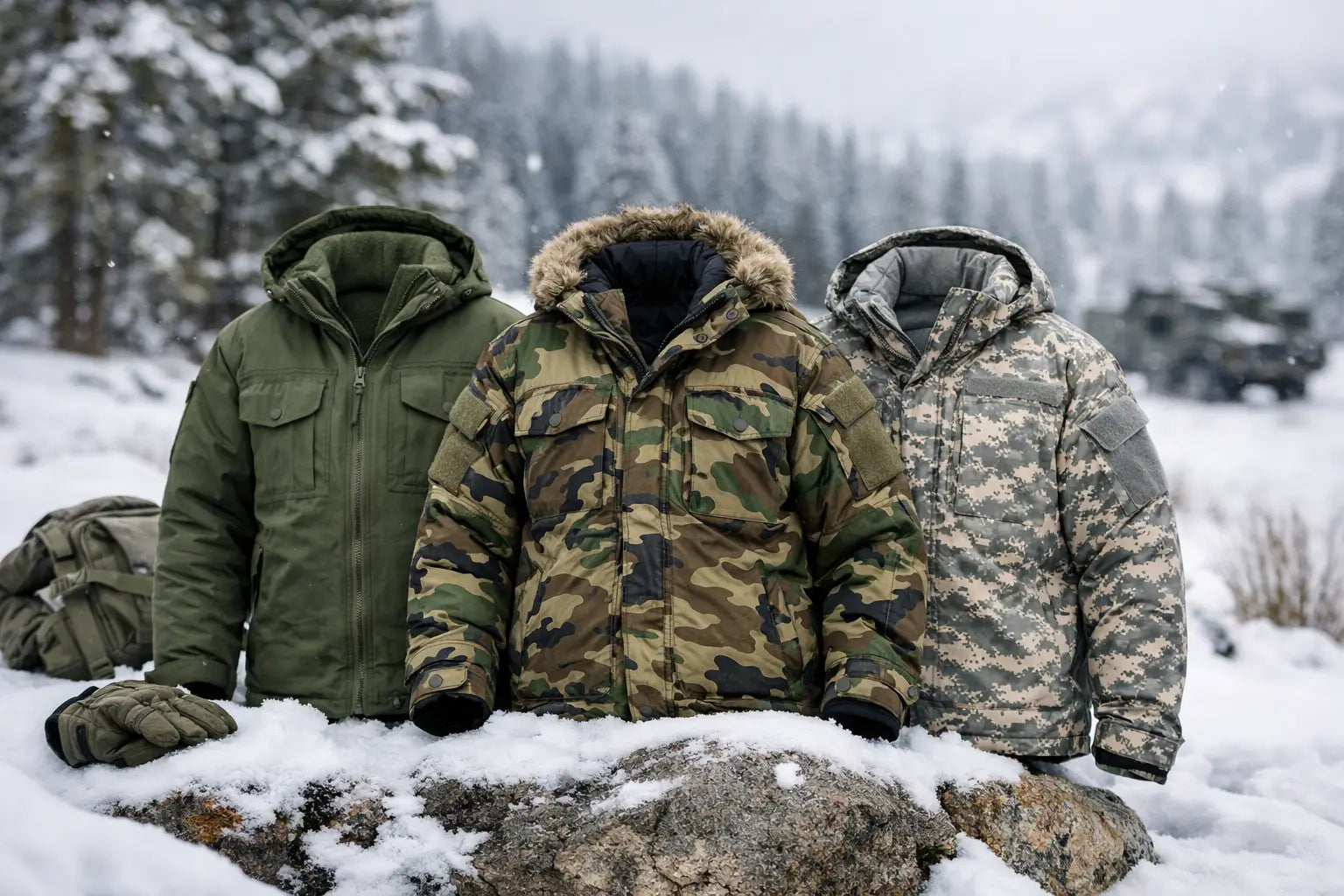
A jacket that feels fine on a dry walk from the car park can become a liability after several hours on a wet range, a night exercise, a dog walk or a cold static shift. The best army jackets for winter are not simply the thickest options available. They manage weather, movement and moisture while leaving room for the layers and equipment you actually need to wear.
For British winter conditions, the right choice usually comes down to your job, activity level and exposure. A sentry, spectator or deer-stalker needs insulation that holds warmth while standing still. Someone tabbing, working on a range or moving through woodland needs a system that vents heat and keeps rain out without becoming clammy. Get that distinction right before looking at camouflage pattern, pocket layout or brand name.
What makes a good winter army jacket?
A dependable winter jacket should deal with three things: heat loss, rain and wind. Wind strips warmth quickly, particularly across open ground or when clothing is damp. Rain compromises insulation and makes even a mild day uncomfortable. The jacket therefore needs a sensible balance of weather protection and breathability, rather than one headline feature.
Fit matters as much as fabric. A field jacket must sit comfortably over a fleece or insulated layer without restricting shoulder movement, access to a belt kit, or the ability to shoulder a rifle. It should also be practical under a rucksack. Bulky pockets, exposed zips and heavy insulation can all become less useful once hip belts and shoulder straps are involved.
Look closely at the hood. A proper adjustable hood with a structured peak gives better protection in persistent rain than a loose, basic design. High collars, adjustable cuffs and a hem drawcord also make a real difference. They close the gaps where cold air enters, especially when you are stationary.
The best army jackets for winter by role
There is no single best army jacket for every user. The correct type depends on how hard you will be working and what the weather is doing.
Waterproof field shells for wet, active days
A waterproof shell is the most versatile outer layer for wet British weather. Worn over a wicking base layer and fleece, it allows you to add or remove insulation as your activity changes. This is often the strongest choice for soldiers, cadets, airsoft players and outdoor users who expect to move regularly.
Choose a shell with a breathable membrane, taped seams and ventilation options such as pit zips. A longer cut offers better coverage when standing or kneeling, though a shorter jacket can work better with webbing and a climbing harness. Keela waterproof garments are well regarded by users who need hard-wearing weather protection without unnecessary complication.
A shell alone will not keep you warm on a long stop. Its value is that it protects the warmth created by the layers underneath, while remaining useful through autumn, winter and spring.
Insulated jackets for cold, dry conditions
An insulated jacket earns its place when temperatures drop and movement slows. Synthetic insulation is particularly practical for field use because it retains more performance when damp than down. It also dries more readily after a wet day or when condensation becomes an issue in a bivvy.
For static tasks, choose enough loft to keep your core warm without relying on several thin layers underneath. A jacket with a close-fitting hood and an extended rear can make a marked difference when sitting on a firing point, watching a match or waiting outdoors. Snugpak insulation is a familiar choice within military and outdoor circles for this sort of dependable cold-weather use.
The trade-off is bulk. A heavily insulated jacket can be too warm for a fast-paced tab and may be awkward under a Bergen. Treat it as a stop layer or a cold-weather camp jacket if you expect to generate heat while moving.
Softshell jackets for cool, changeable weather
Softshells suit cold, dry days with occasional light showers and plenty of movement. They are quieter than many waterproof shells, stretch more easily and tend to breathe well. For security work, training, dog walking and airsoft, a softshell can be the jacket that gets worn most often.
Do not mistake a water-resistant softshell for a waterproof jacket. It will shed drizzle and snow for a time, but sustained rain will eventually pass through. Carry a proper waterproof outer layer when the forecast is poor or your day cannot be shortened.
Smocks and longer field jackets for coverage
Traditional smock-style jackets remain popular because they offer useful coverage, generous pocket capacity and a practical cut over mid-layers. They work well for fieldcraft, fishing, rural work and anyone who prefers easy access to maps, gloves and small essentials.
For winter use, check that the smock has room for insulation and a windproof closure at the cuffs and neck. Cotton-rich designs can be hard wearing and comfortable, but they are slow to dry if saturated. In persistent rain, pair them with a waterproof layer or select a modern weatherproof fabric.
Build a layering system, not a single heavy outfit
The most reliable cold-weather approach is a three-layer system. Start with a moisture-wicking base layer. Add a fleece, grid fleece or lightweight insulated mid-layer for warmth. Finish with a waterproof shell or windproof outer layer appropriate to the conditions.
This arrangement gives you options. Remove the mid-layer before a steep climb, put it back on during a rest, and keep the shell ready for rain and wind. It is far more effective than sweating inside one oversized padded jacket, then becoming cold as soon as you stop.
Avoid ordinary cotton T-shirts beneath winter kit. Once wet with sweat, they hold moisture against the skin and cool rapidly. Merino or synthetic base layers are more suitable for training, hill days and field use. Keep a dry spare layer in a waterproof bag if you will be out for extended periods.
Check the details before choosing a jacket
Product photographs rarely show how a jacket behaves during a long day outdoors. Read the specification and assess the features that affect use rather than focusing only on the camouflage or price.
Pay particular attention to these points:
- Waterproof construction: Taped seams and a genuinely waterproof fabric matter more than a basic showerproof coating.
- Layering room: Try to allow space for a fleece or insulated jacket without tightening the shoulders and chest.
- Pocket position: Chest pockets remain accessible under a rucksack more easily than low hand pockets, but should not interfere with chest rigs.
- Zip and cuff protection: Storm flaps, reliable zip pulls and adjustable cuffs are small details that improve comfort in wind and rain.
- Packability: A jacket carried in a day sack needs to justify its size and weight, particularly if it is only used during halts.
Match the jacket to boots, gloves and headwear
Warmth is lost through more than the torso. Wet boots, exposed hands and an uncovered head will make a good jacket feel inadequate. Pair your outer layer with waterproof boots or suitable gaiters, insulated gloves that still allow dexterity, and a warm hat that fits under your hood.
Do not over-insulate your hands if you need to operate controls, handle tools or use a phone. A practical arrangement is a lighter working glove plus a warmer over-mitt or spare insulated pair for stops. The same principle applies to the jacket: active layers for movement, additional insulation for static periods.
Care keeps winter kit dependable
A waterproof jacket needs cleaning with the right technical wash to prevent dirt, body oils and detergent residue from reducing breathability. When water stops beading on the face fabric, restore the durable water-repellent finish using a suitable treatment. This does not repair a damaged membrane, but it helps rain run off rather than soaking the outer fabric.
Dry insulated kit thoroughly after use, especially around cuffs, hood edges and pocket linings. Check zips, drawcords and seam tape before a trip rather than discovering a failure in poor weather. Field kit lasts longer when it is packed dry, aired properly and used for the job it was designed to do.
A well-chosen winter jacket should make poor weather manageable, not turn it into a test of endurance. Select the protection you need, leave room for sensible layers, and keep a dry insulating option ready for the moment movement stops.