
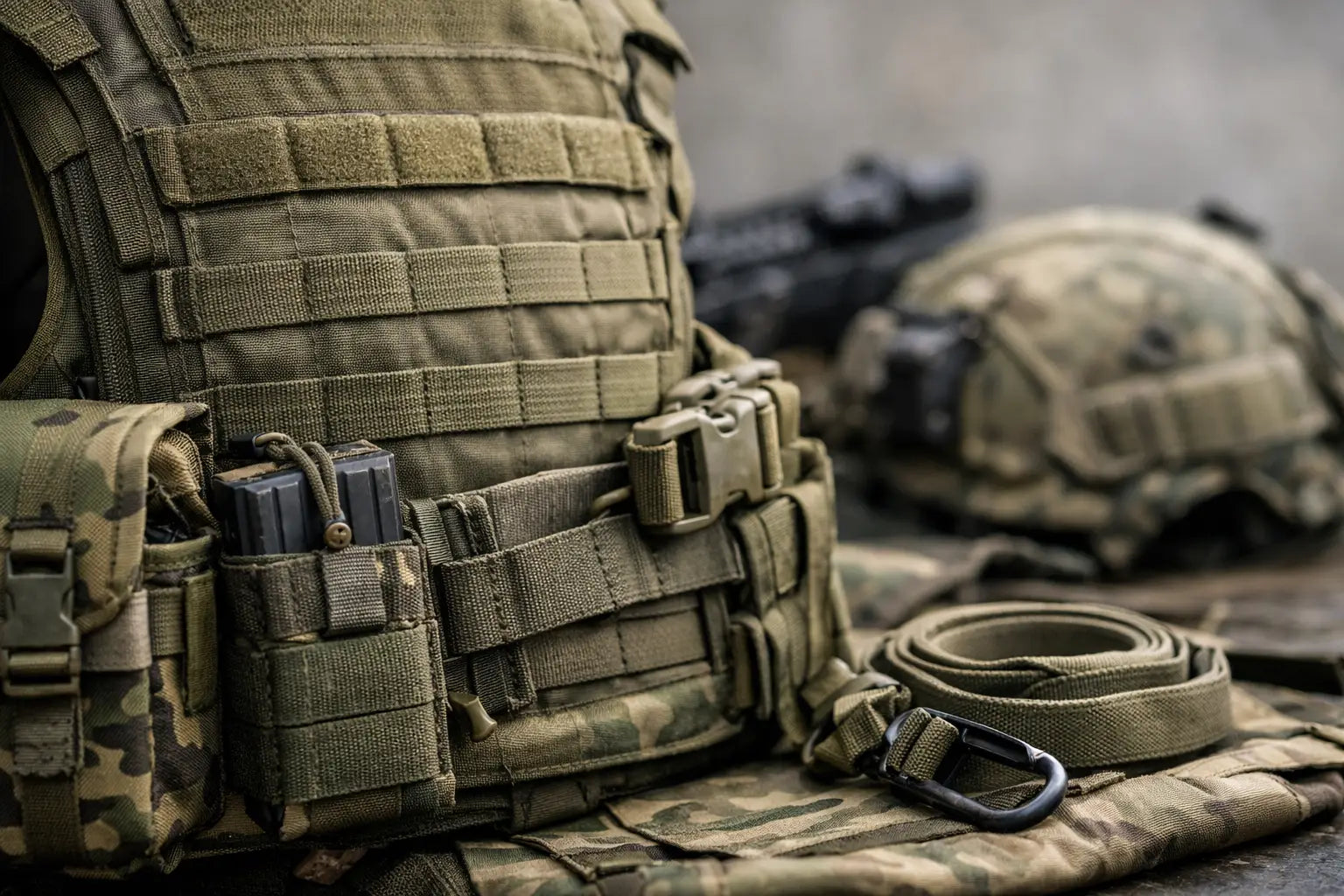
A rucksack carries sustainment kit. Military webbing carries the items you may need before you can, or should, take the pack off. If you are asking what is military webbing, the straightforward answer is a belt-based load-carrying system designed to keep essential equipment secure, accessible and distributed around the body.
For soldiers, cadets, patrol users and outdoor enthusiasts, webbing is not simply a collection of pouches. Correctly set up, it allows you to carry water, ammunition or training weight, first-aid equipment, food and field essentials without restricting movement or making access to key items difficult. The best arrangement depends on the task, the kit being carried and whether a rucksack, body armour or plate carrier is also in use.
What Is Military Webbing Used For?
Military webbing is worn around the waist and supported by shoulder straps, often called a yoke or harness. Pouches attach to the belt or to an integrated mounting system, creating a practical platform for equipment that needs to remain close at hand.
In British military terminology, people may refer to belt order, webbing sets or PLCE-style webbing. PLCE means Personal Load Carrying Equipment, a system associated with British Forces kit. While designs have developed over time, the principle remains the same: carry fighting order or immediate-use equipment on the body while keeping the back clear enough for a bergen or daysack.
A field setup might hold water bottles, utility pouches, a first-aid kit, gloves, a waterproof layer, rations, navigation tools and a small stove or brew kit. A security or airsoft user may arrange it differently, prioritising magazines, communications equipment and medical supplies. Webbing is adaptable by design, but it is most effective when every pouch has a clear purpose.
The Main Parts of Military Webbing
A traditional webbing set has three core elements: a belt, a yoke and pouches. Modern versions can add padded sections, MOLLE attachment fields, quick-release buckles and hydration compatibility.
The belt
The belt is the foundation. It wraps around the waist or hips and supports the weight of the pouches. Older systems may use a wide, stiff belt with fixed attachment points, while modern modular belts commonly use MOLLE or PALS webbing - the horizontal rows of stitched nylon that allow compatible pouches to be positioned where required.
A belt that is too loose will ride down and pull away from the body. One that is overtightened can restrict breathing, particularly when carrying a pack or moving over uneven ground. It should sit securely around the hips rather than high around the waist.
The yoke or shoulder harness
The yoke connects to the belt and transfers some of the load to the shoulders. A good yoke stops the belt sagging under the weight of water bottles and loaded utility pouches. It should be adjusted so that it supports the webbing without taking all the weight off the hips.
Yokes range from simple H-pattern straps to padded, contoured harnesses. Padded versions can be more comfortable over long distances, but extra bulk can interfere with the shoulder straps of a rucksack or with body armour. This is one of the main trade-offs when choosing a system.
Pouches and accessories
Pouches determine what the webbing can carry. Utility pouches are the most versatile, while dedicated designs may be made for water bottles, magazines, first-aid kits, radios, dump bags or small tools. The closure matters as much as the capacity. Buckle, press-stud and hook-and-loop fastenings each have advantages depending on security, noise and speed of access.
When selecting pouches, check that they are compatible with the belt. MOLLE pouches need a suitable mounting field and must be woven through properly. Belt-mounted pouches need to fit the belt width without sliding excessively.
Webbing, Chest Rigs and Plate Carriers: The Difference
These terms are sometimes used interchangeably, but they do different jobs.
Webbing places the load around the hips, making it well suited to longer periods on foot and to carrying items that would be awkward on the chest. It is traditionally paired with a rucksack and is a sensible choice when water, food and field items are part of the load.
A chest rig carries pouches high on the torso. It gives quick front access, especially for magazines and communications equipment, but can make going prone less comfortable and may conflict with rucksack straps. A plate carrier is primarily protective equipment, built to carry armour plates and then fitted with mission-specific pouches. It is not a direct replacement for webbing, although some users wear both as part of a layered system.
For cadet training, hiking and general fieldcraft, a properly adjusted webbing set is often more useful than copying a heavily loaded tactical plate carrier. Carry what the activity requires, not what looks impressive on a kit layout.
How to Set Up Military Webbing Properly
Start with the intended activity. A short exercise, a weekend in the field and a static range day place very different demands on the equipment. Build the layout around essential kit first, then test it under realistic conditions.
Keep heavier items such as full water bottles close to the back and balanced across both sides. This reduces swing and avoids one side of the belt pulling down. Frequently used equipment should be accessible without removing the webbing, but avoid putting hard or bulky pouches where they will dig in when lying prone or sitting in a vehicle.
A practical arrangement often places water and utility pouches towards the rear, with a small first-aid pouch in a known, easy-to-reach position. If carrying a personal medical kit, make sure people you work or train with know where it is. Do not bury it beneath a waterproof jacket or loose accessories.
Once loaded, wear the webbing with the clothing, boots and pack you expect to use. Walk, jog, kneel, climb, sit down and lie prone. A setup that feels acceptable when standing still can become uncomfortable after an hour under weight. Re-tighten the belt and yoke after the first short movement test, as straps often settle.
Choosing Webbing for British Field Use
Material quality matters. Hard-wearing nylon, reinforced stitching and dependable buckles are worth paying for when the set will see regular training, wet weather or heavy loads. Look for drainage eyelets or mesh where appropriate, particularly on water bottle pouches, and inspect attachment straps carefully before use.
Capacity is another consideration. Larger utility pouches are useful for field kit but invite overpacking. More equipment means more weight, and webbing can become cumbersome quickly. A smaller, disciplined load is normally easier to move with and more comfortable beneath a bergen.
Camouflage choice depends on where and how the webbing will be used. MTP-style patterns remain a familiar option for British military-inspired field kit, while olive green, coyote and black may suit outdoor, security or airsoft roles. If you are serving, training with a unit or attending an organised event, follow the relevant dress and equipment policy before buying non-issued kit.
At John Bull Clothing, the most useful approach is to treat webbing as working equipment rather than a fashion accessory. Choose a sound belt and yoke, add only the pouches you genuinely need, then adjust the system with the same care you would give to boots or a loaded rucksack. A well-fitted webbing set should disappear into the task - secure, balanced and ready when you need it.