
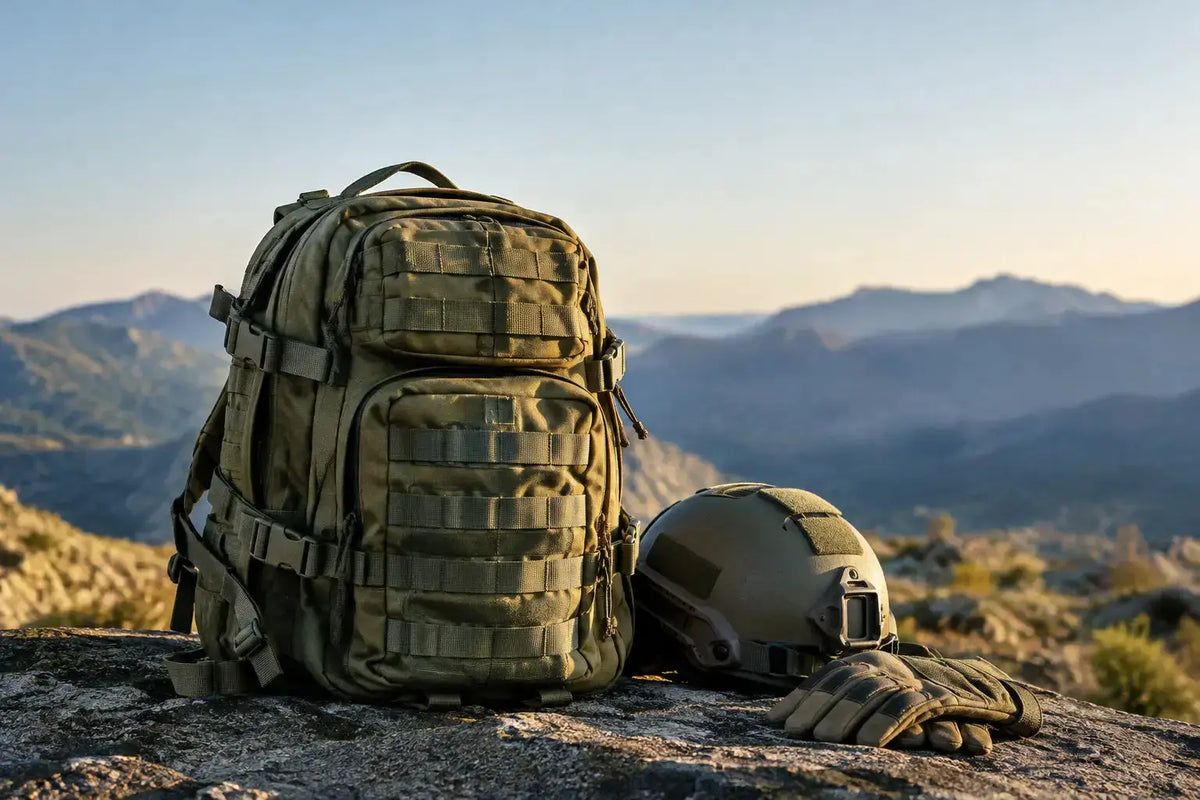
A military bag earns its place by carrying the right load without becoming the problem. Whether you are packing for an overnight exercise, a range day, a deployment movement, patrol work or a weekend in the hills, the bag must sit correctly, keep essential kit accessible and stand up to repeated hard use.
The right choice is rarely the largest bag on the shelf. Capacity matters, but so do fit, compartment layout, fabric strength and the way the load works with your webbing, body armour or other equipment. A well-chosen military bag keeps weight stable and kit organised when conditions are wet, cold, rushed or simply uncomfortable.
Start with the task, not the capacity
Before comparing litres, be clear about what the bag is expected to do. A compact day pack for a short patrol has a different job from a 72-hour bergen, and neither is necessarily the best option for travelling through an airport or carrying kit to a cadet weekend.
For day use, a 20 to 35 litre pack will usually take waterproofs, warm layer, water, rations, navigation equipment, first aid kit and spare essentials. This size suits fieldcraft, airsoft, range days, security work and short outdoor routes where you do not need sleeping equipment.
A 40 to 60 litre pack is more suitable for a night or two out, depending on season and how compact your sleeping system is. It gives room for a sleeping bag, basha or tent components, stove, rations, spare clothing and personal kit, while remaining manageable if you must cover distance on foot.
For extended exercises, deployments and load-heavy expeditions, a full bergen of around 70 to 100 litres may be needed. That extra capacity is useful, but it also creates a temptation to pack unnecessary weight. If the bag is intended for military service, always work within unit requirements and any relevant dress, equipment or safety instructions.
A holdall has a place as well. It is practical for transporting boots, uniform, wash kit and clothing by car, train or aircraft, especially when you do not need to carry the load for long periods. It is not a substitute for a fitted rucksack once the task involves walking any real distance.
Military bag fit matters more than most features
A bag with excellent fabric and plenty of pockets will still be poor kit if it does not fit. The shoulder straps should sit comfortably without pulling hard into the neck, while the hip belt must transfer a meaningful share of the weight onto the hips. On a properly adjusted larger pack, the shoulders steady the load rather than carrying all of it.
Check torso length, particularly if you are buying a large bergen. A back system that is too long can force the hip belt below the top of the pelvis. One that is too short leaves the weight high on the shoulders. Adjustable back lengths offer flexibility for sharing equipment or accommodating layers, but a simpler fixed system can be lighter and less prone to adjustment slipping.
Load the pack before making a judgement. A bag can feel comfortable when empty and reveal pressure points as soon as it carries water, rations and wet-weather kit. Walk around with it fully packed, use the sternum strap only enough to stabilise the shoulder straps, and tighten the load lifters if fitted to bring weight closer to your back.
Body armour, plate carriers and webbing change the calculation. Broad harnesses may clash with shoulder straps, and a large hip belt can interfere with belt-mounted equipment. For patrol use, test the complete setup rather than judging each item in isolation.
Choose fabric and construction for the conditions
Military bags are expected to take abrasion, mud, rough ground and repeated loading. Heavy-duty polyester and nylon are common choices, with higher-denier fabrics generally offering better resistance to wear. A tougher material can add weight, so the best balance depends on how hard the bag will be used and how far it must be carried.
Look closely at the parts that usually fail first: shoulder-strap stitching, grab handles, compression straps, zip tracks and the base of the bag. Reinforced stitching and a strong base matter more than a long list of cosmetic features. Lockable or heavy-duty zips are useful for travel and frequent access, though a drawcord top with a storm flap remains a straightforward, dependable arrangement for larger field packs.
Water-resistant fabric helps, but it does not make the contents fully waterproof. Seams, zips and closures can admit water during prolonged rain or when a pack is set down in wet ground. Dry bags or waterproof liners are the sensible answer for sleeping bags, spare layers, documents and electronics. Keep them inside the bag rather than relying on an external rain cover alone, which can snag in dense ground or strong wind.
Camouflage patterns are relevant where appropriate, but they should not override function. A black, olive or coyote military bag can be more suitable for security work, travelling or everyday use. For field use, select a colour and pattern that meet local requirements and suit the environment without making unsupported claims about concealment.
Layout should support how you work
The best compartment layout is the one that lets you find essential items without emptying the whole bag in poor weather. A traditional top-loading bergen is efficient for large loads and usually offers a clean, strong design. Its limitation is access: the item at the bottom remains at the bottom unless you pack in a disciplined order.
Front-opening or panel-loading packs make organisation easier. They are useful for travel, medical equipment, technical kit and airsoft loadouts, where you may need to see the full contents quickly. The trade-off can be additional zips, seams and weight.
Pack heavy items close to the spine and around shoulder-blade height where possible. Keep bulky but light equipment, such as a warm layer, lower down or around the outside. Frequently used kit - waterproofs, gloves, head torch, map, snacks and first aid items - should be available without disturbing the main load.
External pockets are helpful, but avoid filling every one with heavy items. Uneven side loading can pull the bag off balance. Side pockets work well for water bottles, tent poles, a saw or wet kit that should be separated from the main compartment. Compression straps should be tightened after packing to stop the load shifting as you move.
MOLLE and compatible attachment systems give useful flexibility for adding pouches, but more pouches are not always better. Each addition catches on doors, vehicle interiors and vegetation, adds weight and can make the load less stable. Attach only what you genuinely need and keep critical items consistent in the same position.
Match the bag to the load-carrying system
A military bag is part of a wider setup. If you are wearing webbing, make sure the lower section of the pack does not sit awkwardly on pouches or push them into your back. With a plate carrier, check that shoulder straps can still be adjusted and that the pack does not restrict head movement or access to comms and hydration.
Hydration compatibility can be useful for patrols, endurance events and warm-weather fieldcraft. A dedicated internal sleeve protects the bladder, while hose-routing ports keep the drinking tube controlled. However, water is heavy, and carrying several litres high in the pack changes balance. Plan water carriage around route, resupply, weather and task rather than automatically filling every available reservoir.
For cadets and younger users, avoid oversizing. A huge bergen on a smaller frame is uncomfortable and encourages poor loading habits. A correctly fitted day pack or moderate-capacity rucksack is usually the better starting point, with weight kept sensible for the individual and activity.
Practical checks before you rely on it
Before the bag goes on exercise, inspect it under load. Check that buckles close positively, straps are not twisted, zips run freely and the back panel has no damage. Adjust every loose strap so it cannot flap, snag or work loose.
Pack it once in a dry, unhurried setting, then make a mental note of where key equipment lives. Put wet-weather kit somewhere accessible, protect dry clothing and sleeping equipment in liners, and avoid loose metal items rubbing against a hydration bladder or electronics. After use, empty the bag, brush off mud, dry it thoroughly and inspect the base and stitching before storing it.
A dependable military bag does not need to be overloaded or covered in accessories to prove its worth. Select one that fits your body, carries the equipment required for the task and remains straightforward to use when tired, wet and working to a time limit. That is the bag you will trust when the ground gets rough.