
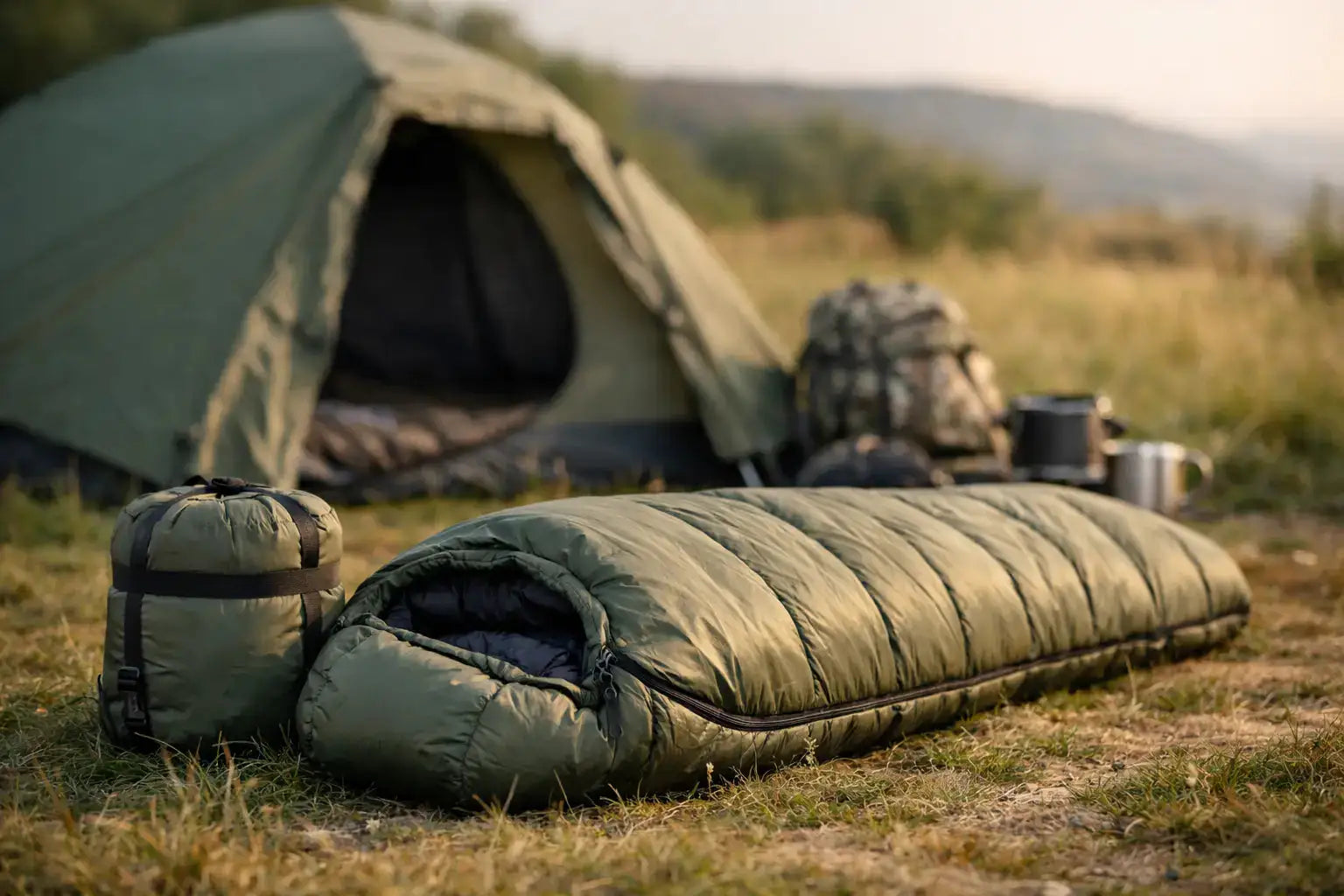
A sleeping bag that is too warm leaves you damp with sweat. One that is too light turns a routine harbour area or weekend camp into a long, cold night. Choosing a Snugpak sleeping bag is therefore less about finding the biggest temperature number and more about matching the bag to the conditions, your sleep system and the load you need to carry.
Snugpak has a long-standing place in British field kit because its range covers the gap between compact summer bags, dependable three-season options and modular systems intended for harsher conditions. For forces personnel, cadets, bushcrafters and tactical users alike, the appeal is straightforward: practical insulation, packable designs and models with a field-proven focus.
What to consider before choosing a Snugpak sleeping bag
Start with the lowest temperature you realistically expect to encounter, not the temperature you hope for. A summer exercise in lowland Britain, a wet autumn camp on exposed ground and a winter overnight in the hills place very different demands on a sleeping system. Wind, humidity, fatigue, calorie intake and whether you are in a tent, basha or vehicle all affect how warm you feel once stationary.
Temperature ratings need sensible interpretation. A comfort rating is the more useful guide for relaxed sleeping, while a lower limit may describe the point at which a user can endure a night with appropriate clothing and shelter. Individual tolerance varies considerably. A lean sleeper who feels the cold should allow more margin than someone who naturally sleeps warm. Do not buy to the absolute limit if the trip matters.
Pack size is the other major compromise. More insulation generally means more bulk and weight, even with efficient synthetic fills. If the bag will live in a vehicle, bergen or base locker, a warmer and roomier option can make sense. If every item is being carried over distance, a lighter three-season bag paired with suitable clothing, a good mat and a bivvi bag may be the more capable choice overall.
The sleeping mat deserves equal attention. Insulation beneath your body compresses, so the bag cannot prevent conductive heat loss into cold ground on its own. A quality mat with an appropriate insulation value can make a meaningful difference to comfort. It is one of the simplest ways to get more from the sleeping bag you already own.
Match the bag to the job
For warm-weather camps, events and summer field use, a compact bag such as a Jungle Bag or Travelpak-style design is often sufficient. These bags are easier to carry and less likely to cause overheating in humid conditions. They are not a substitute for a proper cold-weather bag, however. Add a liner or wear insulating layers only within reason, as trying to force a lightweight summer bag into winter service is rarely comfortable.
A three-season Softie-style bag suits a broad range of UK use. This is often the sensible middle ground for those who camp from spring through autumn, attend training weekends or need a bag that can remain in a vehicle without taking up excessive space. It gives useful flexibility, but users heading into regular sub-zero conditions should still choose a bag designed with more thermal reserve.
For cold-weather work, a heavier Softie model or a modular Special Forces sleeping system is worth considering. The advantage of a two-bag system is adaptability: use the lighter inner bag for mild conditions, the outer bag when temperatures fall, or combine them for a substantially warmer arrangement. The trade-off is obvious - combined systems take more room in the bergen and require disciplined packing.
Bag shape affects both warmth and sleep quality. A close-fitting mummy shape reduces empty air space and improves thermal efficiency, which is valuable in cold conditions. Some users, particularly broader-framed sleepers or those wearing layers, may prefer a little more room to move. Test the fit in the clothing you expect to wear, rather than judging it in a warm shop or sitting room.
Consider the full sleep system
A bag is only one part of the setup. In wet UK conditions, use a suitable bivvi bag, shelter and ground insulation to protect both the user and the insulation. Keep spare dry socks and a warm layer available for the night, and avoid going to bed in wet base layers if there is any alternative. Ventilate a shelter where possible to reduce condensation, while keeping rain and wind properly managed.
A liner can improve hygiene, add a modest amount of warmth and make routine cleaning easier. It is useful for travel, barracks accommodation and summer camps, but it should not be treated as a replacement for selecting the correct rated bag. Likewise, a bivvi bag provides weather protection, not limitless extra insulation.
Synthetic insulation and field practicality
Snugpak sleeping bags are widely associated with synthetic insulation, and that brings practical advantages for military and outdoor use in Britain. Synthetic fill retains more usable performance than down when conditions become damp, dries relatively quickly and is less demanding when a bag has to be packed and unpacked repeatedly in poor weather.
Down remains exceptionally light and compressible for its warmth, but it requires more care to keep dry. For dry, weight-conscious mountain use, it can be the right answer. For routine field use where kit may be exposed to rain, condensation and wet ground, synthetic insulation is often the more forgiving choice.
That does not mean synthetic bags are maintenance-free. Do not leave one compressed in its stuff sack between trips. Long-term compression can reduce loft, and loft is what traps warm air. Once home, air the bag thoroughly and store it loose in a dry place. If it is wet, dry it completely before storage, paying particular attention to the foot box and hood.
Getting a warmer night without carrying more bag
Small habits make a noticeable difference. Eat and drink sensibly before bedding down, as the body needs fuel to generate heat. Change out of damp clothing, loosen boots and avoid constricting layers that reduce circulation. A warm hat is often more effective than adding random clothing inside the bag, especially where the hood cannot be fully adjusted around the face.
Keep tomorrow's base layers and batteries in the bag if temperatures are likely to drop sharply, but do not fill the bag with so much equipment that you lose loft or room to move. A water bottle can be useful overnight, although it must be secured and reliable. A leak inside a sleeping bag is a problem best avoided.
If you are consistently cold, assess the whole setup before replacing the bag. An underperforming mat, a damp bag, poor shelter placement or a bag that is simply too large can each be the real cause. Conversely, if you wake sweating, vent the zip or reduce clothing layers before assuming the bag is unsuitable.
Care, checks and service life
Before an exercise or trip, inspect the zip, drawcords, seams and compression sack. A sticking zip is far easier to address at home than in darkness with cold hands. Shake the bag out to restore loft, check for trapped moisture and make sure the hood and zip baffle sit correctly.
Wash only when needed and follow the care instructions supplied for the specific model. Excessive washing can affect the insulation and water-repellent finishes. Spot-cleaning, airing and using a liner will usually extend the time between full washes. When a full clean is required, use a suitable technical cleaner and ensure the bag is completely dry before it is packed away.
A Snugpak bag earns its place when it matches the ground, season and task rather than merely looking substantial in a kit list. Build the system around realistic conditions, protect it from moisture and give yourself a sensible temperature margin. That approach will serve better on a wet training area, a cold hillside or a straightforward weekend under canvas.