
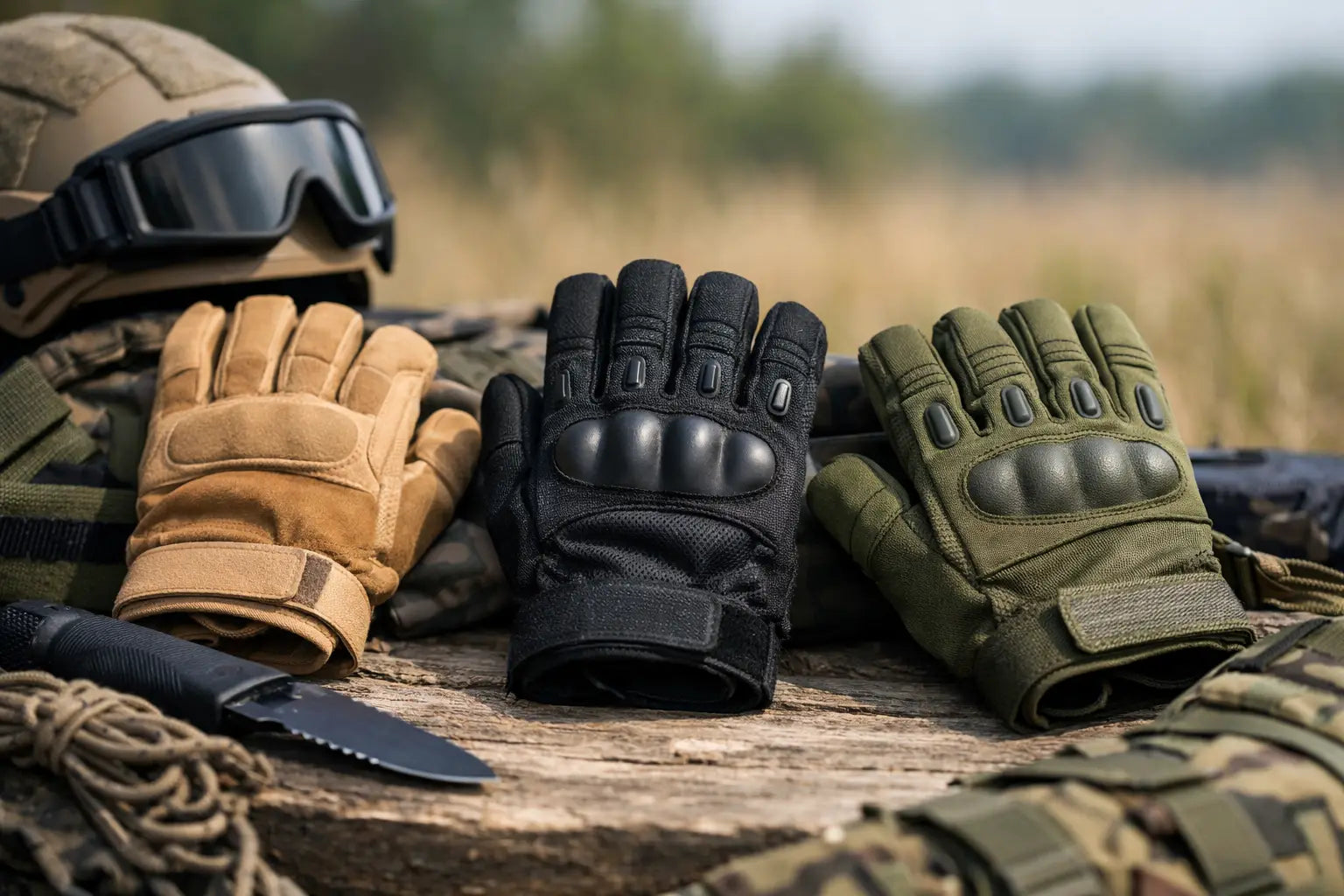
A glove that looks the part but prevents you operating a radio, opening a pouch or feeling a trigger guard is the wrong glove for the job. Knowing how to choose tactical gloves starts with the task in hand: patrol work, range training, vehicle work, searching, airsoft, fieldcraft or cold-weather duties all place different demands on your hands.
Tactical gloves are not a one-size-fits-all purchase. The most protective option can sacrifice feel, while the lightest glove may offer little defence against abrasion, impact or cold. Choose the balance that suits your regular use, then make sure the fit is right before focusing on extra features.
How to choose tactical gloves for your role
Start by deciding what your gloves need to do most often. For warm-weather training, navigation and weapon handling, a lightweight synthetic glove with a close fit is usually the sensible choice. It protects the palms from rough webbing, hot surfaces and everyday abrasion without making fine tasks slow or clumsy.
For patrols, vehicle work, engineering tasks or general field use, look for a more substantial glove with reinforced palms and fingers. Leather, synthetic leather and durable microfibre palms are common because they cope well with repeated contact against tools, steering wheels, slings, equipment and rough ground.
Security, search and police-style duties often call for a neat, low-profile glove. Good grip, dexterity and a professional appearance matter here. Depending on the work, cut-resistant lining may be relevant, but it should be selected for the actual risk rather than assumed to be necessary for every task.
Cold and wet conditions require a separate decision. Insulated gloves keep hands warmer but reduce dexterity, particularly when wet. A waterproof membrane can be useful in sustained rain, yet it may make a glove less breathable during high-output work. If you expect to alternate between movement and static periods, carrying a thin working pair and a warmer over-glove is often more practical than relying on one heavy pair.
Get the fit right before anything else
Fit affects grip, warmth, comfort and control. A tactical glove should sit snugly around the palm and fingers without restricting movement. There should be no excess material at the fingertips, as this makes it harder to operate controls, load magazines, use a map or handle small items from a pouch.
Measure around the widest part of your dominant hand, excluding the thumb, and check the manufacturer's size guide. Hand length matters too. A glove can match your palm measurement yet feel short through the fingers. If you fall between sizes, consider how you will use it. A closer size generally gives better dexterity, while a little extra room can be more comfortable with a liner or during cold-weather use.
Try the glove through the movements you actually make. Form a fist, grip a tool or trekking pole, fasten and unfasten webbing, use a mobile phone, and reach into pockets. Check that the wrist closure stays secure without digging in. A glove that feels comfortable when your hand is flat can become restrictive after an hour carrying kit.
Choose the right level of palm and knuckle protection
Protection should be proportionate to the work. Reinforced palms are worthwhile for almost every field user because they reduce wear from ropes, weapons, handlebars, tools and equipment straps. Double stitching and overlays in high-wear areas can extend working life, though too many layers may reduce feel.
Hard knuckle guards are useful where there is a realistic chance of knocks against vehicle interiors, doors, walls, machinery or obstacles. They are popular for vehicle crews, tactical training and airsoft, but they are not essential for every role. A low-profile padded knuckle design is often more comfortable under sleeves and less cumbersome when handling equipment.
Do not confuse tactical gloves with medical or ballistic protection. A glove with impact panels will not make your hand invulnerable to crushing forces, and ordinary field gloves will not protect against heat, chemicals or serious blade threats unless they are specifically designed and certified for those hazards.
Where cut resistance is required, check the stated standard rather than relying on terms such as “cut proof”. Gloves may be tested to recognised EN 388 abrasion, cut, tear and puncture ratings, with the exact performance varying by model and material. Cut-resistant fibres can make a glove stiffer and warmer, so higher protection is not automatically better for fine-detail work.
Prioritise grip and dexterity
Grip is more than a textured palm. It is the combination of palm material, fit, finger construction and how the glove behaves when wet. Synthetic leather and textured silicone-style grip patterns can work well on tools, weapon furniture and vehicle controls. Leather offers a dependable natural feel and can wear in well, but it needs more care after repeated wet use.
For precise jobs, look for pre-curved fingers, articulated panels across the knuckles and a thin construction at the index finger and thumb. These details reduce bunching when your hand closes. A well-made lightweight glove should allow you to handle fasteners, map corners, navigation equipment and small controls without repeatedly taking it off.
Touchscreen-compatible fingertips are convenient for mapping apps, calls and photographs, but treat them as a useful extra rather than the main reason to buy. Their effectiveness can diminish with wear or moisture. If you need to operate a screen regularly in wet weather, a capacitive fingertip will not overcome the limitations of a rain-covered display.
Match materials to the conditions
Most tactical gloves combine several materials because no single fabric handles every job. Synthetic fabrics on the back of the hand improve flexibility and ventilation. Leather or synthetic leather on the palm improves durability and grip. Stretch panels aid movement, while reinforced sections protect the areas that wear first.
Goatskin and similar leathers are valued for their supple feel and good grip. They suit users who need control without the bulk of a heavy work glove. Synthetic options dry faster and often cope better with regular washing, making them a practical choice for frequent training, cadet activities and wet field use.
Mesh-backed gloves are cooler in summer and during physically demanding work, but they offer less protection from wind, thorns and cold. Fully insulated models are better for winter but can become too warm once you are moving hard. Consider the conditions you encounter most, not the worst weather you might see once a year.
Look closely at cuffs, closures and seams
A wrist cuff changes how the glove works with sleeves, watches and other kit. Short cuffs are easier to wear beneath combat clothing and are less likely to interfere with a jacket cuff. Longer cuffs give more coverage against wind, vegetation and dirt, but can feel bulky when working around webbing or wearing a watch.
Hook-and-loop wrist closures are popular because they allow quick adjustment and keep the glove in place. Elasticated slip-on designs are simpler and often more comfortable, although they give less adjustment. Whichever style you choose, make sure it does not catch on clothing or create a pressure point beneath a sleeve.
Inspect the seams, especially around the thumb crotch, fingertips and palm edges. These are the areas that commonly fail first. Strong stitching and sensible panel placement matter more than cosmetic detailing. If a seam sits directly where you grip a handle, it may become uncomfortable long before the material wears out.
Think about care, spares and realistic service life
Gloves are consumable field kit. Even a quality pair will wear through if used daily on rough equipment, rope, tools or obstacles. Buying for the lowest price can be false economy if the palm loses grip or the stitching fails after a short period, but there is also little value in reserving an expensive specialist glove for ordinary camp tasks.
Allow wet gloves to dry naturally, away from direct radiators or intense heat. Brush off mud, follow the care instructions for washing, and condition leather where appropriate. Heat can shrink leather, damage adhesives and make synthetic materials brittle. Keep a dry spare pair in your pack, vehicle or range bag when conditions are likely to change.
For many users, two pairs are the most useful arrangement: a close-fitting pair for training and everyday handling, plus a warmer or tougher pair for poor weather and heavier work. It gives you better performance across the season and means one damaged or soaked glove does not end the day.
The right tactical glove should become unremarkable once it is on. If it gives you dependable grip, enough protection for the task and the confidence to work without fumbling, it has earned its place with the rest of your field kit.