
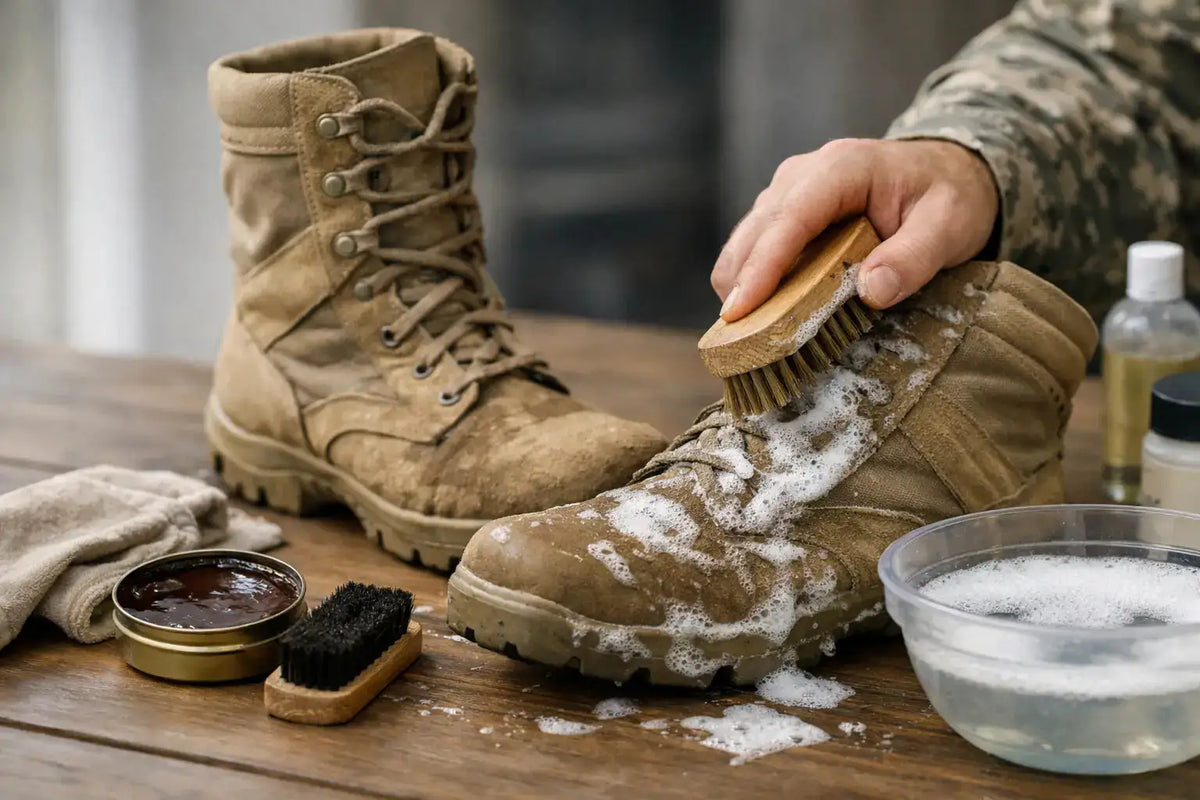
Mud left to dry into the stitching, salt marks on the toe, and grit packed into the tread will shorten the life of any pair. If you are wondering how to clean army boots properly, the answer is not complicated, but it does need the right order. Clean them too aggressively and you can dry the leather, weaken the finish or damage bonded materials. Leave them dirty for too long and they will wear out faster than they should.
Why cleaning army boots matters
Army boots are working kit. They take repeated flex, wet ground, road salt, dust, oil, and long hours under load. That combination is hard on leather, fabric panels, eyelets, stitching and soles. Regular cleaning is not about making them look showroom-ready. It is basic maintenance that helps preserve support, water resistance, breathability and the life of the upper.
There is also a practical point many people ignore. Dirty boots are harder to inspect. If the surface is caked in mud, you will miss cracked randing, loose stitching, worn laces and early sole separation. A quick clean gives you the chance to catch those issues before they become a problem on exercise, patrol or a weekend in the field.
What you need before you start
Most pairs can be cleaned with simple kit: a soft brush, a stiffer brush for the outsole, lukewarm water, a clean cloth, and a boot cleaner suited to the material. For full-grain leather, you may also want a conditioner or wax treatment. For suede, nubuck or mixed-fabric combat boots, use products intended for those finishes rather than standard polish.
Avoid household shortcuts. Washing-up liquid, strong detergents, bleach and solvent-based cleaners can strip protective treatments and dry out the upper. The same goes for throwing boots into a washing machine. It may seem efficient, but it is hard on adhesives, linings and shape retention.
How to clean army boots step by step
Start by removing the laces and, if possible, the insoles. This gives you access to the tongue, eyelets and the areas where grit tends to collect. Shake out loose debris from inside the boot. Small stones and dried mud trapped around the footbed can hold moisture and create odour over time.
Brush off dry surface dirt before adding water. This matters more than people think. If you go straight in with a wet cloth, you can end up rubbing abrasive grit across the leather or fabric. Use a softer brush on the upper and a firmer one on the sole unit.
Once the loose dirt is off, use lukewarm water and a cloth or sponge to work over the boot. If the mud is heavy, let it soften first rather than scrubbing hard. For leather boots, use a dedicated cleaner sparingly. For fabric or mixed-panel boots, keep the cleaning gentle and avoid soaking the material. The aim is to lift dirt, not saturate the boot.
Pay attention to the flex point across the forefoot, the stitching around the rand, and the tongue gusset. These areas trap grime and are often where wear starts. Clean the outsole properly too. Packed tread reduces grip, especially in wet conditions, and dried clay can hide cuts or damage.
After cleaning, wipe off residue with a fresh damp cloth. If the insoles are removable, clean them separately and let them dry fully before refitting. Laces can be rinsed by hand. If they are badly frayed or stiff with dirt, replacing them is usually the better option.
Drying boots the right way
Poor drying does as much damage as poor cleaning. Never put army boots directly onto a radiator, in front of a heater, or use a high-heat drying cabinet unless the manufacturer specifically states it is safe. Excessive heat can shrink leather, harden it, crack coatings and weaken glued components.
Instead, let them dry at room temperature in a well-ventilated area. Stuffing them loosely with newspaper can help draw out moisture, but change the paper if it becomes saturated. Do not force the process. A slower dry is better for the structure of the boot.
This is especially important with waterproof lined boots. The outer may feel dry before the inner layers are fully clear of moisture. If you treat or re-wear them too soon, you can trap damp inside and end up with odour, discomfort and reduced performance.
Cleaning leather army boots
Full-grain leather boots need a little more aftercare than fabric-heavy models. Once clean and dry, the leather should be assessed rather than automatically coated in product. If it still feels supple and the finish looks sound, a light treatment may be enough. If it feels dry, dull or slightly stiff, apply a suitable conditioner or wax.
Use a product designed for military or trekking leather, and apply it in thin layers. More is not better. Overloading the leather can soften it too much, clog breathability and attract dirt. Work it into seams and flex points, then remove any excess.
Polishable leather is a separate case. If your boots are intended to take a shine, cleaning should come before any polishing routine. Dirt trapped under polish will only build a rougher surface. Clean first, let the leather dry, then apply polish in light coats as needed.
How to clean army boots made from suede or fabric
Suede, nubuck and fabric combat boots need a different approach. Standard waxes and heavy polishes can ruin the finish and reduce breathability. Use a brush suitable for the material and a cleaner marked for suede or textile footwear.
Work lightly. Aggressive scrubbing can raise the nap unevenly or fuzz the fabric. If stains remain after cleaning, it is often better to accept a bit of cosmetic wear than force the issue and damage the upper. These boots are built for use, and with suede in particular, there is a limit to how pristine they will look after hard wear.
Once dry, a suitable water-repellent treatment can help restore some protection, especially if the boots are used regularly in wet ground. Again, use the right product for the material. A leather wax on a breathable fabric boot is usually the wrong answer.
Common mistakes that shorten boot life
The biggest mistake is leaving mud, salt and moisture on the boot for days. That is when stitching starts to suffer and leather begins to dry out or mark. The second is using the wrong cleaner. Cheap all-purpose products can do more harm than the dirt you are trying to remove.
Another common problem is over-treatment. Boots do not need a thick coat of wax after every outing. If they are used in mixed conditions, too much product can build up, affect breathability and turn routine maintenance into a mess. It depends on the material, the weather and how often the boots are worn.
Storage matters as well. Clean boots put away damp in a cold shed or packed into the boot of a car for a week will not age well. Let them dry properly and store them somewhere cool, dry and ventilated.
How often should you clean army boots?
There is no single schedule that suits everyone. A pair used on dry ranges or for occasional cadet activity will need less attention than boots worn daily in wet training areas, on security work or through winter roads treated with salt. As a rule, light cleaning after heavy use is better than waiting for a major deep clean.
If the boots are visibly muddy, salt-stained, or starting to feel stiff with dried dirt, clean them. If they only have light dust or surface marks, a quick brush down may be enough. What matters is consistency. Regular basic care is far more effective than neglect followed by an occasional overhaul.
When cleaning will not solve the problem
Cleaning can preserve boots, but it cannot reverse structural wear. If the midsole is collapsing, the heel counter has gone soft, the tread is worn flat, or the upper is cracking through, no amount of polish or conditioner will put that right. The same applies if waterproof performance has failed because the membrane is damaged rather than just dirty.
For operational use, comfort and support matter as much as appearance. If a boot is no longer holding the foot correctly or the sole is compromised, replacement is the sensible option. A dependable pair from a specialist outfitter such as John Bull Clothing is worth looking at before minor wear becomes a field problem.
A clean pair of boots will not make up for poor fit or worn-out construction, but proper maintenance gives good kit the best chance of doing its job. Treat cleaning as part of your routine, not an afterthought, and your boots will stay serviceable for longer.