
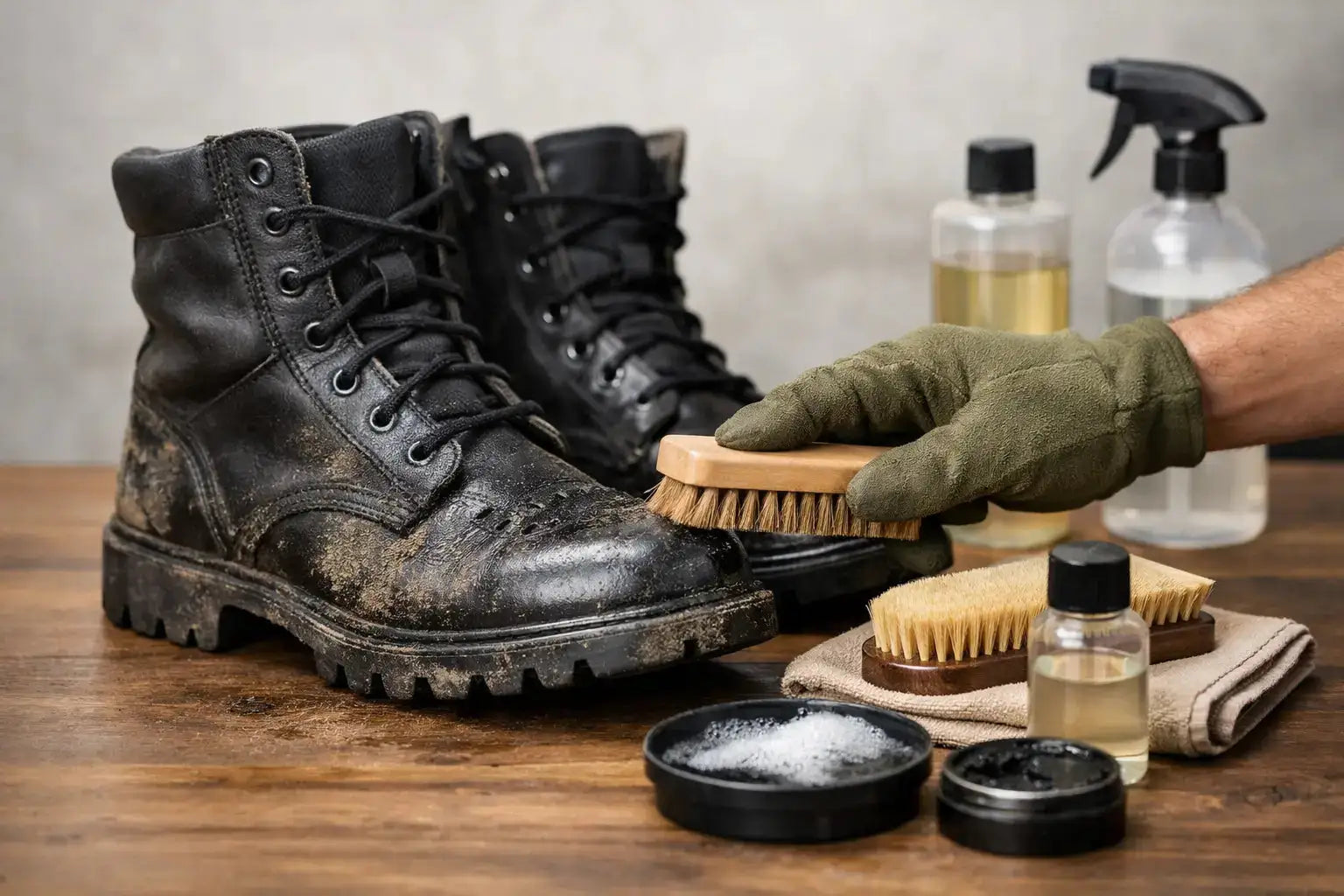
Mud in the tread, salt marks on the upper, dried dust around the eyelets - that is usually when people remember boot care. If you are looking up how to clean combat boots, the main thing to know is that speed matters almost as much as technique. Leave grime sitting too long and it starts drying leather, clogging fabric panels and shortening the life of otherwise dependable kit.
Combat boots are built for hard use, but they are not maintenance-free. Whether you wear full-grain leather patrol boots, high-leg assault boots or mixed leather and fabric models, regular cleaning helps preserve support, finish and comfort. It also makes it easier to spot early problems such as split stitching, worn soles or damaged laces before they become a field issue.
How to clean combat boots without damaging them
The safest method is a simple one. Start by removing the laces and, if possible, the insoles. That gives you access to the tongue, eyelets and the areas where grit tends to build up. Dry brush the boots first with a soft or medium brush to remove loose mud, dust and debris. Doing this before adding water prevents you from grinding dirt deeper into the material.
Once the loose dirt is off, use lukewarm water and a small amount of boot cleaner or mild soap. A damp cloth works well for smooth leather, while a soft brush is better for seams, welts and fabric sections. Work steadily rather than soaking the boot. Too much water is a common mistake, especially with leather boots, because it can strip natural oils and slow drying time.
If the boots are heavily soiled, clean them in stages. Wipe, brush, rinse the cloth, then go again. On mixed-material boots, treat the leather and fabric with the same care but not necessarily the same product. Some heavy polishes and waxes suit smooth leather but can clog breathable textile panels. Always check what the boot is made from before applying anything beyond basic cleaner.
After cleaning, wipe away any remaining soap residue with a clean damp cloth. Residue left on the surface can attract more dirt and affect waterproofing treatments later.
What you need before you start
You do not need a bench full of specialist gear, but the right basics make a difference. A soft brush, a slightly stiffer boot brush, a few clean cloths, lukewarm water and a suitable cleaner will cover most jobs. For leather boots, it also helps to have a conditioner, cream or polish suited to the finish.
This is where knowing your boot type matters. Smooth black leather parade-style or patrol boots may benefit from polish. Brown field boots often do better with a conditioning cream or wax that protects without creating an artificial shine. Suede and rough-out finishes are a separate case again - standard polish can ruin the texture, so those need products made specifically for suede or nubuck.
If your boots have a waterproof membrane, be cautious with aggressive detergents. They can affect the outer treatment and reduce performance over time. Mild, purpose-made cleaners are usually the safer option.
Cleaning leather combat boots
Leather is durable, but it needs balance. Clean off dirt first, then allow the surface to dry slightly before applying any conditioner or polish. If the leather still feels damp, treatments may not absorb properly.
For working boots, a conditioning product is often more useful than chasing a high shine. It helps keep the leather flexible, reduces the chance of cracking and restores some protection after cleaning. Apply a light, even amount with a cloth or applicator brush, paying attention to flex points near the toe and ankle.
If your role or dress standard requires a polished finish, build it gradually. Use small amounts of polish rather than laying it on thick. Heavy build-up looks untidy over time and can trap grime in creases. In practical terms, serviceable and protected usually matters more than glossy.
Cleaning fabric and suede panels
Fabric sections collect fine dust and dry mud quickly, especially around stitched joins. Brush these areas gently and use a damp cloth or soft brush with a small amount of cleaner. Scrubbing too hard can rough up the surface or weaken stitching.
Suede or rough-out leather needs a lighter hand. Let mud dry first, then brush it off with a suede-safe brush. If marks remain, use a cleaner designed for that finish. Avoid polish, heavy wax and household stain removers. They can darken the material unevenly and spoil the finish permanently.
Drying combat boots the right way
Once cleaned, dry your boots naturally. That means room temperature, decent airflow and patience. Stuffing the boots loosely with newspaper or plain paper helps draw out moisture from the inside and supports the shape while they dry.
Do not put combat boots on a radiator, next to a heater or in an airing cupboard that gets overly hot. Direct heat can dry leather too fast, leading to stiffness, shrinkage and cracking. It can also affect adhesives in modern sole units. The same applies to hairdryers and boot dryers that run too hot - gentle airflow is one thing, concentrated heat is another.
If the boots are soaked through after training, hiking or prolonged bad weather, change the paper inside them as it becomes damp. Drying them fully may take a day or more. Rushing the process usually creates more problems than it solves.
How often should you clean combat boots?
It depends on use. Boots worn occasionally for cadet activities or weekend airsoft do not need the same routine as daily patrol or fieldwear. What matters is not cleaning to a rigid timetable, but responding to conditions.
If your boots are covered in mud, road salt, wet grass residue or fuel splashes, clean them as soon as practical. Salt is particularly hard on leather and stitching, and dried mud left around the sole can hold moisture where you do not want it. Lighter dust and minor marks can wait for a regular wipe-down, but a quick brush after use is still worthwhile.
A sensible routine is basic post-use care after hard wear, with a more thorough clean and reproof when the boots start looking dry, stained or less water-resistant than usual.
Common mistakes that shorten boot life
The biggest mistake is neglect. The second biggest is overdoing it with the wrong products. Household cleaners, washing-up liquid used heavily, bleach and strong solvents have no place on combat boots. They can strip finishes, weaken materials and affect breathability.
Machine washing is another poor choice. Some lightweight boots might survive it once, but repeated machine washes can damage structure, stitching and adhesives. Combat boots are built for hard use, not for being spun around in a drum.
Another common issue is applying wax or polish to every boot regardless of material. That works badly on suede, rough-out and many fabric-panel designs. It can also block breathability on boots made for fast-moving, warm-weather or mixed-terrain use.
Finally, do not ignore the inside. Dirt, grit and moisture inside the boot affect comfort just as much as grime on the outside. Remove insoles, let them air, and wipe the interior if needed. Clean boots that still stink, stay damp or rub badly are not really clean.
Aftercare and storage
Once your boots are clean and dry, finish the job properly. Reapply conditioner, wax or a suitable protective treatment according to the material. This step is what turns cleaning from cosmetic upkeep into actual maintenance.
Store boots somewhere dry and ventilated. A garage that swings between damp cold and summer heat is not ideal for leather. If they are not being used for a while, store them clean rather than dirty. Old mud, salt and damp do more damage in storage than many people realise.
It is also worth checking laces, hooks, eyelets and soles while the boots are off your feet. A quick inspection often catches wear early. Replacing tired laces or spotting sole separation before it gets worse is cheaper and easier than losing a good pair of boots altogether.
For anyone building a dependable kit rotation, proper care is part of the job. A well-made pair of combat boots should give solid service, but only if they are cleaned with the same common sense that goes into choosing them. If you treat them as working equipment rather than an afterthought, they will usually return the favour when conditions turn against you.