
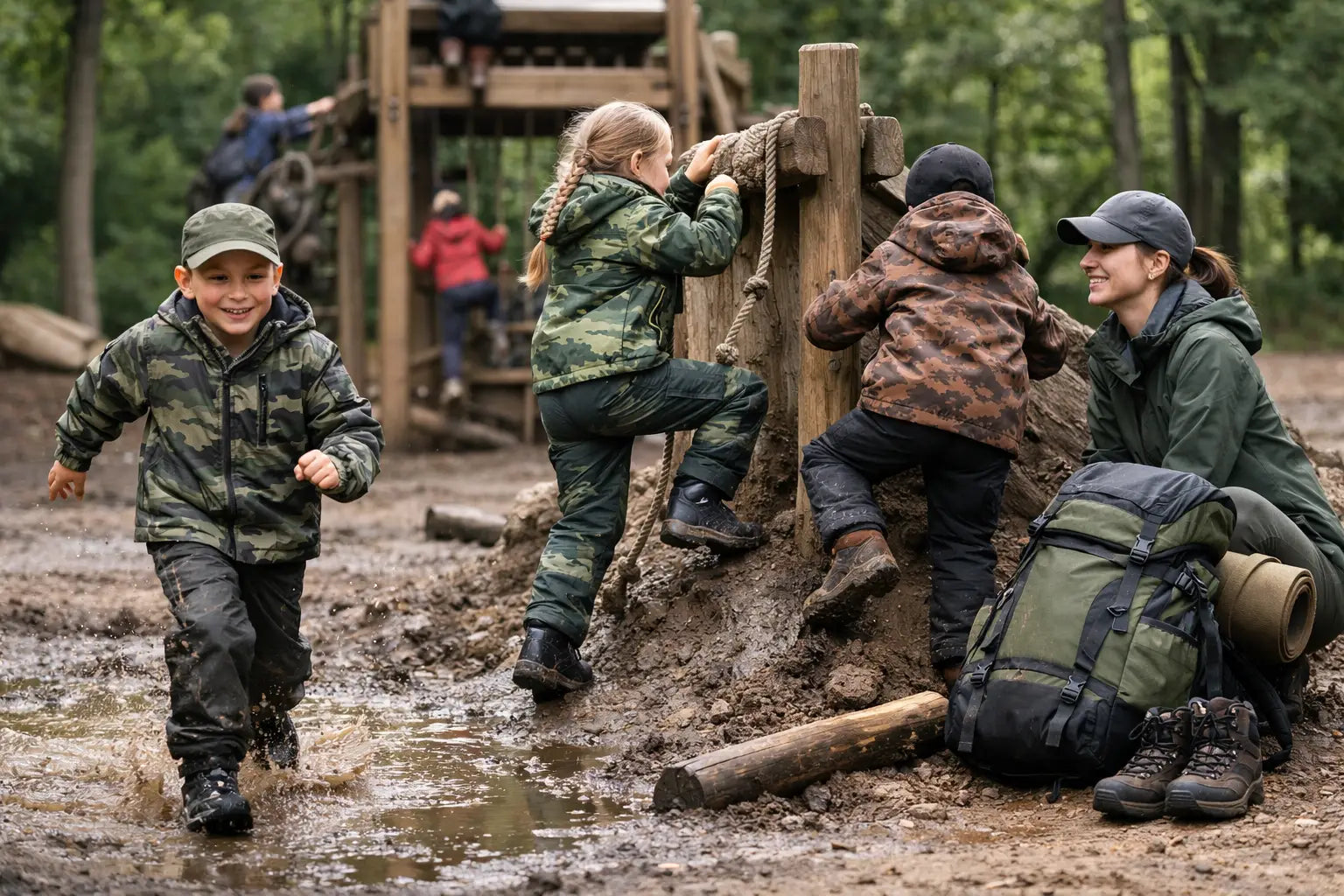
A children’s camouflage jacket that looks the part but catches on every bramble, rides up when they lift their arms or leaves them cold after an hour outside is not good kit. Whether the plan is cadet training, a school activity, airsoft-style play where permitted, camping or simply a muddy afternoon in the woods, kids army clothes need to be chosen for movement, weather and hard wear first.
For parents and families with a military connection, camouflage clothing can also carry a sense of familiarity and pride. That does not mean a child needs an exact replica of issued kit. The right choice is age-appropriate, comfortable and practical, with enough durability to be worn properly rather than kept for best.
Choosing kids army clothes for the job
Start with where the clothing will be used. A lightweight camouflage T-shirt and trousers may suit dry summer days, while winter fieldcraft, camps and long dog walks call for layers that manage cold and wet conditions. A full matching set can be useful, but it is often better to build an outfit around the season rather than buying camouflage from head to toe.
For cadets, check the unit’s guidance before buying anything intended for parades, training nights or official activities. Dress requirements vary, and some items may need to meet a particular pattern, colour or standard. Clothing for general outdoor use gives more freedom, but the same principles still apply: it should fit, allow a full range of movement and be tough enough for repeated washing.
A good pair of combat-style trousers is often the hardest-working item. Look for a secure waist, belt loops and fabric with enough room at the seat and knees for crouching, climbing and sitting on the ground. Cargo pockets are useful for tissues, gloves, a compass or small finds from the woods, but oversized pockets can flap about and snag. Pockets with secure fastenings are a better choice than purely decorative ones.
Jackets should allow room for a fleece or base layer underneath without becoming baggy around the sleeves. A longer cut can give useful coverage in wind and drizzle, while adjustable cuffs help keep sleeves out of the way during practical tasks. For younger children especially, easy zips and simple fastenings matter more than a complicated tactical appearance.
Fit matters more than the age on the label
Children grow quickly, so it is tempting to buy several sizes up. There is a limit. Trousers that trail under boots, sleeves that cover the hands and loose waistbands create trip hazards and make outdoor play less comfortable. Clothing should have a little growing room, not so much that it gets in the way.
Measure the child rather than relying solely on their usual high-street size. Waist, inside leg, chest and height are the useful starting points. Compare these with the individual garment measurements, as sizing can differ widely between brands and military-inspired ranges.
If you are choosing trousers, check whether the waist is adjustable. Elasticated sections, side tabs or a belt allow a garment to last longer through a growth spurt. On jackets, concentrate on shoulder width and sleeve length. If the shoulders fit but the sleeves are slightly long, adjustable cuffs may solve the issue. If the shoulders are too wide, the jacket will restrict movement regardless of how warm it is.
Boots deserve the same care. A child should not wear stiff, heavy boots solely for the military look, particularly for everyday use. Supportive footwear with room for warm socks, a secure heel and grippy soles is the sensible option for rough ground. Break footwear in gradually before a camp or long day out, and never rely on brand-new boots for a major event.
Fabric, camouflage and the British weather
Camouflage pattern is usually the first thing a child notices. Fabric is what determines whether they will still be happy wearing it two hours later. Cotton-rich clothing is comfortable and breathable in dry weather, but it can hold moisture and take time to dry. Polyester-cotton blends generally cope better with repeated use, dry faster and can be more resistant to abrasion.
For wet conditions, a camouflage outer layer is not automatically waterproof. A field jacket may offer wind resistance and useful pockets but still require a waterproof shell over the top. Likewise, a fleece adds warmth but needs protection from rain. Treat army-style clothing as part of a layer system, not a single answer to every forecast.
A practical cold-weather setup begins with a breathable base layer, followed by a fleece or insulated mid-layer, then a windproof or waterproof outer garment. This lets a child remove a layer as they warm up during activity and put it back on when standing around. Overheating is as common a problem as feeling cold, particularly on cadet exercises and energetic woodland play.
Camouflage also has a practical safety consideration. In open countryside, near roads, during organised activities or at dusk, a child must remain easy to spot by responsible adults. A bright hat, high-visibility tabard for travel to and from an activity, or a clearly visible rucksack can be a sensible addition. Camouflage is for outdoor clothing and play, not for making children difficult to find.
The details that earn their keep
The best kids army clothes are usually straightforward garments with well-chosen details. Reinforced knees are worthwhile for children who spend time crawling, kneeling or building dens. Ripstop fabric can help prevent a small tear becoming a large one. A hanging loop is useful when wet kit has to be dried after a rainy afternoon, and internal name labels are essential when several children own similar camouflage clothing.
Choose fastenings with the child’s age in mind. Buttons are traditional and durable but may be awkward with cold hands. Zips are quick, though they should run smoothly and be protected by a flap where possible. Hook-and-loop cuff tabs are easy to adjust, but they can collect fluff and lose grip over time. There is no perfect fastening, only the option that best suits how the garment will be used.
Avoid loading younger children with unnecessary accessories. Webbing, imitation plate carriers, large packs and loose straps can be uncomfortable and can snag on playground equipment or branches. If a rucksack is needed for a day out, use one sized for the child, with adjustable shoulder straps and a modest carrying weight. A packed waterproof, drink, snack and spare warm layer are more useful than a collection of empty pouches.
Care that keeps kit serviceable
Outdoor clothing lasts longer when it is washed with a little care. Shake out mud and empty pockets before putting garments in the wash. Follow the care label, use a mild detergent and avoid excessive heat, which can damage prints, coatings and elasticated sections. Washing camouflage separately for the first few washes can help prevent colour transfer.
Dry kit fully before storing it, especially after wet weather. Damp clothing left in a kit bag develops odour quickly and may mildew. Small tears are worth repairing early, particularly around knees, pocket corners and seams. A simple patch or stitch can extend the useful life of a favourite pair of trousers for another season.
Handing clothing down is often practical, provided the fit and condition are still right. Check cuffs, zips, seams and the inside of knees before passing an item on. Hard-wearing field clothing should show evidence of use, but it should not be uncomfortable, unsafe or beyond repair.
Buy for confidence, not costume
There is a place for novelty dress-up clothing, but it is not the same as kit for genuine outdoor use. If a child will be scrambling through woods, attending cadet activities or spending time at camp, choose garments that can take mud, movement and changing weather. The most convincing outfit is the one that works without fuss.
John Bull Clothing’s specialist approach is useful here: focus on practical categories, reliable construction and clothing that suits the activity rather than chasing unnecessary extras. Let children enjoy the camouflage, pockets and sense of adventure, while the adult choice stays grounded in fit, comfort and safety. That is how outdoor kit becomes part of a good day out instead of something they cannot wait to take off.