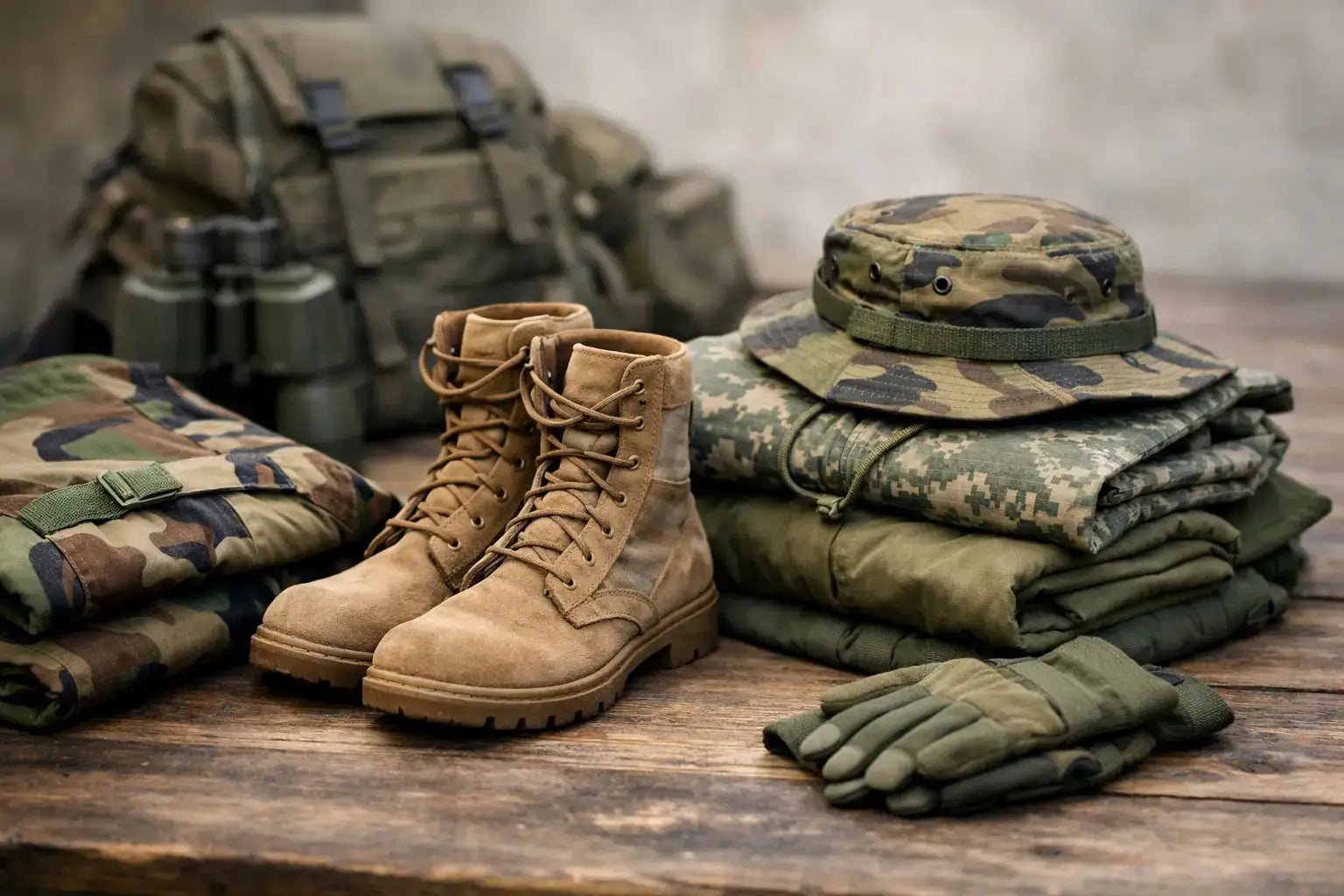
You can usually spot poor surplus buying within a minute - cuffs blown out, zips near the end of their life, fabric that looks hard-wearing until the first proper wet day. A good military surplus clothing guide should save you from that. It should help you buy kit that still has service left in it, suits the job at hand, and does not leave you paying twice for the same item.
Military surplus clothing appeals for straightforward reasons. Proper military garments are built around durability, weather protection, load carriage and hard use. That matters whether you are serving, training with cadets, working security, heading into the hills, or simply want dependable outerwear that is made for more than casual wear. The key is knowing what surplus does well, where newer tactical clothing may be the better option, and how to judge condition before you buy.
What military surplus clothing is good at
Surplus clothing earns its place because it was designed around practical use rather than fashion-first features. Good examples include field jackets with sensible pocket layouts, combat trousers with reinforced panels, and insulating layers intended to keep working in poor weather. You are often getting proven designs, sturdy fabrics and useful details at a lower price than equivalent new kit.
That said, surplus is not automatically better. Some garments are heavier than modern alternatives. Some older waterproof systems are durable but less breathable. Certain camouflage patterns or cuts may suit collectors and enthusiasts more than regular field use. The right choice depends on whether you need hard-wearing general-purpose clothing, specific military style, or lightweight performance.
A military surplus clothing guide to buying the right categories
Most buying mistakes happen when people shop by look rather than role. Start with the job the garment needs to do.
Jackets and smocks
Surplus jackets are often the strongest entry point. Field jackets, combat smocks and cold weather parkas tend to offer good pocket space, robust construction and practical protection. For outdoor use, focus on fabric weight, hood design, cuff adjustment and zip condition. A jacket that blocks wind well and layers properly is usually more useful than one with a long feature list.
If you need something for regular walking, camp use or range days, a smock can be an excellent buy. If you need low bulk, faster drying times and lighter carry weight, a newer technical layer may suit you better. Older surplus outerwear can be bombproof, but not especially compact.
Combat trousers
Combat trousers are one of the easiest surplus purchases to get right if you pay attention to fit and fabric. Look at seat and knee wear first, then inspect hems, pocket closures and belt loops. If the cloth has gone thin at stress points, the bargain is probably false economy.
For work and outdoor use, surplus trousers often represent strong value because the design brief is simple - allow movement, carry essentials and tolerate repeated wear. For warm weather or more active use, check the weight of the fabric. Heavier cloth can be excellent in rough ground and poor weather, but less comfortable in summer.
Base layers and mid layers
This is where surplus can be more mixed. Thermal tops, fleece layers and wool pullovers can still be very useful, especially for training, dog walking, fieldcraft or cold weather layering. But hygiene, wear, and older fabric technology matter more here than with outer garments.
If a base layer has lost shape, has persistent odour, or shows heavy pilling and thinning, it is better left behind. Mid layers are more forgiving, provided the cuffs, zip and loft still have life in them.
Boots
Boots deserve caution. Surplus military boots can be excellent, but only if they are in sound condition and fit properly. Uppers may still look presentable while midsoles are tired or linings are worn through. For serious field use, police work, patrol tasks or extended walking, many buyers prefer reputable new boots because fit, support and sole life are too important to gamble on.
Surplus boots make more sense when condition is genuinely strong, the maker is proven, and the intended use is realistic. If you need dependable day-after-day performance, this is often the category where paying more for new stock is justified.
How to assess condition properly
Condition matters more than label, pattern or issue history. A standard military surplus clothing guide should always put inspection ahead of excitement.
Start with the high-stress areas. On jackets, check cuffs, elbows, zip tracks, storm flaps and pocket corners. On trousers, check knees, seat, hems and fastening points. Fading is usually cosmetic. Frayed stitching, damaged waterproof membranes, missing buttons and worn hook-and-loop closures are functional problems.
Then consider whether the garment has been washed into softness or worn into weakness. Some broken-in clothing is more comfortable and perfectly serviceable. But if the structure has gone, especially around seams and closures, it is near the end of its useful life.
Smell and storage condition also tell a story. Mustiness can be manageable. Oil contamination, mould damage or long-term damp storage are another matter. If the garment is intended for field use, reliability should come first.
Sizing - the part buyers get wrong most often
Military sizing is not always intuitive. Different nations, eras and manufacturers cut garments differently. Some surplus clothing is meant to fit over layers, some close to the body, and some with room for movement under webbing or armour.
Do not assume your regular high street size means much. Check chest, waist, inside leg and, where relevant, height range. A smock that is slightly generous can work well. Trousers that are wrong in the rise or seat usually do not. With boots, close enough is not enough.
It also helps to think about your actual use. If you want a jacket for winter layering, buy for that system. If you need summer field trousers, avoid over-sizing that causes sagging under a belt and poor movement across the knee.
Fabric, weather and real-world use
The best surplus clothing choices are usually the simplest. Cotton-rich garments can be tough and comfortable, but slower to dry. Polycotton blends often strike a better balance for general use. Waterproof outer systems vary widely. Some older garments prioritise protection and toughness over breathability, which may suit static or low-tempo tasks more than fast hill movement.
Camouflage is another practical point. It is easy to buy a pattern because it looks right, but use matters. For field sports, outdoor work or training, choose something suited to your environment and legal context. For casual wear, subdued plain colours or solid military tones often prove more versatile.
When surplus is the smart buy - and when it is not
Surplus is a strong option when you want durable outerwear, practical combat clothing, dependable cold weather layers, or classic military designs with genuine service heritage. It suits buyers who value function, proven construction and sensible pricing.
It is less convincing when you need the lightest possible loadout, maximum waterproof breathability, guaranteed lifespan from the first wear, or exact modern compatibility with current operational systems. In those cases, current production kit from established field brands can be the better route.
For many buyers, the best setup is mixed. Surplus jacket, new boots. Surplus combat trousers, current thermal layer. Old-school wool for static cold conditions, modern insulation for mobile use. That is often the most cost-effective way to build a dependable clothing system.
Buying with purpose
A disciplined approach saves money. Buy one good layer for one clear role, then build from there. If you need a winter field jacket, judge warmth, wind resistance and condition. If you need work trousers, judge durability and fit. If you need parade-smart presentation, surplus field clothing is probably not the category you should be browsing in the first place.
A specialist outfitter such as John Bull Clothing is useful here because military categories are treated as functional categories, not novelty stock. That makes it easier to compare clothing by role, weather and expected use rather than by appearance alone.
The best surplus purchases are rarely the most dramatic. They are the jacket that keeps doing another season, the trousers that handle rough ground without complaint, and the layer you reach for because it simply works. Buy on condition, fit and purpose, and your kit will earn its place rather than just take up room.