
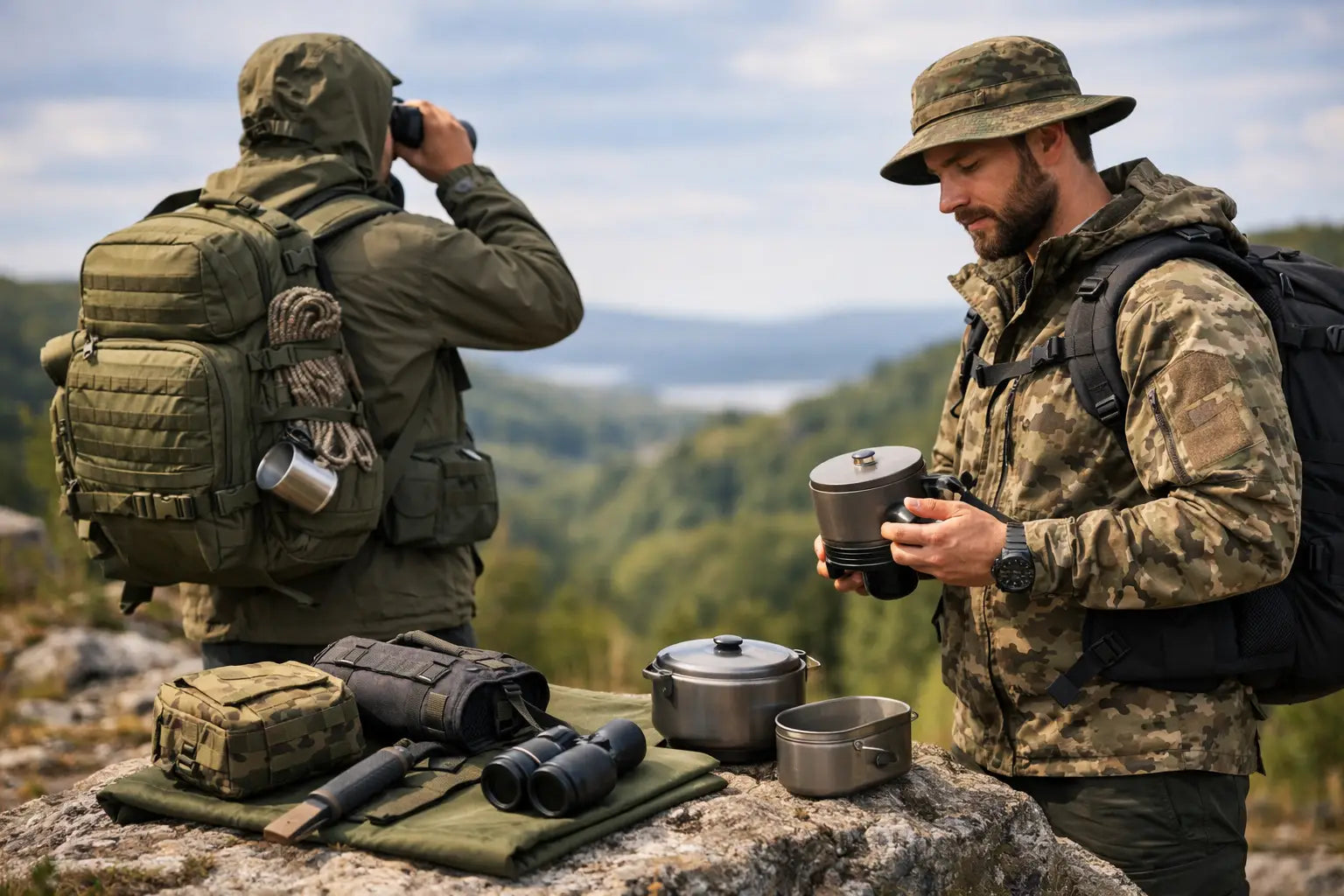
A rucksack that survives wet ground, a sleeping bag that earns its place in a cold bivvy, and a cook set that packs down without fuss all solve the same problem: getting dependable kit without overspending on features you will not use. So, who are Highlander Outdoors? They are a long-established UK outdoor equipment brand known for practical, accessible gear covering camping, hiking, travel, cadet activities and general field use.
Highlander occupies a useful position between basic high-street camping equipment and premium specialist expedition kit. Its range is broad, familiar to regular outdoor users and particularly relevant to anyone building a capable loadout for weekends under canvas, Duke of Edinburgh’s Award expeditions, cadet exercises, fishing trips or vehicle-based camping.
Who Are Highlander Outdoors in the Kit Market?
Highlander Outdoors is best understood as a field and outdoor equipment supplier rather than a technical clothing brand with a narrow speciality. The name is commonly seen on rucksacks, dry bags, sleeping bags, tents, stoves, mess tins, water carriers, head torches, walking poles, camp furniture and general accessories.
That breadth matters. A first-time camper may need most of the essentials in one go, while an experienced user may only be replacing a wash kit, mug, waterproof pack liner or folding mat. Highlander offers practical options across both situations. The focus is generally on usable design, sensible packing and value for money rather than chasing the lightest possible gram weight or the most advanced fabric specification.
For military-minded customers, the appeal is straightforward. Much of the range is suited to fieldcraft, training areas, cadet weekends and outdoor tasks where kit needs to be functional, simple to maintain and easy to carry. It should not be confused with issued equipment or selected automatically for operational use, however. Requirements for deployment, unit policy, safety certification and personal role must always come first.
What Does Highlander Make?
The Highlander catalogue tends to centre on the essentials that make a night or several days outdoors more manageable. Their sleeping equipment includes sleeping bags, liners, mats and pillows. Camping ranges cover tents, tarps, furniture, cookware and lighting. Bags and luggage can include day packs, holdalls, dry bags and organisers, while accessories often cover hydration, cutlery, navigation aids and personal comfort items.
Sleep Systems and Shelter
A sleeping bag is not simply a bag with a temperature number on the label. Consider the expected night-time temperature, whether you sleep cold, the insulation beneath you and the shelter being used. A budget synthetic sleeping bag can be a sensible choice for summer camps and occasional use because it is usually forgiving, easy to care for and performs better than down if it gets damp. For colder conditions or low-weight travel, a more technical system may be the better investment.
The same applies to mats. A thick self-inflating or foam mat can make a major difference on hard, cold ground, even when the sleeping bag itself is adequate. Highlander’s practical camping equipment is often a good starting point for building a complete sleep system, but check packed size before committing if it has to fit inside a patrol pack.
Packs, Dry Storage and Load Carrying
Rucksacks and dry bags are among the most useful parts of the range. The right pack is determined by load, duration and terrain, not just litre capacity. A day pack may be ideal for waterproofs, food, water and a first aid kit, whereas an overnight load requires room for a sleep system, spare layers and shelter equipment.
Look closely at shoulder straps, waist support, back length and external attachment points. A larger pack without proper adjustment can become uncomfortable quickly. Dry bags are equally valuable: they separate wet kit, protect spare clothing and make a packed rucksack easier to organise. In prolonged rain, use internal dry bags rather than relying only on an external rain cover.
Cooking, Hydration and Camp Accessories
Highlander stoves, mess tins, mugs and water containers are designed around basic outdoor utility. For a simple overnight camp, a compact stove and metal cook set may be all that is needed. For groups or basecamp use, larger cookware and water storage can make more sense.
Fuel compatibility is the detail that catches people out. Check which fuel a stove accepts, whether a pan support suits your cookware, and whether a windshield can be used safely with that specific stove. Never use cooking equipment inside a tent or enclosed shelter. Carbon monoxide and fire risks are not minor inconveniences.
Where Highlander Gear Fits Best
Highlander is a strong choice when you need functional equipment for regular but not extreme use. It is especially well suited to new campers, families, cadets, festival users who want more capable gear, anglers, scouts and outdoor enthusiasts assembling their first dependable kit list.
It can also be useful as supporting equipment alongside higher-specification items. For example, a user might choose premium boots and waterproof clothing for demanding hill work, while using Highlander dry bags, camp cookware, a wash bag or spare tent pegs to complete the system. Not every item in a loadout needs the same performance level or budget.
The trade-off is that specialist users should assess individual products carefully. If you are heading into winter mountains, carrying heavy loads over long distances, or relying on a piece of equipment in sustained severe weather, look for the required temperature rating, waterproof specification, fabric durability and manufacturer guidance. A lower purchase price is useful only when the product is right for the job.
How to Choose Highlander Equipment Properly
Start with the environment, then work back to the equipment. A summer campsite with vehicle access calls for different kit from a wet autumn training weekend or a multi-day walk. Write down what must stay dry, what must keep you warm, what you need to cook, and how far everything will be carried.
Check dimensions and packed weight rather than judging from product photographs. A chair, large pillow or oversized cook set can be excellent around a family campsite but unnecessary bulk in a rucksack. Similarly, a very compact item may save space while giving up insulation, capacity or comfort.
Pay attention to care as well. Clean mud from tent pegs and poles, dry tents fully before storage, air sleeping bags after use and inspect stove seals. Simple maintenance extends the life of practical field equipment and makes it more dependable when it is needed again.
Highlander Outdoors Versus Premium Field Brands
The question is not whether Highlander is better than every premium outdoor brand. It is whether a particular Highlander item meets your actual requirement. Premium equipment can offer lower weight, more advanced materials, better weather resistance or more refined suspension systems. Those advantages are valuable when conditions and frequency of use justify the cost.
For general camps, cadet activities and routine outdoor use, Highlander often represents a sensible balance of capability and price. It allows users to cover core needs without treating every purchase as an expedition-grade investment. Spend more where failure would have serious consequences, such as footwear, weather protection or a cold-weather sleep system, and be pragmatic with lower-risk accessories.
For customers building a field-ready setup, Highlander Outdoors is worth considering as part of a wider kit selection. Choose each item against the conditions, carry it properly, and test it before the weekend when it has to work.