Buying surplus by your usual high street size is where most people come unstuck. A military surplus sizing guide matters because surplus clothing was built around service issue systems, layering needs and practical movement, not fashion sizing. If you want kit that works in the field, on exercise, at cadets, for airsoft or simply for hard outdoor use, you need to read the label differently.
Why military sizing catches people out
Military clothing is rarely sized the same way as civilian retail. One jacket may be marked by chest and height, another by NATO numbers, and another by a national issue code that means very little unless you know how to decode it. Add in shrinkage from laundering, variation between countries, and garments designed to go over base layers or insulation, and your normal medium or 34-inch waist stops being a reliable reference point.
That does not mean surplus sizing is guesswork. In fact, it is often more precise than civilian clothing once you understand the system. The key is to start with your actual body measurements, then compare them with the garment’s intended use.
How to use this military surplus sizing guide
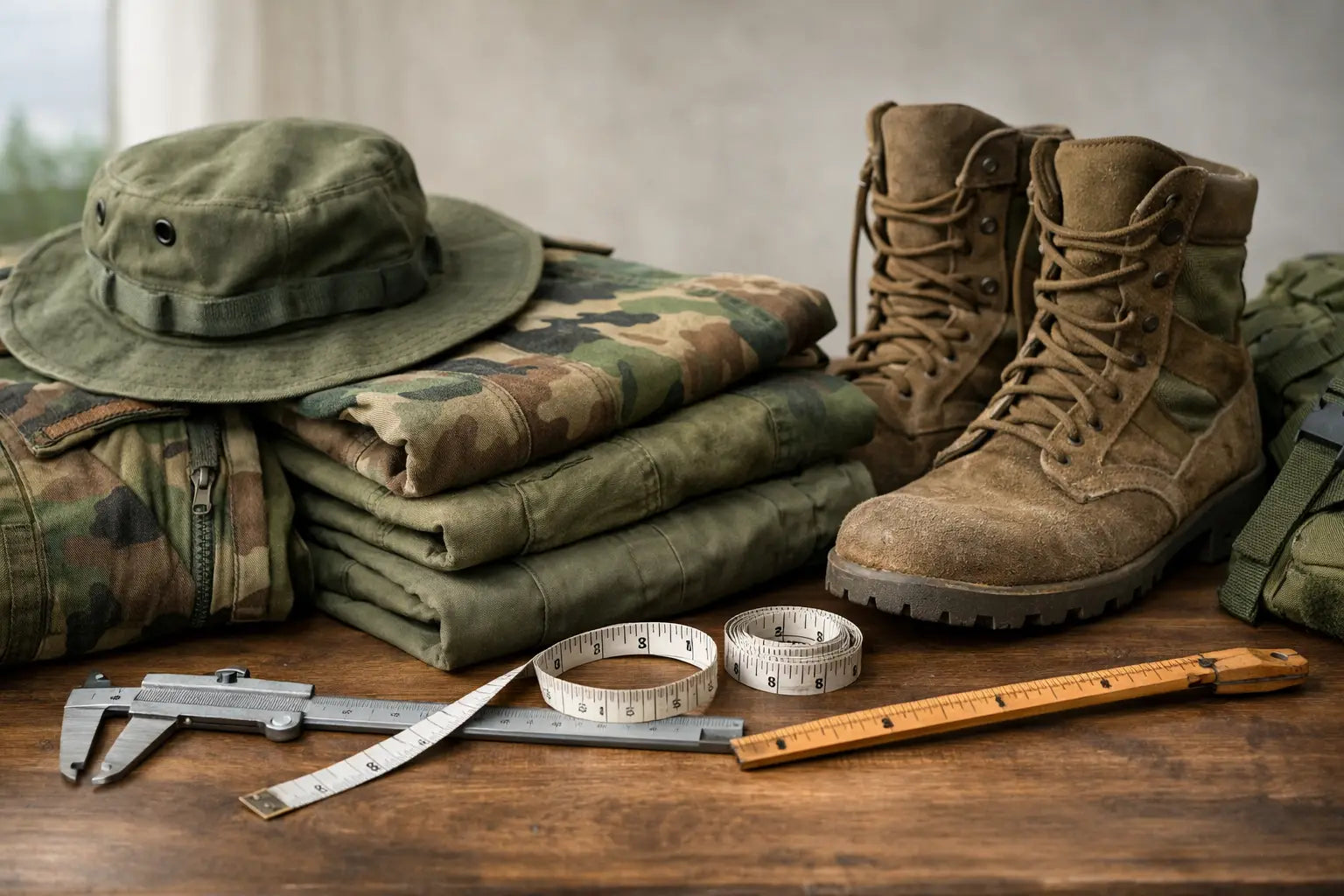
Before you buy, measure your chest, waist, inside leg and foot length properly. Use a soft tape, keep it level and avoid measuring over bulky clothing unless you are specifically checking fit over layers. For jackets, measure the fullest part of the chest. For trousers, measure your natural waist rather than relying on what size jeans you wear. For boots, measure both feet standing up, ideally later in the day when feet are slightly larger.
Then ask a simple question - what do you need the item to do? A smock meant for field use should have enough room for layers and arm movement. Combat trousers need space through the seat and thigh for kneeling, climbing and carrying kit. Parade or presentation wear is a different matter, where a cleaner fit may be preferred.
Jacket and smock sizing
Surplus jackets are usually the easiest place to start because many are labelled by chest size and height range. A jacket marked for a 100cm chest and a given height bracket is telling you far more than a civilian large ever will. The complication is that military outerwear is often cut generously. That is deliberate. It allows for base layers, fleece, body armour or load carriage.
If you want a field jacket for genuine outdoor use, buying to your measured chest is normally correct. If you want the same jacket for casual wear over a T-shirt, you may prefer a neater fit and one size down can work, but only if sleeve length and shoulder movement still make sense. This is where many buyers make the wrong call. A jacket that feels trim in the front may become restrictive when reaching, driving or carrying a pack.
Height codes matter just as much as chest size. A regular chest in a short length can sit badly at the cuff and ride up when worn with webbing or a rucksack hip belt. Likewise, a tall fitting can leave excess fabric bunching at the wrist and waist. Surplus garments were built for function, so the right length is part of the fit, not an afterthought.
Watch for national differences
British, Dutch, German and US surplus all have their own sizing habits. British issue garments are often straightforward once chest and height are understood. German and Dutch pieces may use numeric sizing that combines body proportions in a less familiar way. US surplus can run larger, especially in outer layers, because it is commonly designed around layering systems. The garment may still be correct for service use, but not for someone expecting a civilian fit.
Trouser sizing is where fit really varies
Combat trousers often look simple on paper - waist and leg length - but surplus pairs can differ noticeably in rise, seat and thigh width. Military trousers are made to move in, so they may feel roomier than workwear or denim in the same nominal waist. That extra space is useful in the field, less so if you are after a slim casual fit.
Start with your true waist and inside leg. Then allow for the fact that some surplus trousers are intended to sit slightly differently from modern jeans. Many military cuts ride higher on the waist, especially older issue garments. If you buy based only on what you wear in casual trousers, you may end up with a pair that feels wrong even if the label is technically accurate.
There is also the question of worn condition. Genuine surplus can have seen storage, washing or previous issue use. Cotton-rich fabrics may shrink a little over time. Waist adjusters and drawcord hems can help, but they do not fix a trouser that is fundamentally too short in the rise or too tight through the thigh.
Practical fit checks for trousers
When trying surplus trousers, check three things before deciding they fit. First, can you squat and kneel without the seat pulling tight? Second, does the waistband stay comfortable when sitting? Third, is the leg length workable with the boots you actually wear? A trouser that looks fine in socks can become too short once bloused over combat boots.
Boot sizing needs more than your usual shoe size
Surplus boots and military-style boots are another area where buyers often rely too heavily on their everyday size. That is risky. Military boots are built around thicker socks, long days on foot and in some cases a stiffer, more structured fit than casual footwear. Your normal trainer size is only a starting point.
Measure foot length and consider width. If you wear a heavy sock system, factor that in from the start. A boot that feels just right in a thin sock indoors can become cramped on a cold training day or a long tab. On the other hand, too much space causes heel lift and rubbing. Neither problem gets better once you are properly moving under load.
Different boot brands and issue styles vary in last shape. Some are better for narrow feet, others suit broader forefeet or a higher instep. This is one area where a half size can make all the difference, but only if the width and heel hold are still correct.
Layering changes the correct size
A proper military surplus sizing guide has to account for layering. Base layers, fleece mid-layers, waterproof shells and insulated outer garments all work differently. If you are buying a shell to wear over thermal and fleece layers, your ideal size may be different from the shell you would choose for summer use.
This matters especially with cold weather surplus. Parkas, smocks and overtrousers are often intentionally oversized because they were designed as part of a clothing system. Buyers sometimes see that room as poor sizing when it is actually correct for the garment’s role. Equally, buying down too far can leave you with a shell that no longer works as intended.
Common surplus sizing mistakes
The most common mistake is buying by letter size alone. Small, medium and large mean very little across military stock, especially between countries and decades. The second mistake is ignoring height. A jacket or pair of trousers can match your chest or waist and still be wrong in use because the length is off.
The third mistake is treating all surplus as identical. Condition, age and manufacturer differences can all affect fit. Two jackets from the same country may not fit exactly alike if they come from different contracts. That is normal with service clothing.
The sensible approach is to treat measurements as primary and your usual retail size as secondary. If a product listing gives body measurements, use those first. If it gives garment measurements, compare them with something you already own that fits well.
When to size up and when not to
Sizing up makes sense if you are between sizes, plan to layer heavily, or need full freedom of movement for field use. It can also help with older non-stretch garments that have a trimmer cut through the shoulder or thigh. But sizing up purely because military kit should feel baggy is a mistake. Too much fabric catches, bunches under webbing and can be uncomfortable over distance.
Sizing down is only sensible when the garment is known to come up large and your use is casual rather than operational. Even then, check the length and movement carefully. A smarter-looking fit is no use if the sleeves pull short the moment you shoulder a pack.
Getting the best result from surplus kit
The best buyers are methodical. They measure properly, think about intended use and accept that military clothing is built around function first. That is exactly why surplus remains such good value - the sizing system may need a little decoding, but the garments were designed to work.
If you are buying from a specialist military outfitter such as John Bull Clothing, take advantage of the product detail available and compare it against your own measurements rather than guessing from habit. Five minutes with a tape measure usually saves the hassle of getting it wrong.
Get the sizing right and surplus stops feeling unpredictable. It starts doing what it was made to do - fit properly, move properly and earn its keep.